

Scarcity and competition lead to GloCal Blocs
Asia and Europe are part of a global drive towards more wealth. Asia in particular makes impressive progress in developing its economic power, boasting strong and even double-digit growth in many countries. The financial crises have taken their toll but some voices in Asia speak of ‘Western financial crises’. With new industrial capacity and sharply rising domestic and international demand, countries in Asia and Europe often find themselves on opposite sides of a battle for natural resources and scarce materials. Responding to the rising demand for food and for more advanced food products becomes a key concern and a central element of power in Asia. The situation is becoming increasingly competitive. China’s strength becomes more and more visible. Japan and Europe have to fight to stay ahead in many areas of advanced technology.
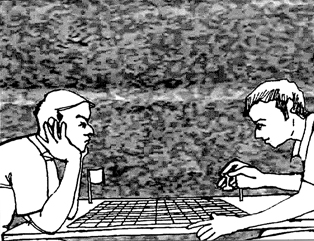
Competition becomes fierce
Faced with such fierce competition, governments in the EU move closer together. Many countries in Asia do the same through supranational regional bodies. Grouped countries feel that, if they combine their natural and economic resources, they have greater leverage and can benefit from technological dependence. Governments within these blocs find their own answers to balancing economic, environmental and developing needs. In Europe, environmental concerns are high on the agenda. In Asia, the situation is quite diverse, with many countries clearly putting development first. Despite its ageing population, the EU is blocking immigration from Northern Africa in response to popular pressure. While the EU is debating whether or not to open its borders more to immigrants with higher education, Asian blocs are busy doing just that: attracting and selecting immigrants who can support regional and economic development.
The competition between blocs is accelerated by technological progress, R&D and innovation. Advances in the health sciences are boosted by emerging diseases that bring about advantageous budget allocations. An increasing number of countries rely on nuclear energy as a transitional source of power because of the effects of climate change and the depletion of natural resources. Much investment is being made in generation IV nuclear energy in an attempt to achieve subcritical levels of radioactive waste. There is much R&D competition between the regions, but also selective cooperation where there is a clear advantage for both sides. This form of cooperation and competition is widely called ‘cooptition’, which is selected as expression of the year 2019 by the Asia-Europe Linguistic Society, winning by a narrow margin over its closest rival, ‘glocal’, which reflects the local approach to global problems that is dominant in Asia and Europe.
GloCal Blocs wealth and tensions
Cooptition between GloCal Blocs fuels development and prosperity, particularly in many Asian countries. Industrialisation has led to more than 70% of the Asian and European population moving to urban areas. Growing environmental problems contribute to increased alienation of people from nature in many blocks in Asia, but also in European societies. Quality of life is one of the stated aims of all layers of society and all the countries, which is responded to by readily available consumer goods.
But there are still some differences between the Asian countries and blocs. Some blocs focus on economic development, whereas others target broader cooperation. Faced with ever stiffer global competition, the EU is taking decisive steps to further integrate into a United States of Europe.
Adequate basic health care is a key element in the competitiveness of blocs. In many of the more successful blocs, state-provided basic health care is accessible by everybody. Highly specialised services are only available to the elite through a private health care system. As a result of continuous developments in R&D, medical treatment of more exotic disorders becomes possible through genetic mapping. Evidence-based traditional medicine from within the distinct cultures of the respective blocs is on the rise.
Together with technological developments, the economic shift in balance between Asia and Europe leads to new divides. Some developed Asian blocs and Europe attempt to leapfrog through highly specialised R&D and services with largely automated industrial production. In the developing Asian blocs, industrialisation based on cheap labour drives growth. A class of professionals in Europe and the rich Asian blocs contrasts with a class of increasingly skilled workers in developing Asian blocs.
In Europe and Asia, cooptition has also created new challenges to cultural identity, which in turn affect how immigration is treated within the blocs. In European countries such as the United Kingdom, there is talk of a 'migrant-dominated society'. In 2025, a South Asian migrants party gains 15 seats in the European Parliament. In Asia the concept of trade is increasingly linked to the identity of nations and blocs. Often, migrants from outside the block are perceived as weakening this identity. Many migrants in Asia live in separate pockets in cities with a distinctive culture of their own. The same holds for many parts of Europe. People inside these pockets are often marginalized, poorly integrated in society and lack the health services available to the rest of society.
Tensions turn violent
The problem of scarce resources in Asia and Europe is not easing. In terms of food, Asians have turned increasingly to consuming meat. In Asia, GM food is widely used to respond to increasing demand. Contract farming has largely replaced traditional agricultural practices in Asia. Obese Asian passengers needing to buy two seats on Air Asia no longer make the headlines.
For a long time, Europe held off modernisation of food production, focusing more on its own production of organic food and compensating the lower yield with increased food imports. This approach, however, comes under pressure from tougher competition for food resources. As the effects of climate change begin to manifest themselves, water is increasingly seen as a scarce and valuable resource. Iceland creates a lucrative business by exporting water to the United Arab Emirates.
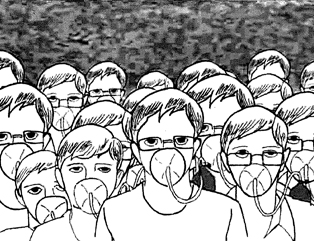
Weak Immune Systems
As a result of changes in diet and food production technologies, immune systems weaken and people become more vulnerable to germs. Diabetes becomes a major problem. Sugar and fat replacements show long-term negative effects. One headline reads: “Continued use of stevia causes osteoporosis." Health research reaches new frontiers. Genetic mapping opens the way for genetic treatment of the foetus. This in turn leads to new forms of discrimination, such as regarding the perceived superiority or inferiority of genes. Some blocs start to experiment with using this knowledge to gain a competitive edge. Casualties result. Competition reaches a new height.
In the 2020s, technological advancement and mixed farming turn Africa, Brazil, parts of Mongolia and Greenland, and some areas of Russia into major food producers. They are also important sources of scarce metals and minerals – key elements in advanced industrial production. Lagging behind in development, Africa becomes the battle arena for these resources. Blocs of Asia, the EU and the USA engage in an increasingly violent and open struggle for Africa's resources. Violent African terrorism increases.
Critical reports on this topic can be read in media in some blocs, depending on the bloc's openness and freedom of expression. However, the public mood is focused on the home turf and other blocs have moved away in mental perception. Along the same lines, many media have developed a strong block bias. Social media and social networking follow this trend, despite the existence of fringe groups with a global outreach. More violence between the blocs looms.