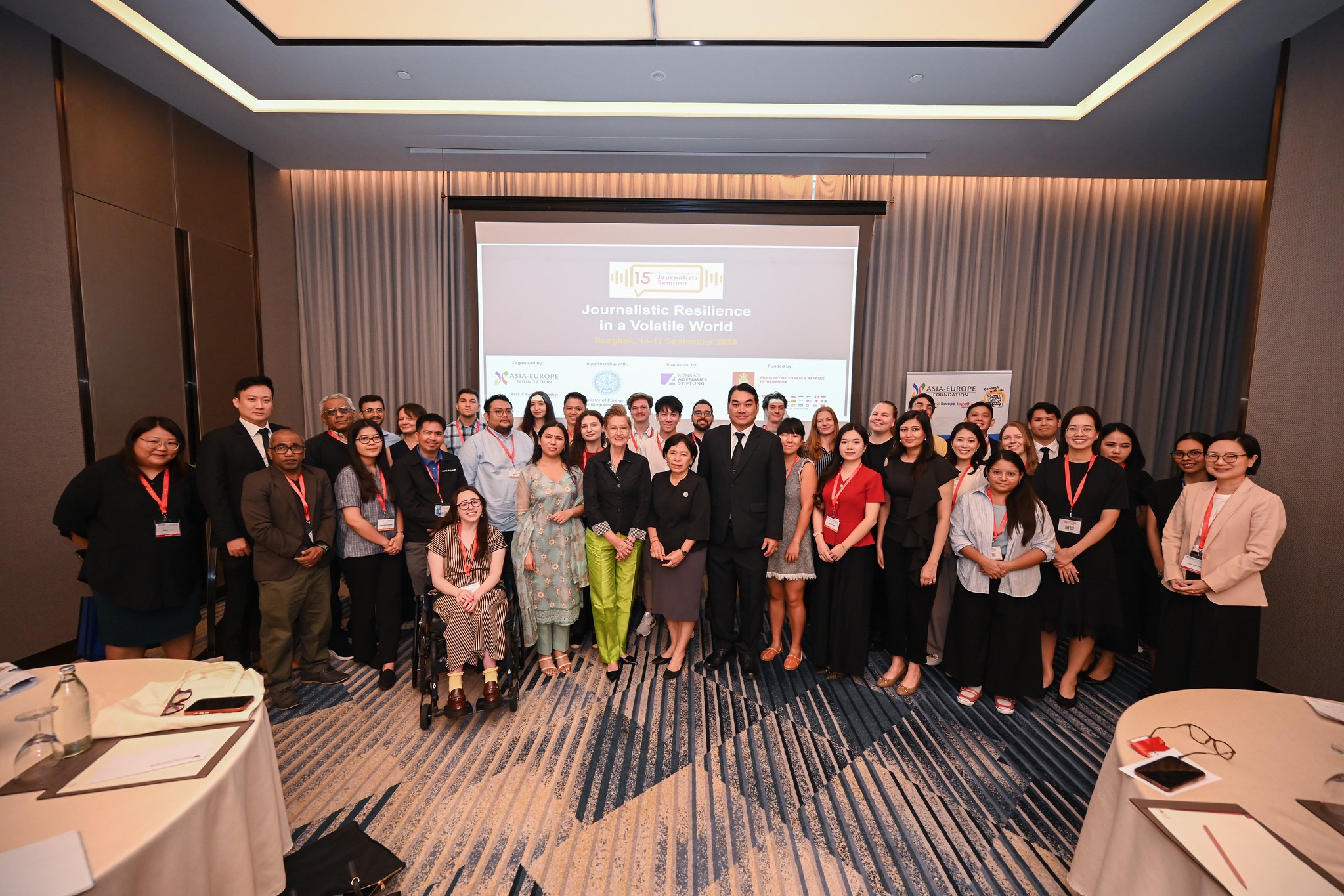
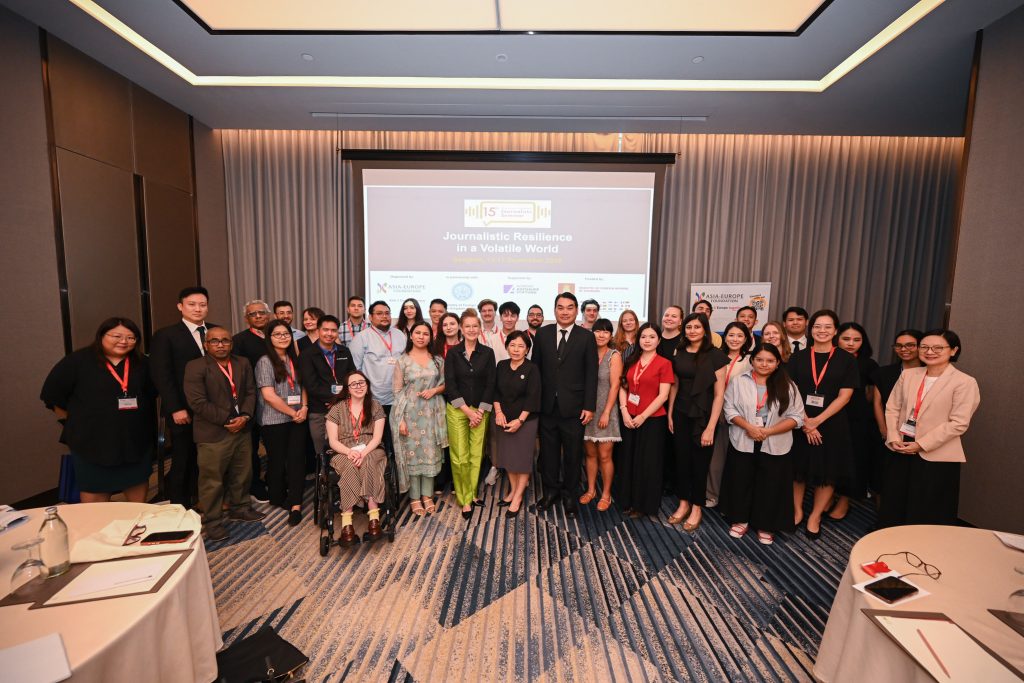
The 15th ASEF Journalists Seminar (ASEFJS15) with the theme “Journalistic Resilience in a Volatile World” was held in Bangkok, Thailand from 14 to 17 September 2026. The seminar, organised by ASEF in partnership with Ministry of Foreign Affairs of Thailand, brought together 22 journalists from 20 countries in Asia and Europe to discuss key challenges facing journalism, including media trust, misinformation, AI, journalists’ safety and well-being and geopolitical shifts.
Welcome Reception – 14 September 2026
ASEFJS15 kicked off with a welcome reception in Bangkok on the evening of 14 September 2026. Participants, organisers and ASEF country embassy representatives had the opportunity to meet, exchange experiences and begin building new connections ahead of two intensive days of discussions on the challenges shaping journalism today.




Seminar Day 1 – 15 September 2026
The first day featured two sessions, followed by a public evening panel discussion at the Foreign Correspondents’ Club of Thailand (FCCT).
The day began with an Opening Ceremony with remarks by HE Mrs Chulamanee Chartsuwan, Thai Governor of ASEF and Ambassador Beata Stoczyńska, Executive Director of ASEF, who officially welcomed participants and set the stage for discussions on the resilience of journalism in an increasingly complex and rapidly changing environment.
Session 1: Overview of geopolitical situation in Asia and Europe and their impact on reporting
By Mr Panu Wongcha-Um, President of FCCT and Indochina and Senior Correspondent, Reuters
The session examined how global developments, geopolitical shifts and changing media environments are influencing the way journalists cover and interpret events.
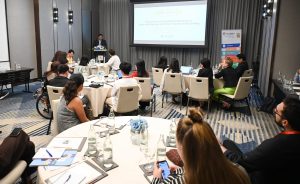
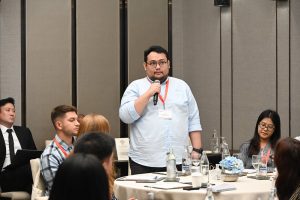
Session 2: Media trust and resilience in the current situation – combatting news fatigue; political polarisation of media
By Mr Augustine Anthuvan, Media Trainer and Crisis Communication Consultant
The session aimed to rebuild readers’ trust in the news and explored challenges surrounding public trust in journalism and approaches that news organisations and journalists take to strengthen credibility and engagement with audiences.
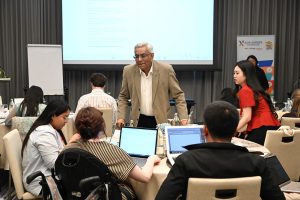
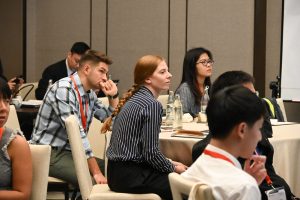
Public Panel Session
Panelists:
Mr Marwaan Macan-Markar, Asia regional correspondent at Nikkei Asia
Ms May Wong, Indochina Bureau Chief, The Straits Times
Mr Dominic Faulder, Associated Editor at Nikkei Asia
Mr Panu Wongcha-um, Indochina senior correspondent, Reuters
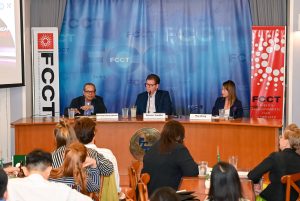
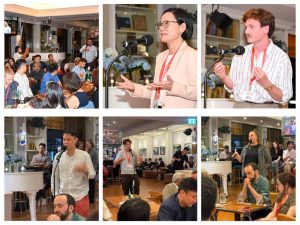
In the evening, ASEFJS15 opened its programme to the public with a panel discussion at the Foreign Correspondents’ Club of Thailand (FCCT) titled “Reporting Southeast Asia Today: Journalism at the Crossroads of Global Change.”
The panel brought together journalists and media professionals from Nikkei Asia, The Straits Times and Reuters, who shared their perspectives on how rapid global and regional changes are affecting journalism and news reporting across Southeast Asia. The discussion provided an opportunity to reflect on the realities faced by journalists working in a region shaped by political, economic and technological transformation, while also highlighting the importance of credible and resilient journalism in navigating these changes.
Seminar Day 2 – 16 September 2026
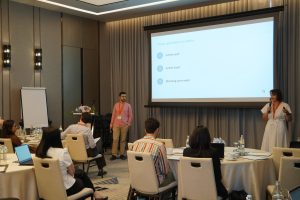
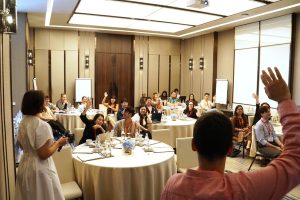
Session 3: Fact checking and credibility in the age of AI – verification workflows, AI-generated content, transparency
By Ms Jenny Romano and Mr Pedro Henriques, Newsroom.ai
The session focused on the personal and professional challenges journalists face in an increasingly demanding media environment. The trainers shared practical tools and strategies that can help journalists navigate the risks and pressures associated with their work.
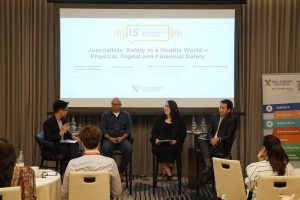
Session 4: Journalists’ Safety in a Hostile World – physical, digital and financial safety
Asst Prof Jessada Salathong, Lecturer at Faculty of Communication Art, Chulalongkorn University
Ms Onravee Tangmeesang, Thailand-Myanmar Specialist and Communications & Marketing Lead
Mr Tony Cheng, Al Jazeera’s Bangkok-based correspondent
Mr Pongsathat Sukphong, Thai PBS World
The session combined practical advice with trainers’ professional experiences, offering participants concrete approaches to managing the challenges they may encounter in their work. The discussions also reinforced an important message: looking after journalists is an essential part of protecting the quality, independence and resilience of journalism itself.
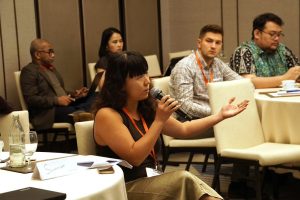
Session 5: Journalists’ Mental Health and Well-being in Hybrid Workspaces
By Mr Amantha Perera, PhD candidate, Director/Consultant- Centre for Journalism and Trauma, Asia Pacific formerly the Dart Centre Asia Pacific
The session addressed journalists’ safety and security, including the risks they may encounter while reporting both in digital spaces and in the field. The trainer highlighted the importance of the need for journalists to protect their mental health, particularly given the pressures, uncertainty and sometimes difficult circumstances associated with the profession.
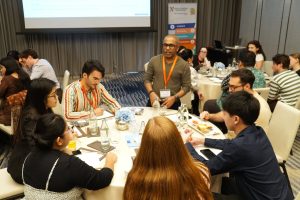
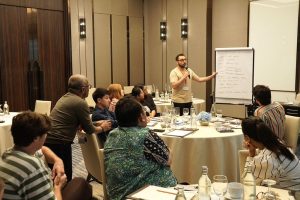
Closing Reception – 16 September 2026
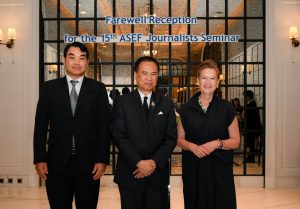
ASEFJS15 concluded with a farewell reception hosted by the Ministry of Foreign Affairs of the Kingdom of Thailand, providing participants, organisers and speakers with an opportunity to continue their conversations and strengthen the connections developed throughout the seminar.
The closing remarks were given by HE Mr Vijavat Isarabhakdi, Vice Minister for Foreign Affairs of Thailand and Ambassador Beata Stoczyńska, Executive Director of ASEF. The reception marked the conclusion of the seminar’s formal programme and celebrated the active participation and engagement of all 22 journalists throughout the two days of discussions.
With the conclusion of ASEFJS15, participants officially joined the ASEF Alumni network, extending the connections established during the seminar beyond Bangkok. The event closed with a shared hope that the relationships, ideas and collaborations developed during the seminar would continue to grow into lasting professional partnerships and impactful stories.