
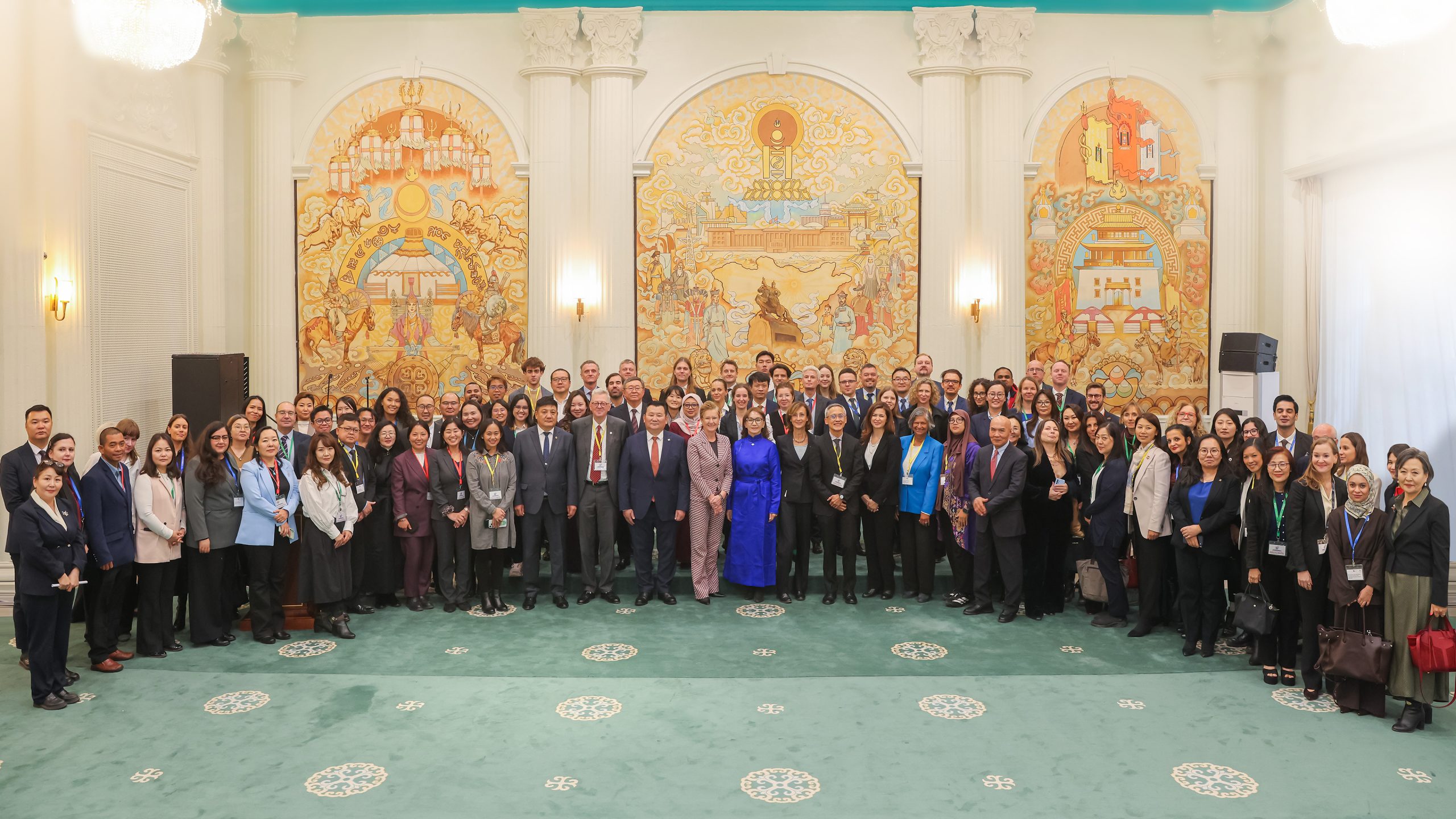
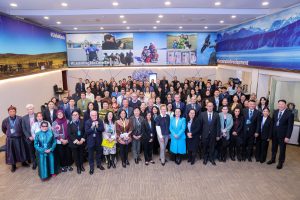
Human rights are agreed in capitals and in Geneva, but they are kept or broken where people live. That tension ran through the 24th Asia-Europe Meeting Human Rights Seminar (ASEMHRS), held in Ulaanbaatar, Mongolia, from 12-14 October 2026. The Seminar, co-hosted by the Ministry of Foreign Affairs of Mongolia and the National Human Rights Commission of Mongolia (NHRCM), brought together governments, National Human Rights Institutions (NHRIs), international organisations, academia and civil society from Asia and Europe. Under the theme “The Future of Human Rights – From Local to Global,” they examined how global standards, regional systems and local action can better reinforce one another.
The Seminar was opened by Ambassador Beata STOCZYŃSKA, Executive Director of the Asia-Europe Foundation (ASEF), and Dr SUNJID Dugar, Chief Commissioner of NHRCM. Ambassador Stoczyńska described a human rights system under strain but with a proven capacity to renew itself, while Chief Commissioner Sunjid stressed that no country, institution or region can meet today’s cross-border challenges alone.
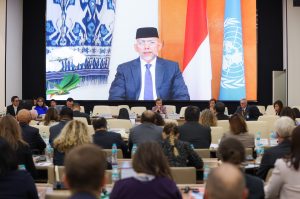
The keynote session, chaired by Rolf RING of the Raoul Wallenberg Institute, featured H.E. Batmunkh BATTSETSEG, Foreign Minister of Mongolia; Prof Marta CARTABIA, President of the Council of Europe’s Venice Commission; and Ambassador Sidharto Reza SURYODIPURO, President of the United Nations Human Rights Council, by video message. Volker TÜRK, United Nationas High Commissioner for Human Rights, sent a written statement read by Reem MAZZAWI of the Office of the High Commissioner for Human Rights (OHCHR). Prof Cartabia stressed that international protection never replaces national protection because rights must live first within States. High Commissioner Türk pointed to more than 60 wars, rising anti-rights movements and AI governance that has not kept pace, called human rights “a compass that can guide policies and decisions from the local to the global,” and invited participants to join the Global Alliance for Human Rights launched by his Office this year.
Prof Vitit MUNTARBHORN and Virginia BRÁS GOMES of the Geneva Human Rights Hub then presented the background paper, Asia-Europe and the Future of Human Rights: Bridge-Building for Shared Pathways, co-drafted with Dr Domenico ZIPOLI, which looks at protection through global, regional and national lenses. It noted reforms already underway in the UN treaty body system, including a synchronised eight-year reporting cycle, dialogues held beyond Geneva and digitalised information flows. The first day ended with a panel on NHRIs facing emerging challenges, from AI to climate change, which asked whether their mandates and resources are keeping pace while safeguarding their independence.
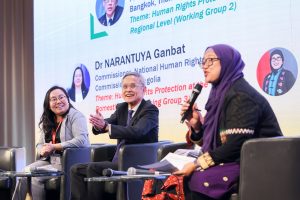
The second day was dedicated to three working groups, held under the Chatham House Rule. The global level group, moderated by Dr Anna Camille TALBOT with Virginia Brás Gomes as rapporteur, centred on contributing to wider UN reform, including treaty body strengthening and responsible digitalisation, and on piloting new solutions rather than waiting for the full reform package. The regional level group, moderated by Prof Hélène TIGROUDJA with Prof Muntarbhorn as rapporteur, noted that Europe has a more systematic, court-based framework while Asia has advanced step by step at the sub-regional level, notably through ASEAN, and that there is no need for a single blueprint. The domestic level group, moderated by Adrià DUARTE with Dr NARANTUYA Ganbat as rapporteur, emphasised independent and well-resourced NHRIs, clear government responsibility for implementation, human rights cities, stronger protection for civic space and human rights defenders, and links with anti-corruption efforts.
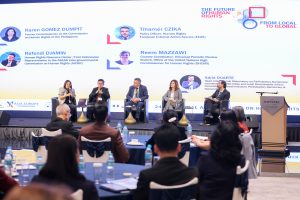
A side event organised by NHRCM presented Mongolia’s 2021 law on the legal status of human rights defenders, the first of its kind in Asia, as a practical case study rather than a model to be replicated, alongside the experience of the Commission on Human Rights of the Philippines. It pointed to areas for further development, including timely responses to urgent risks, compliance by duty-bearers and sustainable resources.
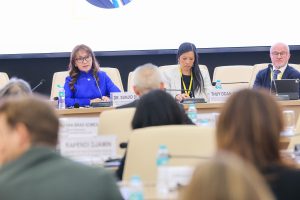
The final day, chaired by Indah Nuria SAVITRI of Indonesia’s Ministry of Foreign Affairs, opened with reports from the three working groups, followed by a closing panel on strengthening protection across local, regional and global levels. The Seminar closed with remarks from ERDENEBOLD Sukhbaatar, Member of the State Great Khural, and Dr Narantuya Ganbat on behalf of the host, and Rolf Ring on behalf of the organisers. Two youth speakers, AMARZAYA Tumurbaatar of the Mongolian Youth Council and Nate WILBOURNE of Make it 16, underlined the urgency of meaningful youth participation.
The Seminar’s outcome document sets out 14 recommendations. Participants called for States and partners to realign and recommit to the universality, indivisibility and interdependence of all human rights; to contribute to wider UN reform; to combine Asian and European experience on regional and sub-regional protection; to widen access to timely, affordable and effective remedies; to back independent NHRIs while keeping clear responsibility with governments; to protect civic space and human rights defenders; to connect human rights with anti-corruption efforts; to build alliances through the Global Alliance for Human Rights on human rights cities, business and human rights, climate justice and responsible digitalisation and AI; and to build a culture of human rights that rebuilds public trust. As participants put it, “universal protection does not mean uniform protection” and “the closer to the ground, the better.”
→ View the Seminar programme here
→ View photos from the Seminar here