
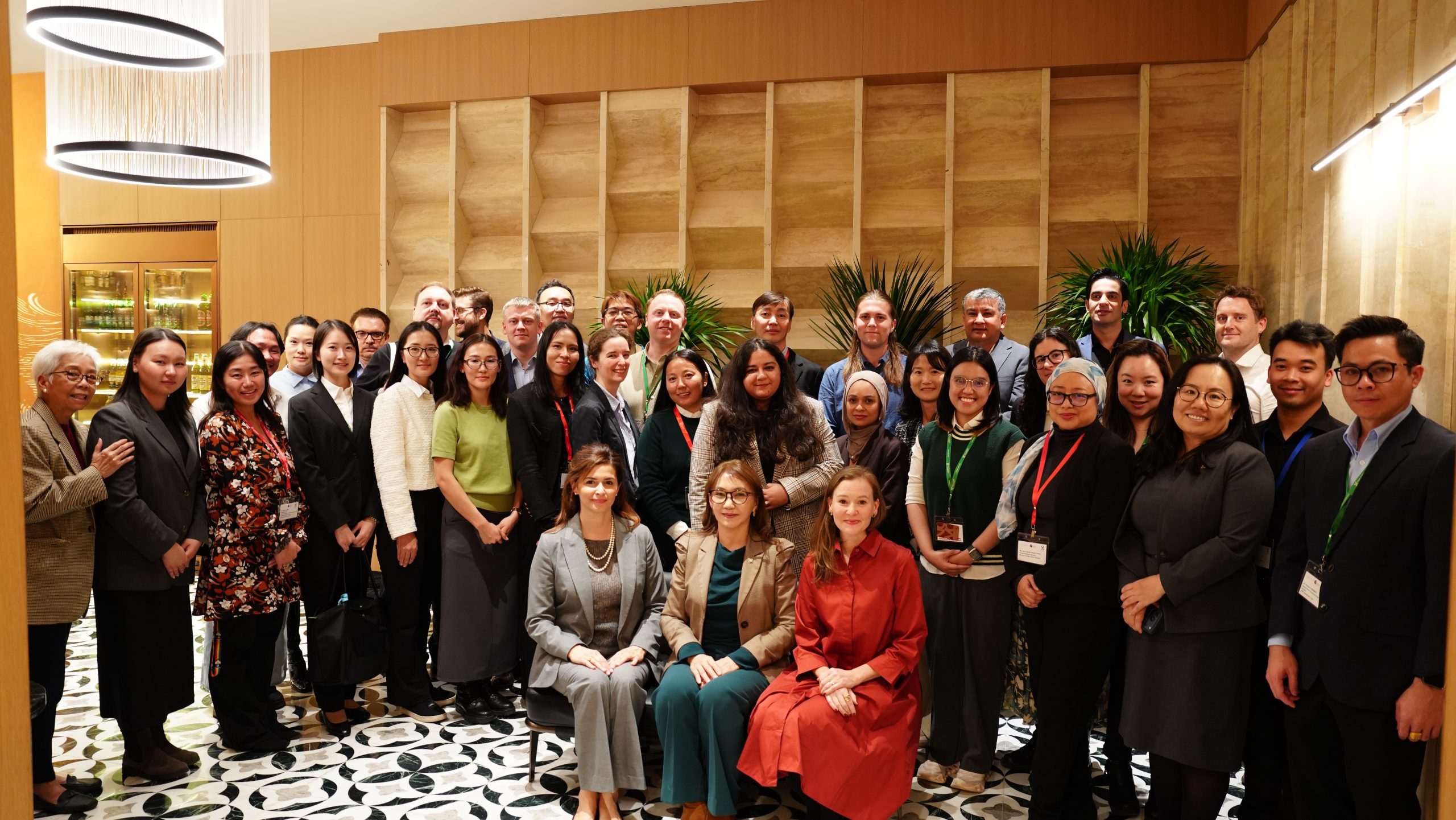
Following the 24th Informal ASEM Seminar on Human Rights (ASEMHRS24), 27 selected participants from 19 countries across Asia and Europe stayed on in Ulaanbaatar for a two-day capacity-building programme. The Asia-Europe Foundation (ASEF) organised it jointly with the Office of the United Nations High Commissioner for Human Rights (OHCHR).
The training was titled “From Human Rights Mechanisms to National Implementation”. It brought together government officials, representatives of National Human Rights Institutions (NHRIs) and civil society, all engaged in implementing and following up on human rights commitments. Together, they explored how recommendations from international human rights mechanisms can be turned into concrete action at the national level.
The programme was opened by Cynthia VELIKO, Regional Representative of the OHCHR Regional Office in Bangkok. She noted that the world now has a sophisticated human rights architecture, but that it does not automatically translate into rights people can experience. “The issue is no longer an absence of guidance,” she said, “it is rather how to transform a growing universe of recommendations into coherent regional and national action.” She called on participants to move “from a culture of reporting to a culture of implementation”. Dr NARANTUYA Ganbat, Commissioner of the National Human Rights Commission of Mongolia, then reflected on the Seminar’s key takeaways, setting the stage for two days focused on practical implementation.
The first day gave participants a thorough grounding in the UN human rights system. Led by OHCHR trainers Reem MAZZAWI, Erkin ISAKULOV, Afaf LAMKOUTAR and Naved AHMAD, the sessions covered the treaty bodies, the Human Rights Council, the Special Procedures and the Universal Periodic Review (UPR). Participants examined how each mechanism works, how they complement and interlink with one another, and where national actors can engage most strategically.
The second day turned from global mechanisms to local action. Participants were introduced to the UPR Voluntary Funds as a source of support for implementation. They then worked in stakeholder groups representing Member States, NHRIs, civil society, academia and the UN to identify each actor’s role and added value in following up on recommendations. A session on National Mechanisms for Implementation, Reporting and Follow-up (NMIRFs) showed how governments can coordinate implementation more effectively.
The programme concluded with two online sessions from OHCHR Geneva, both under the theme “From Recommendations to Action”. In the first, Claude CAHN of OHCHR’s Indigenous Peoples and Minorities Section looked at how recommendations from the international human rights mechanisms can inspire national reforms that advance equality and non-discrimination. In the second session, Azin TADJDINI explored the growing role of technology in human rights, including both the opportunities digital tools offer for protecting rights and the risks they pose. Dr Narantuya Ganbat joined the session to share Mongolia’s experience. She drew on the National Human Rights Commission of Mongolia’s national inquiry into human rights and digital technology, which examined personal data protection and the human rights implications of emerging technologies.
Participants were also honoured by a surprise visit from MUNKHBAATAR Lkhagva, Member of the State Great Khural (Parliament) of Mongolia and Chair of the Standing Committee on Justice, who greeted the group and kindly gifted each participant a book on Mongolia’s history.
The training closed with reflections from Dr SUNJID Dugar, Chief Commissioner of the National Human Rights Commission of Mongolia.
The training used OHCHR’s participatory, adult-learning approach, combining expert input, peer exchange and practical group work. This gave participants tools they can take back to their own institutions, and strengthened the network of practitioners across the two regions.
ASEF warmly thanks OHCHR and its trainers for their partnership and expertise. We also thank the National Human Rights Commission of Mongolia for its support, and all participants for their active engagement.

See more pictures from the training here.
Read more about the Seminar series here.
“ASEM HRS is an effective bridge between the contexts, challenges, opportunities and future engagement between stakeholders from Europe and Asia. An enlightening seminar that I’ll be sure to remain engaged with and connected to. ” (Evan Jones, Mixed Migration Centre)
“An unparalleled opportunity to engage with human rights advocates from all over Asia and Europe and learn new skills and knowledge to help participate in international human rights mechanisms.” (Participant from a European National Human Rights Institution)