WE SPEAK WITH AOI NAKAMURA AND ESTEBAN LECOQ, CO-FOUNDERS OF AΦE AND THE CO-CREATORS OF LILITH.AEON, AN INNOVATIVE AND IMMERSIVE WORK BLENDING DANCE AND TECHNOLOGY, PRESENTED AT AECFest 2026.
1. With distinct artistic backgrounds, you have collaborated as the artistic co-directors of AΦE since 2016, developing a shared practice at the intersection of dance and technology. How did your collaboration begin, and what drew you to working together?
We did not plan a company. We planned a conversation and it never stopped. What drew us together was not a shared aesthetic but a shared restlessness: we both felt that what we had been taught about performance wasn’t the whole story. Aoi came from the precision and discipline of classical ballet training; Esteban, also with a classical ballet background his curiosity quickly shifted toward the physical intensity of European dance theatre and immersive performance (Constanza Macras, just to name one). We then both discovered the Live Art Scene ( SPILL Festival of Performance created by Robert Pacitti, a prominent UK-based live artist, curator, and artistic director known for creating intense, often autobiographical performance works and installations that explore themes of the body, sexuality, and mortality, who founded the festival) which was a real eye opener for us. As well as discovering Robert Lepage, Romeo Castellucci, Punchdrunk company. It created a needs in us, something neither of us could have made alone began to take shape. AΦE was born not from a manifesto but from curiosity about bodies, about space, about what happens when an audience stops watching and starts becoming part of the work itself.
2. Your philosophy centres on “choreographing the audience.” How does this approach take form in your work, and how does it evolve when presented to audiences across different cultural contexts?
For us, choreography has never been limited to the body of the performer. Every person who enters the room brings their own rhythm, their own hesitations, their own impulse to move or to stay still. We design for that. We think about the distance between people, the moment someone breath before a choice is made. The technology does not dictate the experience, it listens for it.
What changes across cultures in which we present our work, since we mainly tour internationally, is not the work itself but the quality of the silence within it. In some rooms, audiences lean in immediately; in others, there is a longer, more careful negotiation with the unfamiliar. We have come to love both. That tension between invitation and uncertainty is where the most honest interaction lives.
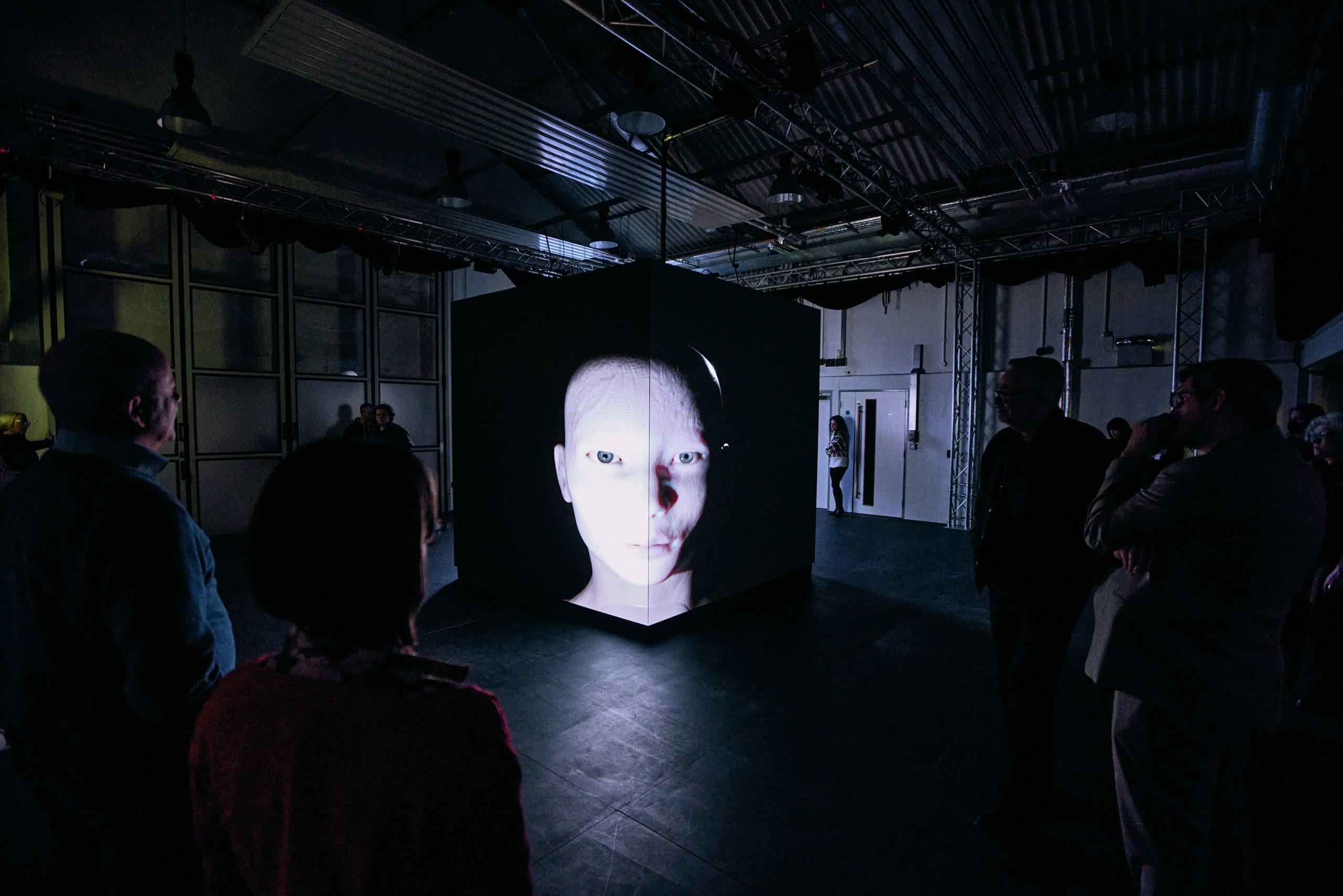
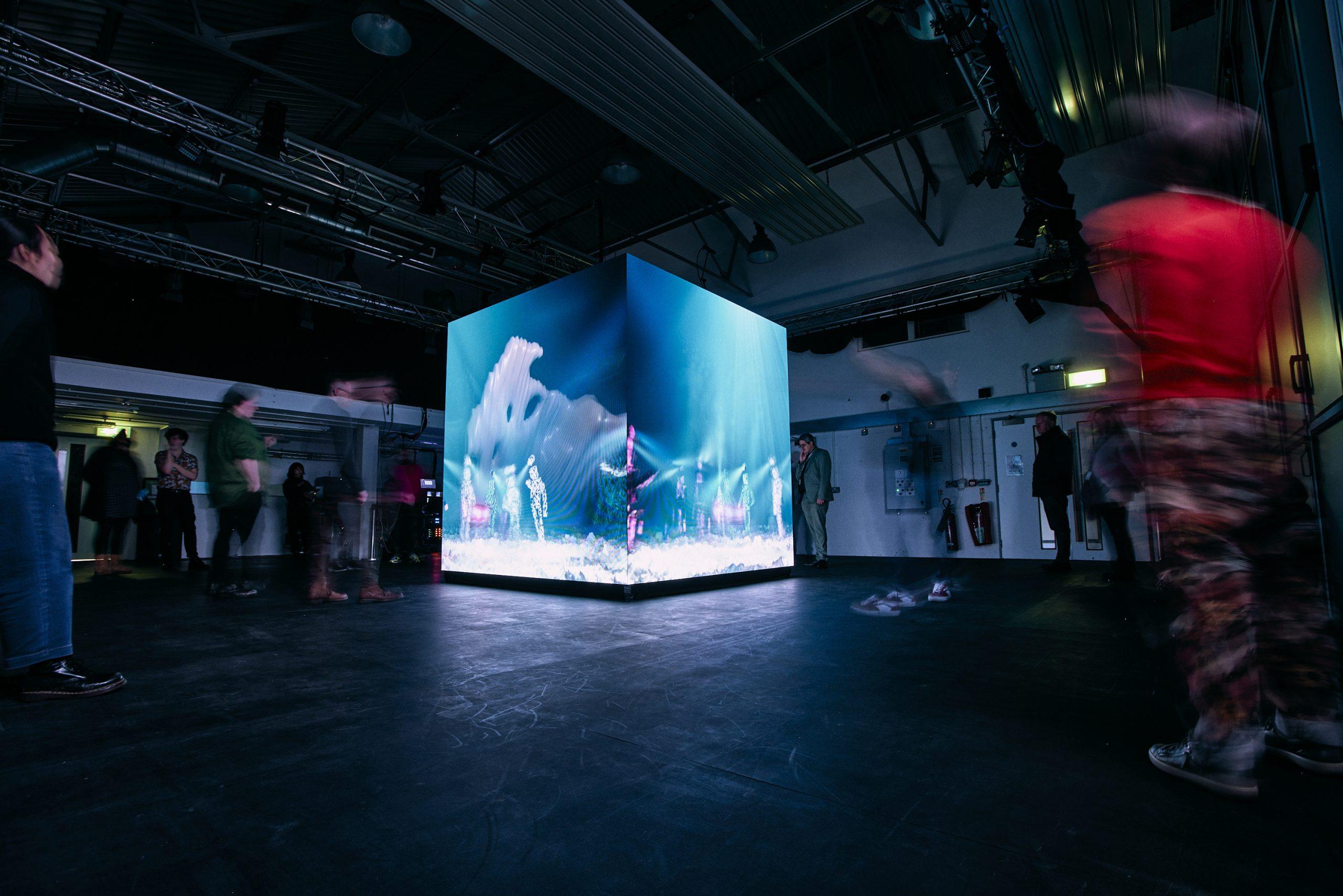
3. LILITH.AEON is rooted in a personal narrative that intersects with ideas of transhumanism, cryogenics, and artificial intelligence. Could you share how the project first emerged, and what motivated you to build a fictional yet emotionally charged figure like Lilith?
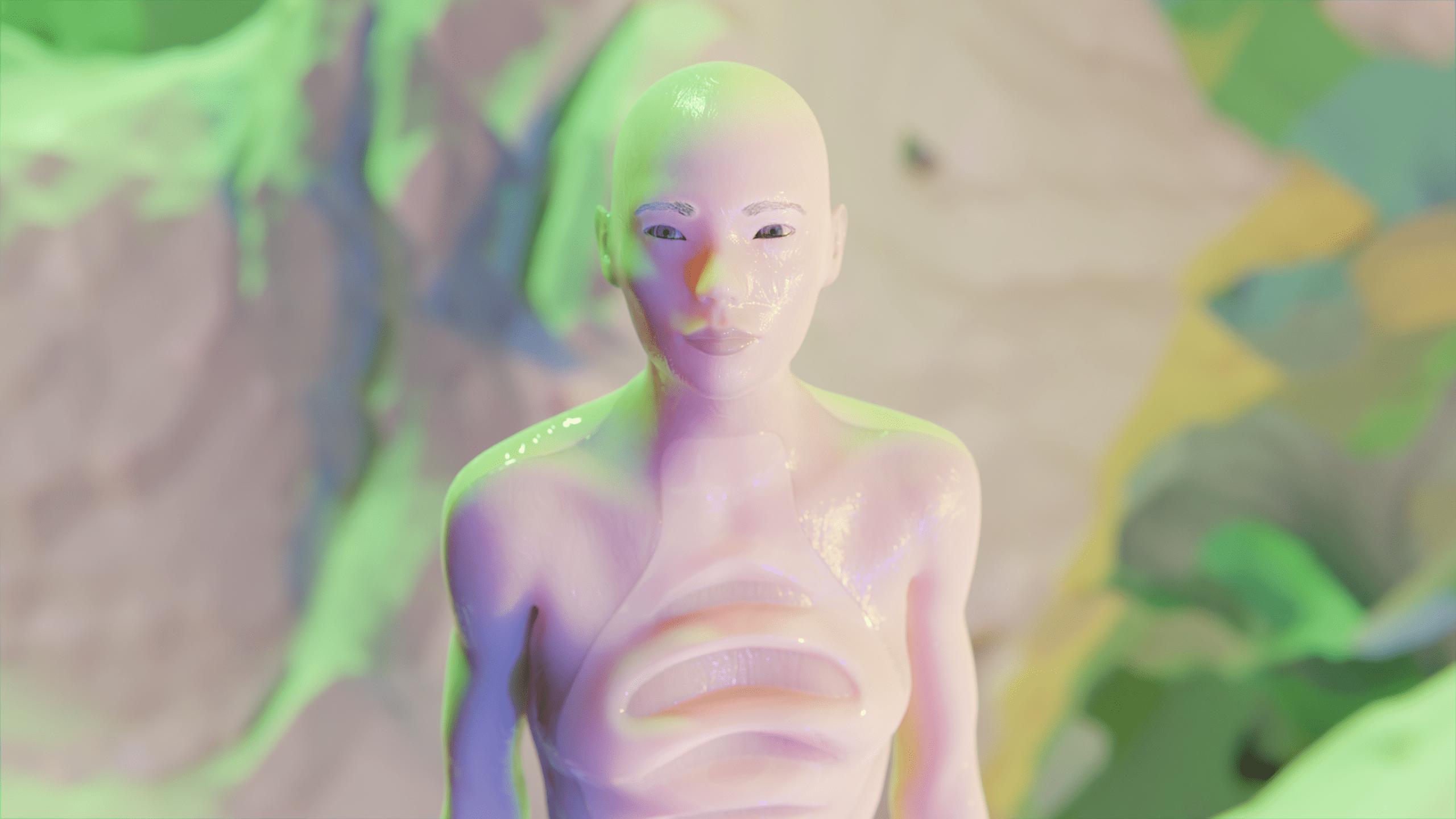
LILITH.AEON was born from grief. From the particular silence that follows loss, the way someone’s presence lingers in our memories, the things they touched, the sounds they made, the shape they left in a room. We found ourselves asking questions we could not answer: where does a person go when they are no longer here? What remains? What if something could remain? And what is the meaning of life, death and what is in between. The question quickly extended to not only about the human being but extended to Civilisations, languages, time, nature.
When we encountered the true story of Matheryn Naovaratpong, a two-year-old Thai girl who became the youngest person to be cryogenically preserved in 2015 after dying from a rare brain cancer, something shifted. It was not a comfortable story. It was a story full of love and desperation and an almost unbearable hope. Lilith emerged from that place, not as a cautionary tale, not as a celebration of technology, but as a question given a name. A soul held in suspension between what was and what might be. Our LILITH was born, and needed to be real enough to mourn, and open enough for anyone to find themselves inside her.
4. LILITH.AEON unfolds through XR environments, motion capture, and real-time systems, where human input and machine processes continuously interact. How do you navigate questions of agency and authorship within this technological framework, and how does it shape the way narrative is constructed in the work?
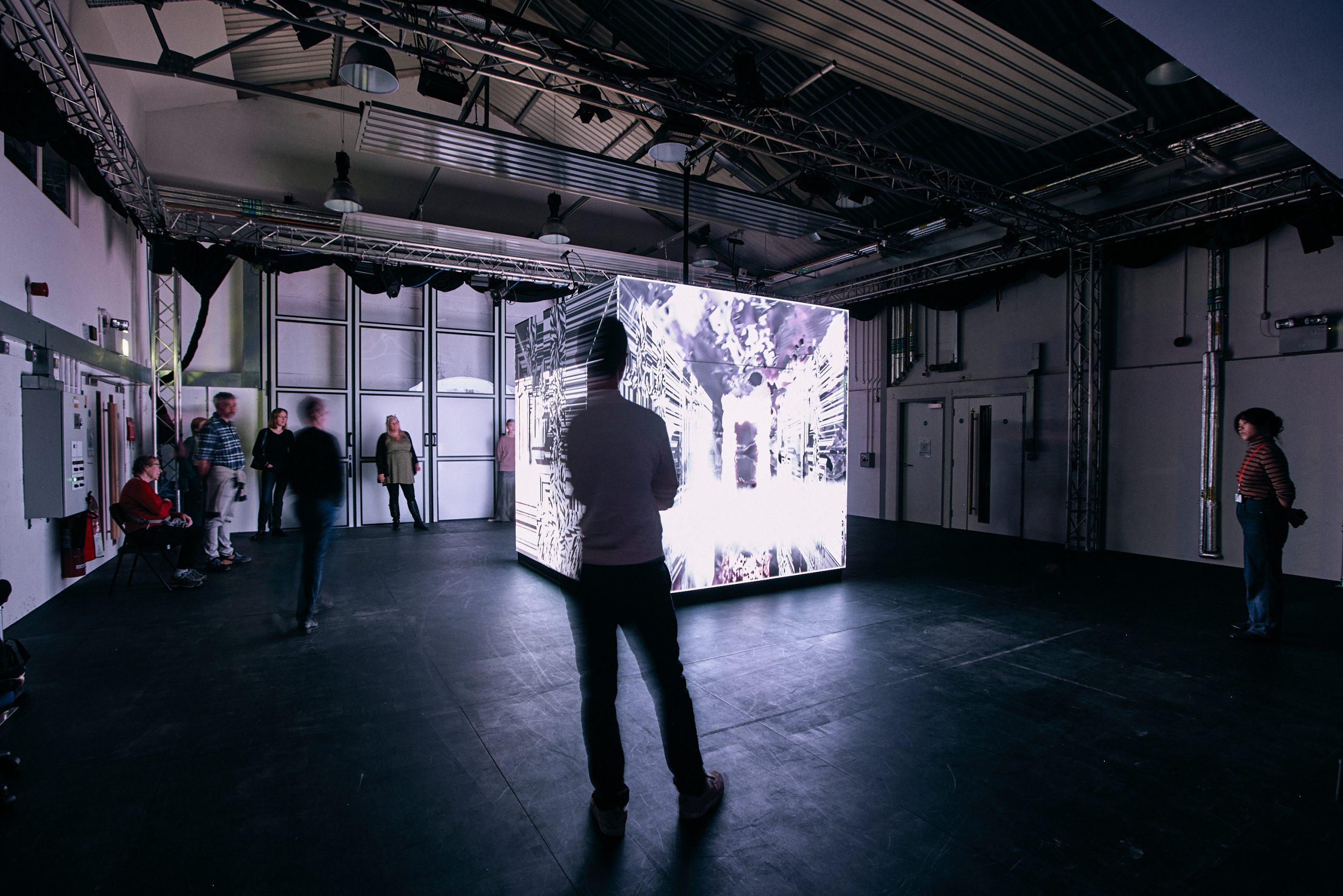
We think of the work as a living score. We compose the conditions, the motion capture systems, the real-time AI, the XR environment but we cannot fully predict the choreography that will emerge from them. Every audience rewrites Lilith slightly. Every interaction shifts her trajectory. In that sense, authorship in LILITH.AEON is genuinely shared between us, between the technology, and between the people who enter the space.
It is the part we find most alive. The machine is not a tool here, it is a collaborator with its own logic, its own memory, its own way of responding to human presence. What we have tried to do is design a system that is responsive rather than reactive one that makes the audience feel that they are truly being seen, not simply being processed.
In the studio, what changed everything was the moment LILITH’s AI came alive because at that point, a new collaborator entered the room. Our prompts was making her generating poems, far from been perfect but inspiring, that it began inspiring the writing of the treatment for the work, which in turn led us to create a vast body of choreography inspired by it. Then, that choreography was then performed by us for motion captured purpose and became the sole dataset on which LILITH’s AI was trained on.
What LILITH AI then generated was treated exactly as we would treat material created by a ‘real’ dancer in the studio. We went through it together, LILITH and us choosing which moments felt most alive. Which sections of her improvisation belonged at what point in the work. It was a genuine creative negotiation, not a curation of outputs.
What emerged from that process is this: LILITH now has a clear choreographic direction for the whole the performance, she knows what task is asked of her at each moment of the performance. But none of us, not us, not the system, not LILITH herself, knows exactly what movements will emerge during the live performance. Every performance is, in that sense, unique. The work is never finished. It is only ever happening.
5. The project engages with transhumanist ideas, including the extension and transformation of life beyond biological limits. What kinds of questions or tensions does LILITH.AEON raise for you around mortality, identity, and the ethics of imagining post- human futures?
The honest answer is that the work does not resolve these tensions, it inhabits them. We are not transhumanists. We are not critics of transhumanism. We are two artists standing at the edge of a question that feels urgent and unanswerable in equal measure.
What troubles us is not the technology itself but the assumptions quietly buried inside it that continuity is the same as life, that data is the same as memory, that preserving the body is the same as preserving the self. Lilith asks us to sit with those distinctions without rushing toward comfort. She is a digital reincarnation, yes but she is also an elegy. And we believe both things can be true at once.
What it means to be human is not a fixed answer. It is a question each generation must ask again. LILITH.AEON is our way of asking it now, in this moment, with the tools this moment has given us.
Here is a famous quote from Harold Pinter once said regarding truth and reality and would like the audience to read: “There are no hard distinctions between what is real and what is unreal, nor between what is true and what is false. A thing is not necessarily either true or false; it can be both true and false”
So now let me ask you: What do we do about it? Do we stand still and just take it in, or do we dare to take a step, in any direction, even if only it is a glimmer of an answer? We chose one of those and I let you guess which one.
6. At a time when artificial intelligence and digital technologies are rapidly reshaping everyday life, LILITH.AEON engages directly with these shifts. What kinds of reflections or conversations do you hope the work sparks within this broader social context?
We hope people leave the work slightly less certain than when they arrived and find that uncertainty generative rather than frightening. We live in a moment when AI is being spoken about everywhere, often in extremes: as salvation or as threat, as the end of creativity or its ultimate expression. We are not interested in those poles.
What interests us is the middle ground the deeply human feeling of not knowing. Of being moved by something you cannot fully explain. Of recognising yourself in something that is not, technically, alive.
If LILITH.AEON does its work, audiences will walk out having danced without ever realising they were dancing. And they will carry a question with them that they did not have before. That, for us, is enough. That is everything.
To complete the interview, the artists requested to include the following statement:
One thing we feel is important to share is the context in which LILITH.AEON came to life. The post-COVID cultural funding landscape has been brutal, especially for emerging and mid-career artists like us. We are deeply grateful to those who believed in our vision.
We were also fortunate that some of the major tech companies like NVIDIA, SCAN Computers, Creative Technology, Stereolabs, Framestore, Visual Elements and educational institutions like the University of Kent and Coventry University recognised the potential in what we were building, and without them, none of this would have been possible. But compromises had to be made along the way, and that is something that weighs on us more than it will ever be visible to the audience. We hope the audience will feel the effort that went into every detail, even and especially in the places where we had to find creative solutions rather than ideal ones.
What we can say with certainty is that some people believed in us without hesitation. Grzegorz Reske, Artistic Director of Spring Performing Arts Festival, was one of them, he said yes without a moment of hesitation, and for that, we will always be grateful. We are equally grateful to the Asia–Europe Foundation (ASEF) for recognising and supporting this work, and for welcoming it as part of its Asia–Europe Cultural Festival Programme 2026.
Aoi Nakamura is an accomplished performer and choreographer, with a career dancing in state theatres in Germany, the Jasmin Vardimon Company, and Punchdrunk since 2006. Her award-winning work Ototoxic (2008) won first prize at the International Choreography Competition in Aarhus and was performed in Germany and Japan. In 2016, she co-founded AΦE with Esteban Lecoq, pioneering XR technologies in dance.
Esteban Lecoq has worked with the Johannes Wieland Dance Company (Kassel, Germany), the Jasmin Vardimon Company, Punchdrunk, and numerous other artists and choreographers in dance, film, and immersive productions. He began choreographing alongside his performing career in 2008. In 2016, he co-founded AΦE with Aoi Nakamura, pioneering XR technologies in dance.
AΦE (AE) is a dance company founded by Aoi Nakamura and Esteban Lecoq. Their uniqueness lies in using technology to completely reinvent audience participation, touring their productions worldwide. AΦE is an associate artist of the Institute of Cultural and Creative Industries – University of Kent (iCCi), and in 2022 they launched A+E Lab, a cultural and technology hub located at the Historic Dockyard Chatham, UK, producing innovative work and delivering community and artist engagement programmes related to technology and culture. Across all their work, they have engaged over 101,000 live audience members and participants internationally.
Cover photo: LILITH.AEON © AΦE | credits: Shane Obenson
Get your tickets for LILITH.AEON here and the performance-lecture LILITH.AI here.
Discover the full AECFest programme.
SHARE THIS ARTICLE