WE SPEAK WITH DAMIANO OTTAVIO BIGI AND ALESSANDRA PAOLETTI, CO-FOUNDERS OF BIGI PAOLETTI FRITZ COMPANY, ON THEIR APPROACH TO COLLABORATION AND THEIR LATEST WORK, TO BE PRESENTED IN SHANGHAI AT AECFEST 2025.
1. Please introduce yourselves and share a bit about how Fritz Company first started.
Our collaboration began in Istanbul in 2013 with the project Yuvaya Dönmek, Babam için – Back Home, to my Father, created for the Istanbul Municipal Theatre. From that first encounter, a shared journey took shape, which over the years has led us to develop both pedagogical and artistic work, weaving together experiences with artists from diverse cultural backgrounds. In 2020, during the pandemic-induced pause, we took the time to reflect on the meaning of our artistic practice. It was at that moment that we decided to give our project a more defined structure by founding the Bigi Paoletti FRITZ Company.
2. Your latest work That’s All Folks!, to be presented in Shanghai as part of the Asia-Europe Festival Cultural Festival 2025, is both transdisciplinary and cross-cultural, putting together theatre, dance and performers from various corners of the globe. Could you share more about the process of developing this piece and how these various dimensions contributed to what you’ll be presenting in September?
That’s All Folks! was conceived as an ideal continuation of our previous work, Un Discreto Protagonista, and represents the second chapter of a trilogy that brings dance, science, and myth into dialogue. While Un Discreto Protagonista focused on the origins of the universe — on the physical and astronomical processes that gave rise to it and were later translated into myth — this new creation shifts the attention to the arrival of humankind in the history of the cosmos, or more precisely, to the relationship between humans and the universe.
For this research, we brought together artists with diverse backgrounds, coming from distant worlds and cultures, to nurture a creative process that could explore multiple perspectives. The intention was to shape a shared space, a common ground where different “stories” could resonate together and generate new visions.
We sought a stage language that would emerge from a living relationship with the themes we were exploring, allowing both individual and collective imaginaries to come to the surface. Following an initial phase of theoretical and dramaturgical research, we began building an open structure — one that, enriched by the various contributions of dance, music, light, sound, and scenography, gradually took shape over time.
3. Along your careers, you’ve had many notable collaborators and supporters such as Pina Bausch Zentrum and Dimitris Papaioannou, among many others. How have these partnerships shaped your artistic approach and the role that collaboration plays in your creative process?
We believe that encountering the places where the creative process takes shape significantly influences both the work itself and the experience of the entire team. In saying this, we also affirm that our choices regarding where to work and rehearse are deeply connected to the nature of the research we are undertaking. These residencies are also the outcome of a long journey developed over time — in Wuppertal with Pina Bausch, in France, Italy, or with Dimitris Papaioannou. It is inevitable that these experiences, now deeply internalised, shape our approach to creation.
Some encounters, for instance, with Dimitris and Pina in Damiano’s career, and the one with José Sanchis Sinisterra for Alessandra, have been among the most meaningful. It isn’t easy to describe precisely how these figures have influenced us, and often we discover it only during the creative process, when we recognise what remains in us of their example.
We believe that what matters most is to stay sincere in the research — not to deny our influences, but to leave ample space for the unconscious to guide the imagination, sensations, and studies, and to allow ideas to find their own path.
4. The title of the work evokes a sense of spectacle and/or nostalgia. Could you please share more about the story behind this title and how it relates to the work?
At the beginning of our creative process, we gather suggestions, themes, and images from a broad range of sources. In this initial phase, we use a working title that functions as a poetic nucleus: a catalyst that, rather than providing answers, is meant to open questions and spark the imaginative process. It is an initial intuition that, over time, becomes clearer and more concrete, while still preserving a certain fertile ambiguity. Sometimes, this provisional title ends up becoming the final title of the performance, and that is what happened with That’s All Folks!. What interests us is that it remains an open question for the audience, capable of evoking different imaginaries rather than offering a definitive answer or a single interpretation.
That’s All Folks! is a slogan many immediately recognise as the closing line of Looney Tunes episodes. An expression that evokes a playful, popular imaginary, tied to childhood and the world of cartoons, but which also carries a deeper resonance. It’s a farewell, a parting phrase, and at the same time a threshold: it marks the end of something while opening the possibility of a new beginning. In this sense, it points to that transitional zone, that fluid boundary between what has been and what is about to emerge, where we have chosen to place this creation.
That’s All Folks! is, for us, more than just a quote. Beyond suggesting an episodic structure in which reality is constantly reshaped, it is the place from which we observe the world we bring to the stage; a space where lightness and unease coexist, where popular culture intersects with symbolic layers, memory, and possibility. And it is precisely within this liminal space that our scenic journey unfolds, traversing diverse and syncretic worlds.
5. A key theme of That’s All Folks! is the journey into the unknown, an increasingly relevant topic in today’s world. Can you tell us more about how the artistic process enabled you to explore this theme and others ideas the audience will encounter during the show?
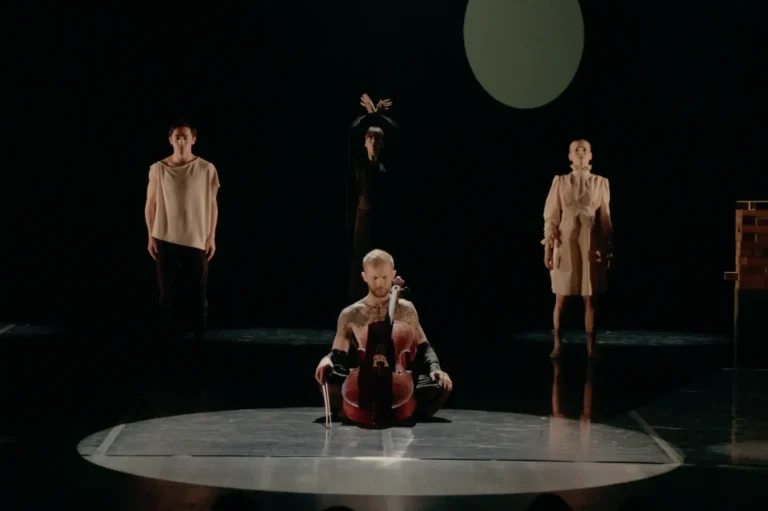
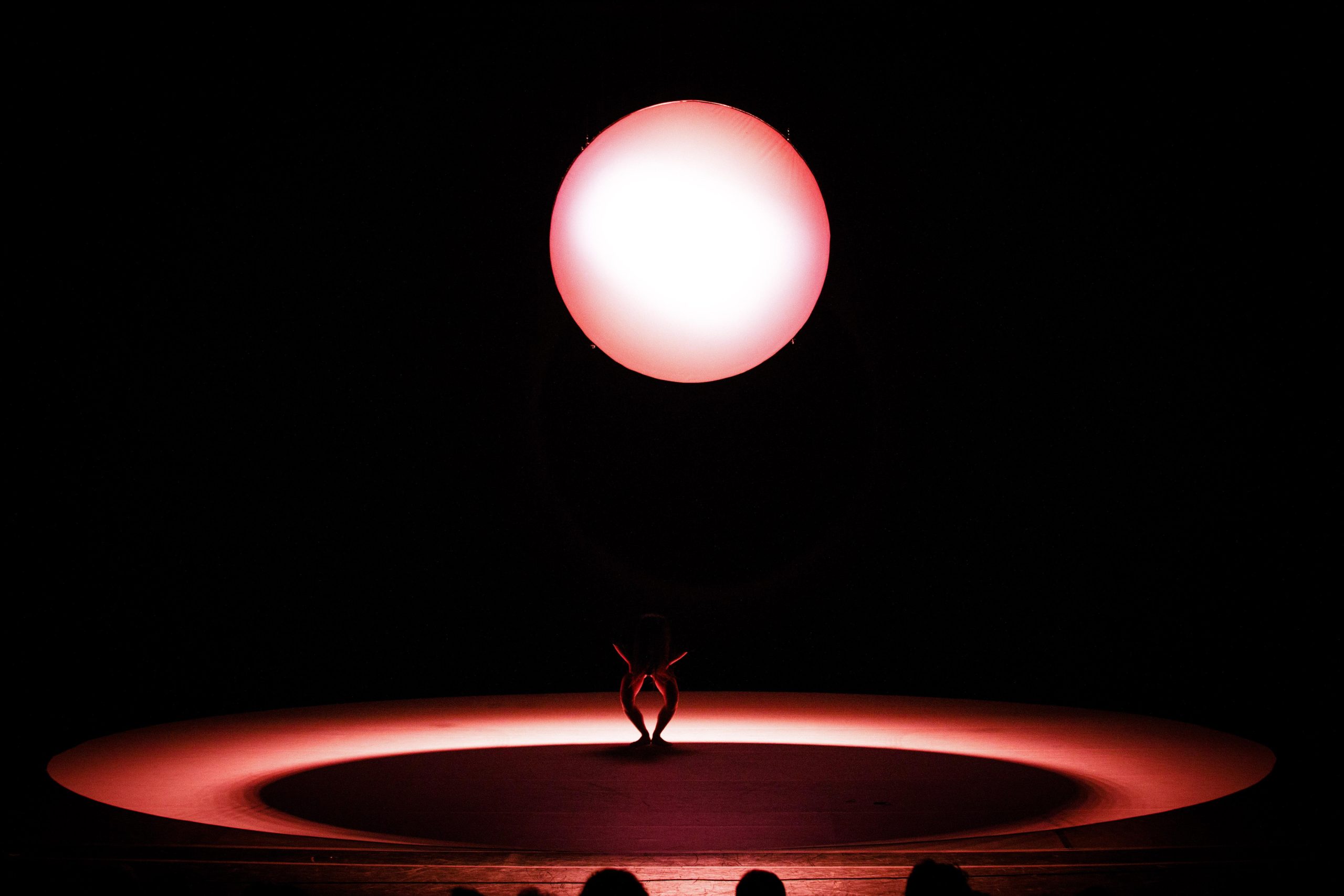
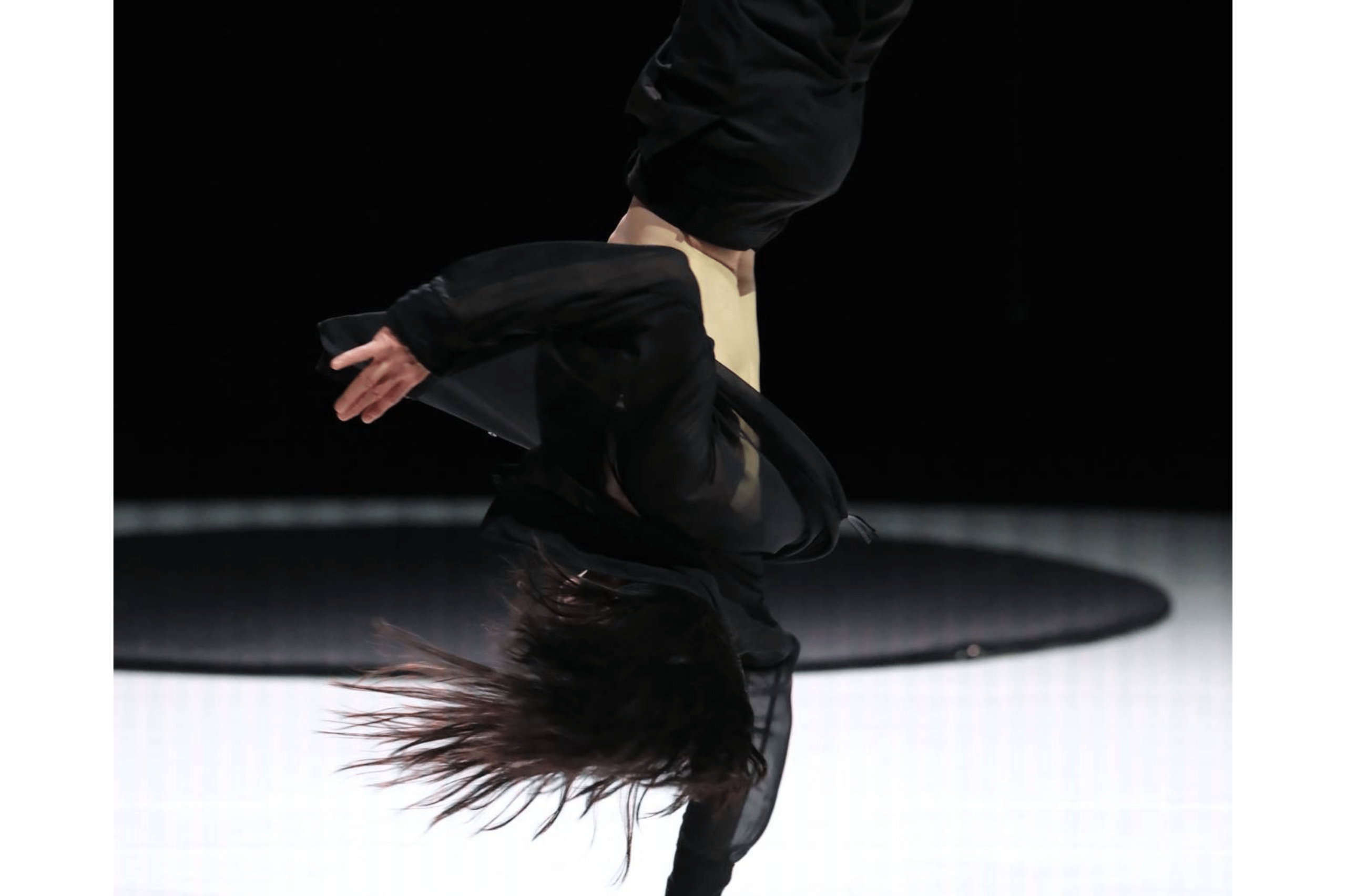
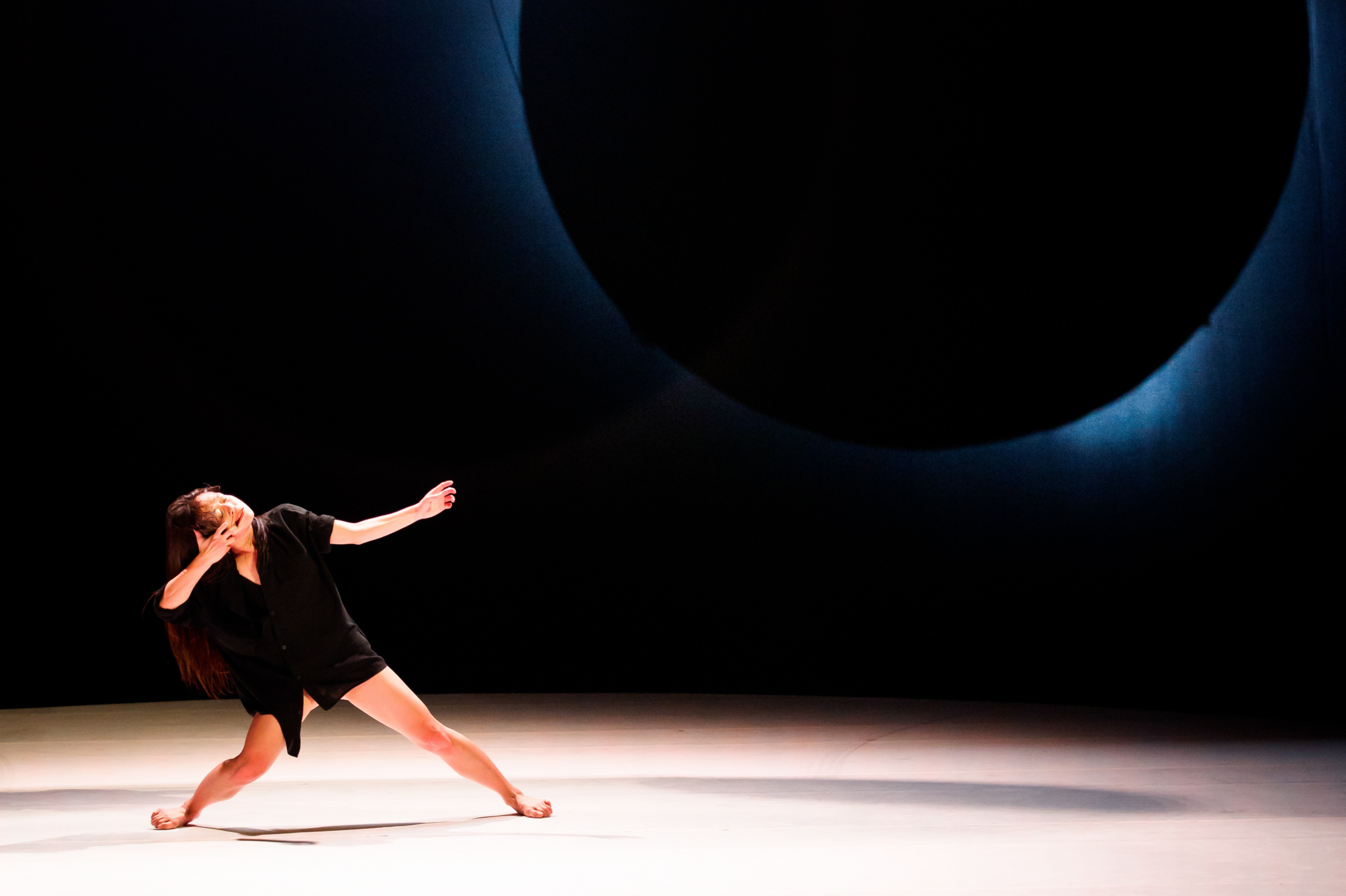
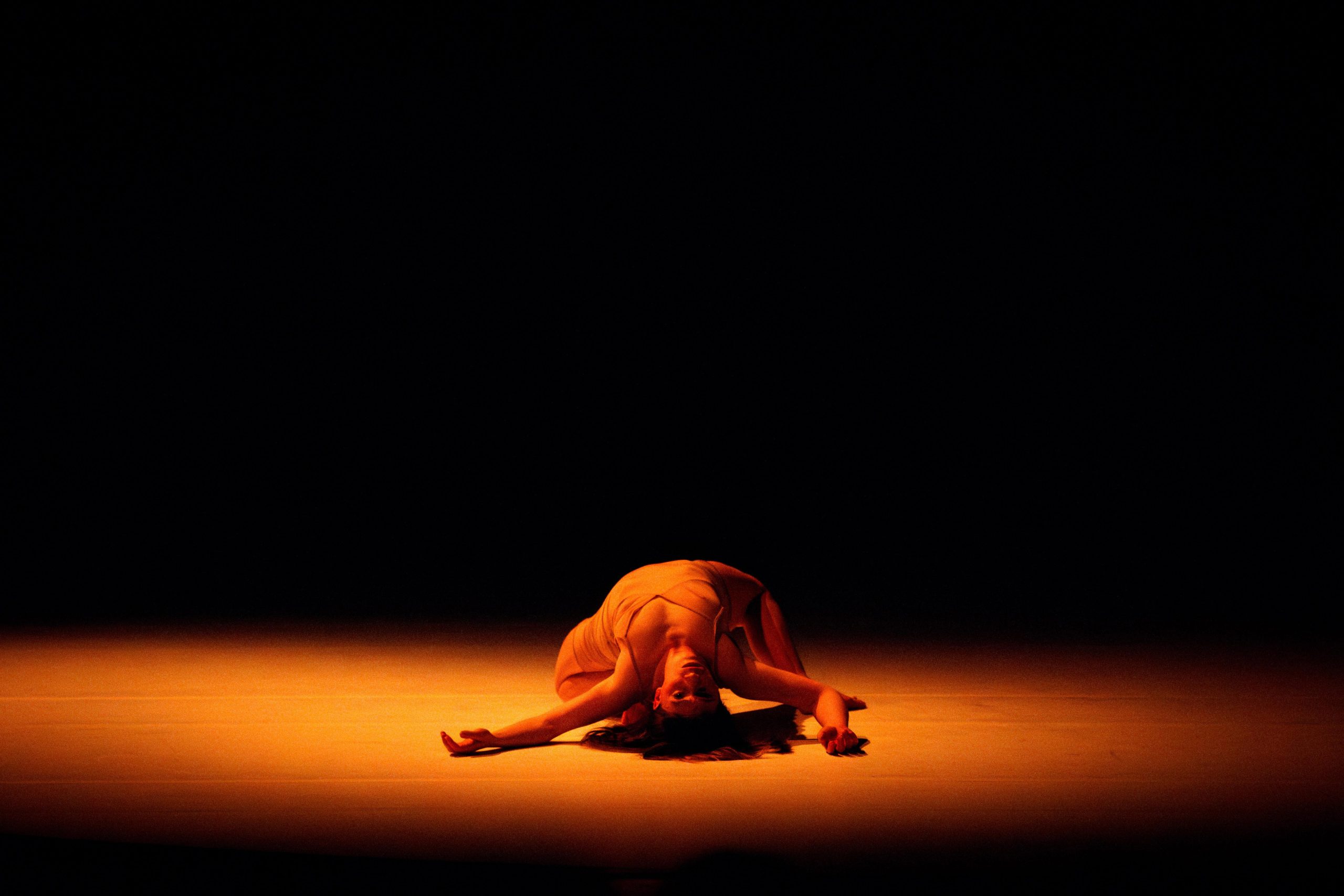
Four characters move within a suspended, undefined space. There is no precise place, no recognisable time: we find ourselves in a transitional zone, a fragile, elusive threshold. A space where what we know begins to dissolve, allowing uncertainty and the vertigo of emptiness to emerge. The bodies cross this threshold in a state of flow. They slowly slide toward a deeper dimension that brings them face to face with the unknown. In this movement, personal memories resurface, but also collective ones.
One of the performers invites the audience to take this leap together. They do not point to a specific direction, nor do they tell a closed, linear story. Deliberately, empty spaces are left, so that each person may fill them by projecting something of themselves.
An image that has accompanied us throughout this process is that of the black hole. In some way, we associate it with the unconscious. It is the outermost boundary of what cannot be seen or known, but perhaps only sensed or intuited. It is in this zone that our journey begins.
The bodies on stage respond to this condition through movements inspired by ritualistic, archetypal forms. Gestures that evoke something ancient, as if emerging from a deep memory already inscribed in the body, where individual experience intertwines with the collective one.
Damiano Ottavio Bigi is a choreographer, dancer, and performer born in Rome, Italy. Throughout his career, his encounters have led him to explore diverse creative experiences and visions, enriching his world and inspiring him as both a choreographer and pedagogue. In 2016, he was awarded the “Premio Capri Danza International,” and in 2020, the “Premio Sfera d’Oro per la Danza.”
Alessandra Paoletti is an actress, director, and choreographer active in dance theatre and contemporary dance, working across various languages and artistic visions. She has performed as an actress with several companies and directed numerous international projects. Notable collaborations in her career include work with A. Knapp, J.A. Stanzak, J. Muller/Fura dels Baus, J. Sanchis Sinisterra, R. Garcia, and L. De Bei. With L. De Bei, she won the “Le Maschere del Teatro Prize and the “Golden Graal Award.”
Cover image: group photo of That’s All Folks! @ph Paolo Porto
Get your tickets for That’s All Folks! at the Asia-Europe Cultural Festival 2025 here (EN) or by scanning the QR code below with your WeChat app (CN):

Discover the rest of AECFest 2025 programme.
SHARE THIS ARTICLE