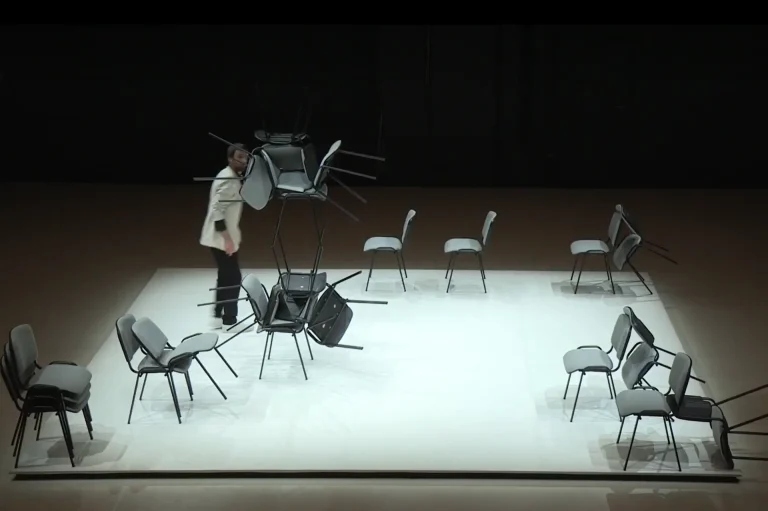
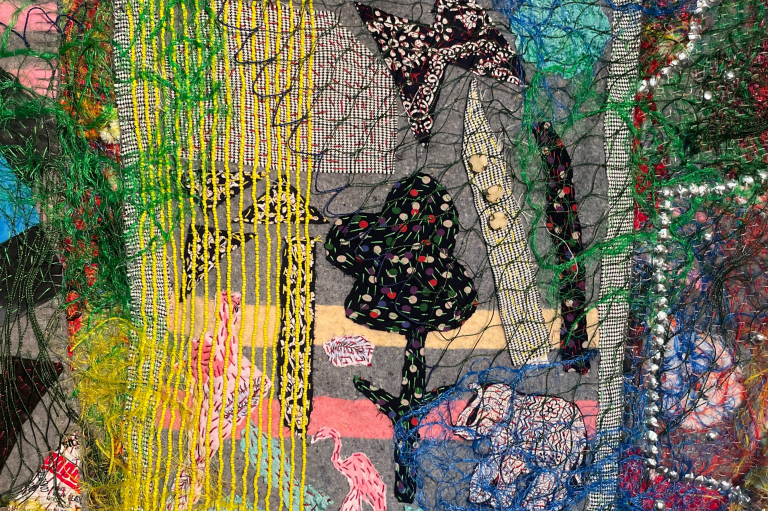
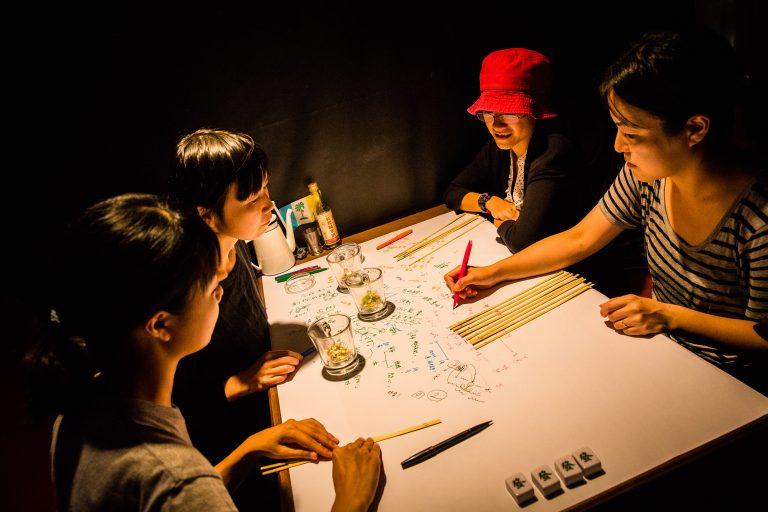
WE SPEAK WITH EMINENT THEATRE DIRECTOR, TIAN GEBING, ABOUT HIS TIME AND DISCIPLINE-BENDING WORK, THE FOE OF AN ARROW WOUND, PRESENTED THIS SEPTEMBER AT THE ASIA-EUROPE CULTURAL FESTIVAL 2025 IN SHANGHAI, CHINA.
1.You founded Paper Tiger Theatre Studio in 1997, bursting onto the Chinese theatre scene with your contemporary and multi-disciplinary approach. Can you share a bit about the journey of Paper Tiger Theatre Studio and why you chose to create this collective?
In the late 1990s, China was at the starting point of over two decades of rapid economic growth. Everyone, without exception, was swept up in the tide of the times. Amid this, a group of young people who refused to be carried away by the current gathered together, attempting to resist the flow under the banner of theater, and thus Paper Tiger was born. The term “Paper Tiger” originally refers to something that appears formidable but is actually weak. Claiming this politically charged term also meant directing the act of exposing and dismantling inward, toward themselves.
Thus, Paper Tiger’s establishment was not about making a mark in the theater world. On the contrary, it disdained aligning with the theater industry. Over the past 20 years, Paper Tiger has turned its back on theater, faced reality, and ventured further afield. It has always been about resistance, adventure, freedom, revelation, and imagination—always standing in opposition to authoritarian systems and established structures.
If it turns its back on theater, why still operate under the name of theater? Purely by chance. Paper Tiger began as a prank, disrupting the decadence of theater and then slipping away. Unexpectedly, once the disruption started, there was no escaping it. This led to a double accident—both in life and in theater—for those who had no initial intention of engaging with theater. This is also because theater exists in the liminal space between reality and illusion, offering a buffer and a space for mediation. In the bidirectional escape—out of and into theater—a dual tension and compromise emerged. This is the paradoxical logic of Paper Tiger using and abandoning theater.
Paper Tiger’s first work combined physical text, real-world appropriation, and violent satire, forging a new era. The extensive creations over the following decades were a continuous release of heterogeneous moments. This heterogeneity and its associated rejection reactions hold cultural, existential, and aesthetic significance. After Paper Tiger relocated to Germany, this heterogeneity became even more striking in the context of international theater.
In 2010, Paper Tiger established a space in Beijing, which, for about five or six years, operated as an autonomous theater, engaging in interdisciplinary practices that were seen as reshaping Beijing’s theatrical landscape of that era. Around the same time, Paper Tiger shifted toward intercultural creation, blending different cultural contexts. Like hackers, they parachuted into diverse cultural systems and alien communities, prophetically addressing shared global issues and crises, creating numerous historic collaborative cases.
In 2019, Paper Tiger’s core operations moved to Berlin. Over the nearly six years since, Paper Tiger has continued collaborating with German city theaters, major museums, and foundation systems, constantly reinventing its form. It moved away from the “intercultural” phase and began practicing the concept of a theater “between worlds.”
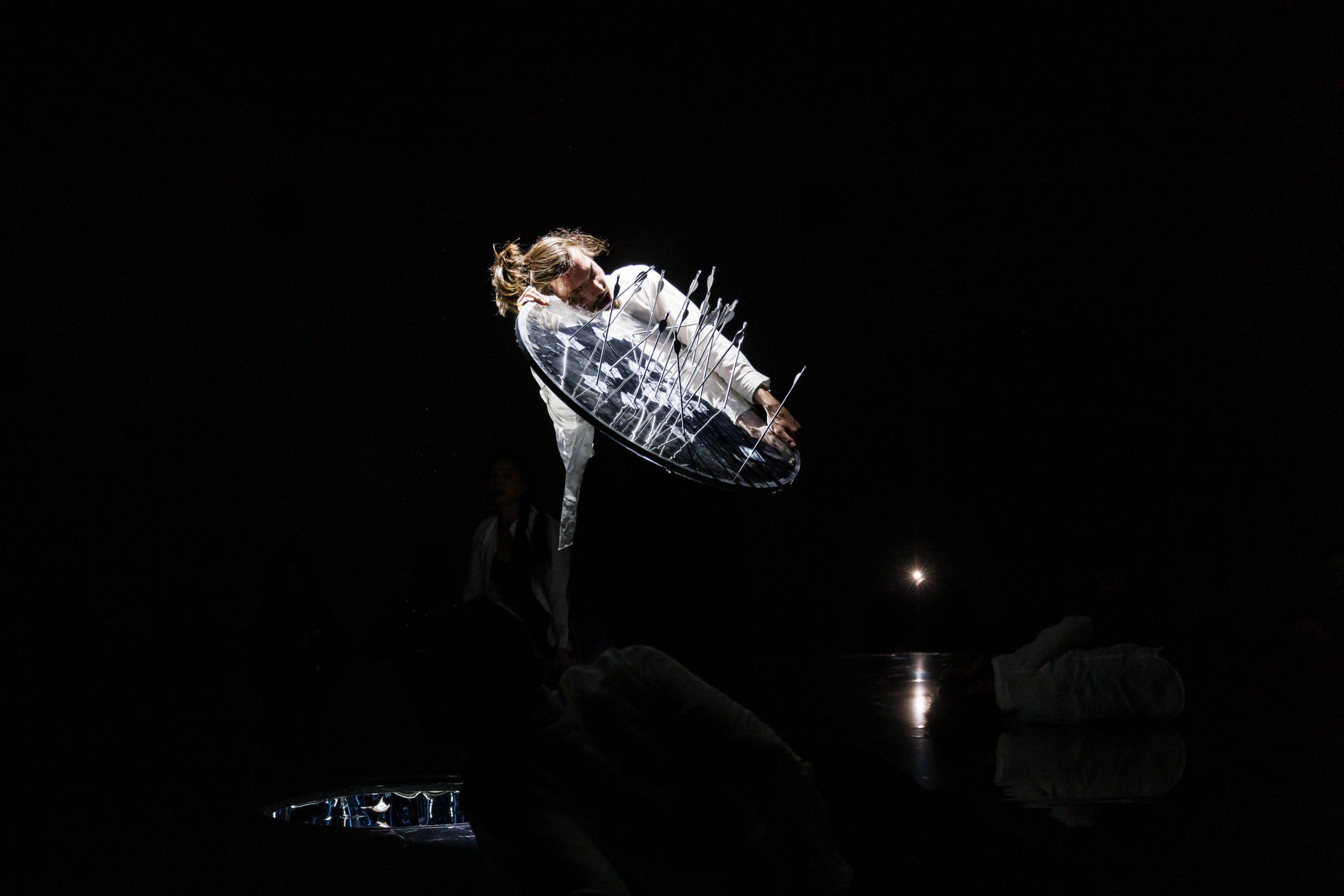
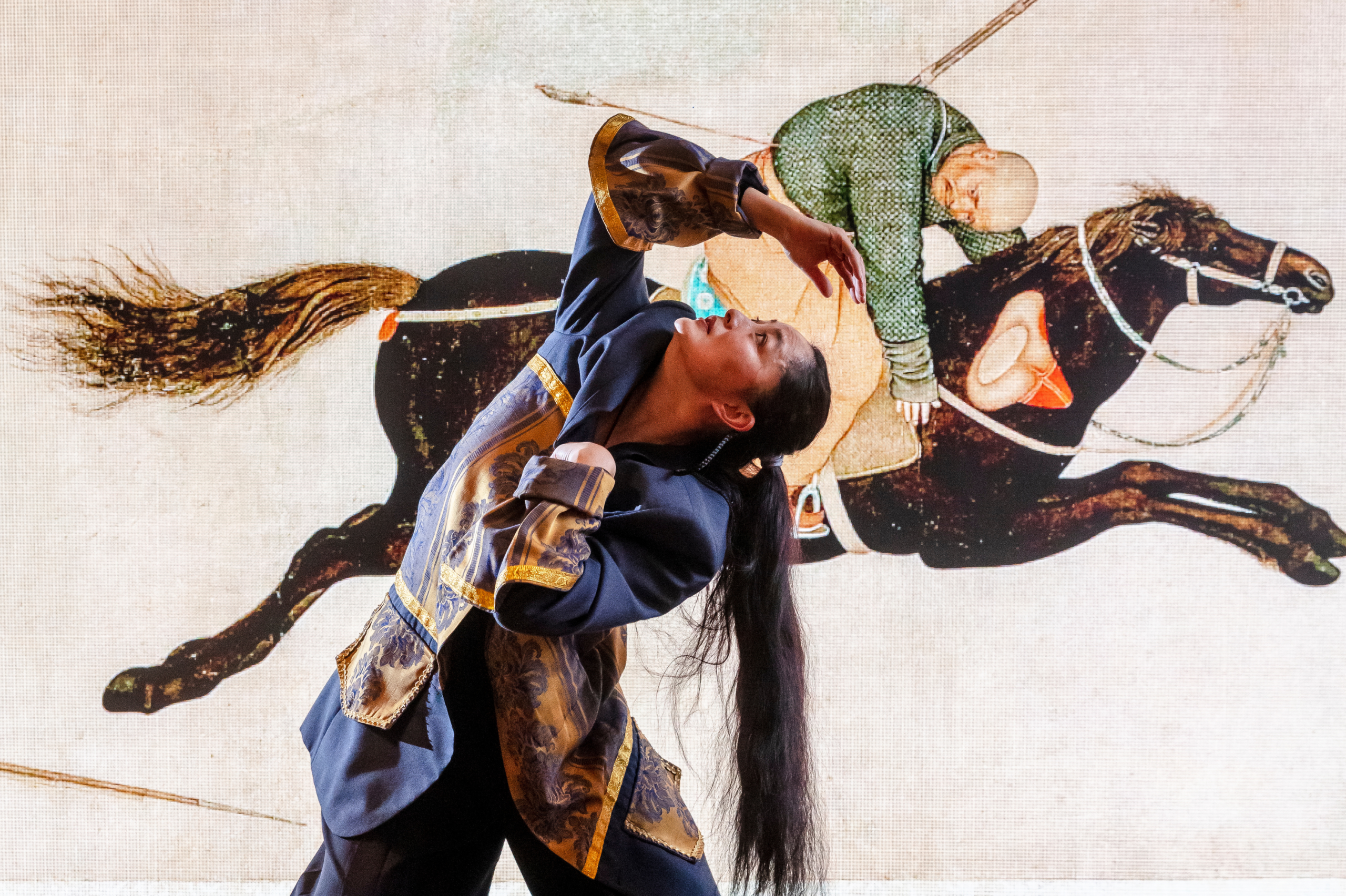
2.The piece The Foe of an Arrow Wound was originally commissioned by the Humboldt Forum in Berlin and inspired by a painting now housed in the Museum of Asian Art. Could you share what the initial stages of this collaboration were like, and how this static work of art sparked a creation driven by movement and music?
In 2018, by a twist of fate, Paper Tiger embarked on a project centred on the concept of “revolution,” a plan vast and boundless. At this boundless moment, the Humboldt Forum reached out. The Humboldt Forum is Germany’s largest cultural project in the past decade, rooted in colonial history and vast collections, integrating five major museums. Built on the ruins of a former imperial palace and People’s Palace, it was named after the geographer and botanist Alexander von Humboldt—a different kind of vastness. Their vastness could accommodate ours, and so we hit it off immediately.
After moving to Berlin in 2019, the collaboration began. This partnership grounded our multifaceted concept of “revolution” in the historical folds of modern East-West encounters.
I started sifting through the ethnographic and Asian museum collections provided by the Humboldt Forum. Among the vast array of artifacts, I was inexplicably drawn to a painting by Giuseppe Castiglione (Lang Shining) created for Qianlong’s imperial wars—a scene of a chase on horseback. I saw these “intercultural” paintings, blending Western techniques with Chinese aesthetics, as China’s earliest political propaganda art.
From there, our theater project on revolution began with a study of this painting’s history. Immediately, the gates of modern East-West historical encounters were flung open.
The painting freezes a shooting scene into a suspended moment, with an arrow in mid-air falling into the depths of history and real-world politics. In this sense, I saw in it a wealth of movement.
3.The show which will be presented at Asia-Europe Cultural Festival 2025 in Shanghai, is described as a form of ‘theatre research’. Centred on images of East–West interactions, it reflects on themes of history, revolution, and colonialism. How do you see the relationship between East and West emerging through this work?
Unlike the colonial narratives of Europe toward Africa and the Americas since the Age of Exploration, the Qing Empire, seen by Europeans 400 years ago, was a superpower of its time. The earliest Westerners to enter Qing territory were mostly missionaries and a few traders. Giuseppe Castiglione, unable to proselytize, became a painter-slave for the Qianlong Emperor. His “survival” through painting techniques and craftsmanship, being “accommodated” by the empire, epitomizes the West’s attempt to pry open the East. The subsequent centuries of uninterrupted trade, missionary work, wars, territorial concessions, occupations, and plundering were driven by “technology,” especially after the Western Industrial Revolution, which gradually led to the collapse of the Eastern empire. This forms the core of modern Chinese history. Our concept of “revolution” is wrapped in these historical textures.
But did the West truly colonize the Eastern superpower? Not quite. The forces that fundamentally shaped Chinese history always came from the North. Similarly, Europe has its own unresolved “Northern problem.” Thus, modern history and contemporary geopolitics reflect each other like a mirror.
Therefore, our work is not only about history but also about the present.
While studying the Humboldt Forum’s collections, we developed the concept of “object hijacking.” The plundered objects, as historical ghosts, in turn hijack their plunderers. The endless debates in European museums are the voices of those objects’ ghosts holding sway. In this sense, it can be described as the “decolonization of objects.”
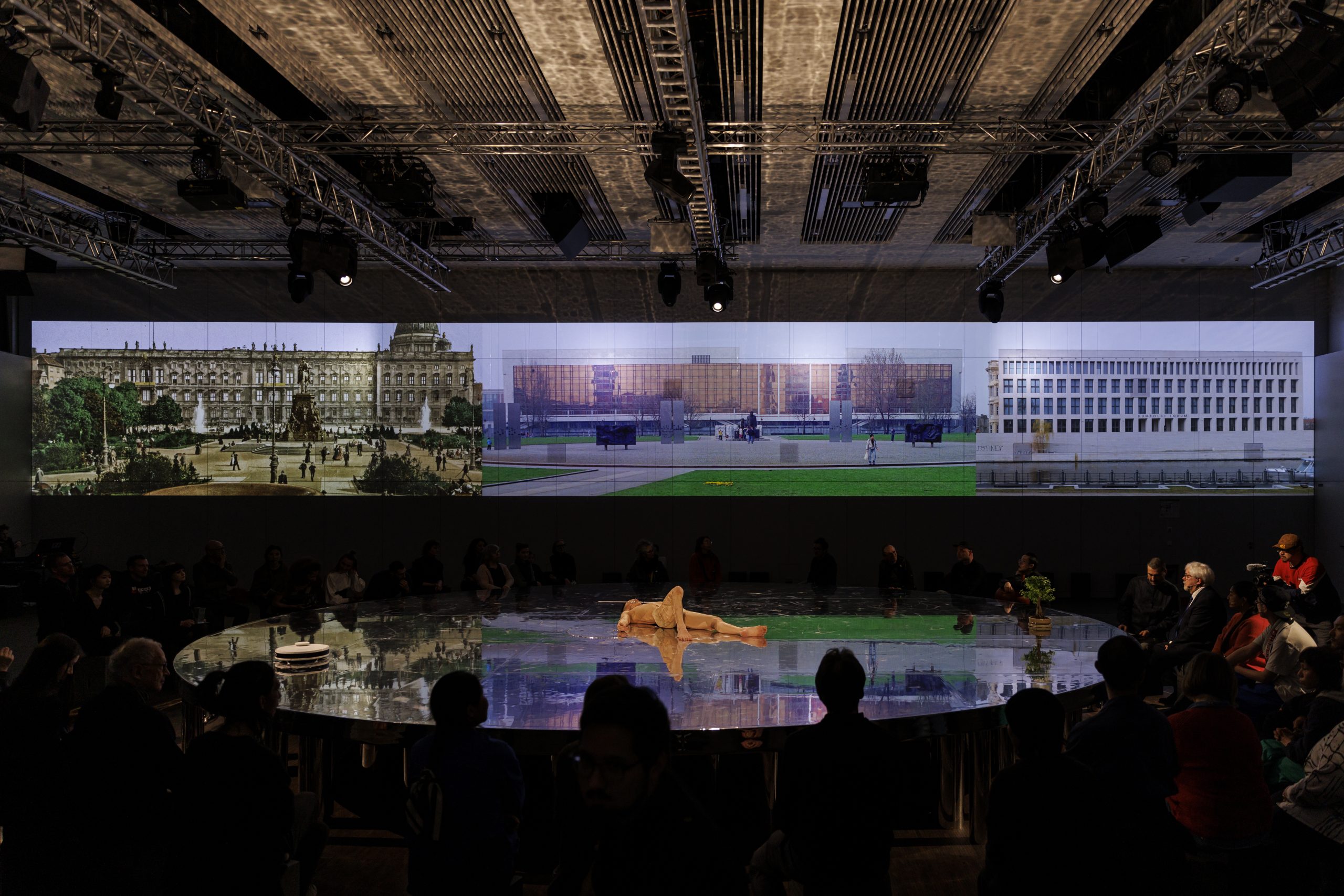
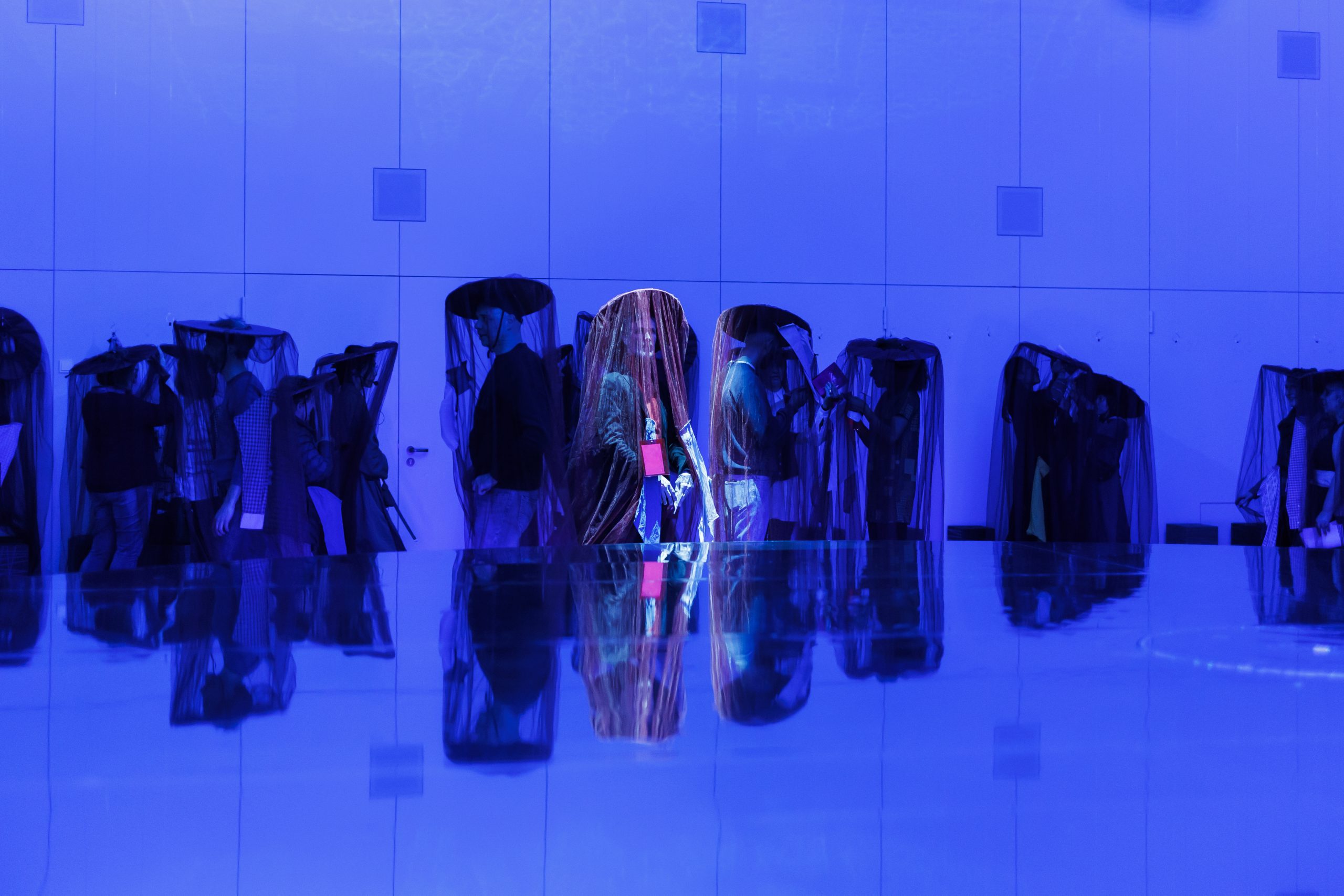
4.Rather than simply watching the performance, audiences become part of it – given costumes and seating around a disc-shaped stage. How does this curated audience experience impacts how they perceive the work and its messages?
The current performance space is designed based on the Humboldt Forum’s venue. It’s a typical museum white-box space, used for exhibitions and meetings. Following the space’s characteristics, we developed the current large table (or large disk) plan. Our research materials are filled with images of negotiations, treaty signings, and unequal treaties around large tables—square or round. These tables are the ultimate stage for all sinful wars, dirty deals, and international relations.
For our work, when a table of this size occupies the center of the space, the entire space becomes a stage, with the audience included.
Within the structure discussed above, the performance process presents a constantly shifting space, with the audience naturally moving along with it. Throughout the performance, the audience will physically move, shift positions, and adjust postures. I don’t know if this will help the audience understand the work, but movement will certainly excite them and maintain their active agency, rather than leaving them in a passive, voyeuristic state.
5. Past and present collide in many dimensions in The Foe Of An Arrow Wound – from the painting that inspired the piece, to the video art, the narrative arc of Chinese imperial wars, and even the presence of a skateboarder. How did you weave these elements together to connect past and present, and create a broader tapestry that conveys the performance’s central themes?
Indeed, once research begins, even starting from a single specific painting, it can spiral into an encyclopedic volume. Faced with myriad threads and materials, how do we return to theater? By simplifying complexity. This work incorporates two structures. The spatial structure moves from palace to black market to museum, corresponding to the timeline from the Qianlong era to the Eight-Nation Alliance wars to today. Conversely, the Humboldt Forum, as a museum, was formerly the People’s Palace of East Germany and the Prussian imperial palace. The painting by Castiglione traveled from a Chinese palace to a former German palace and now a museum, with the historical context and energy of the spaces and architecture themselves participating in the work.
The formal structure is simplified into a ball, a monologue, a list, and a meeting.
Only through “simplification” can richness be achieved, creating a multitude of expansive scenes.
Tian Gebing, born in Xi’an in 1963, is a theater director and an outstanding personality in China’s independent theater scene, since the 1990s. He was involved in numerous independent experimental projects in the nineties before founding the Paper Tiger Theater Studio in 1997, a platform in which performance artists, dancers, literary figures, musicians, visual artists, as well as people from all kinds of other social backgrounds work together. The central starting point of the theater work is the immediate reality of Chinese society and the search for new forms of expression for a contemporary theater in China.
Cover photo: The Foe of An Arrow Wound © Humboldt Forum, Berlin / ph Chén Xīn
Get your tickets for The Foe of An Arrow Wound at the Asia-Europe Cultural Festival 2025 here (EN) or by scanning the QR code below with your WeChat app (CN):
Discover the full AECFest programme.
SHARE THIS ARTICLE