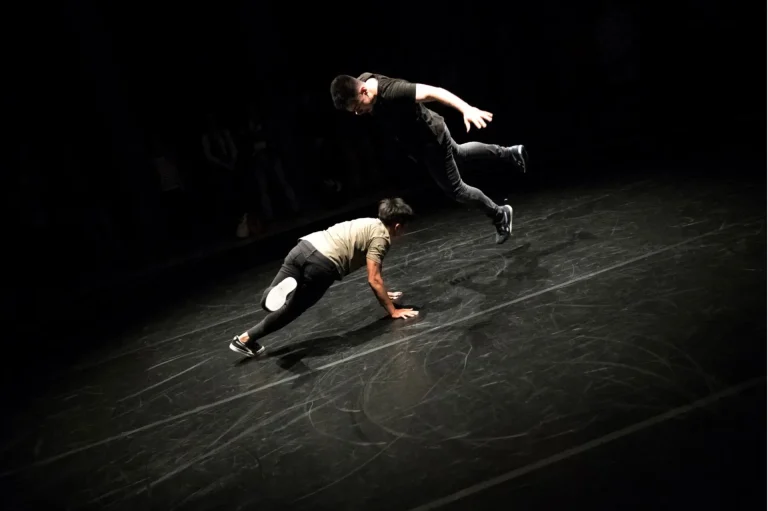
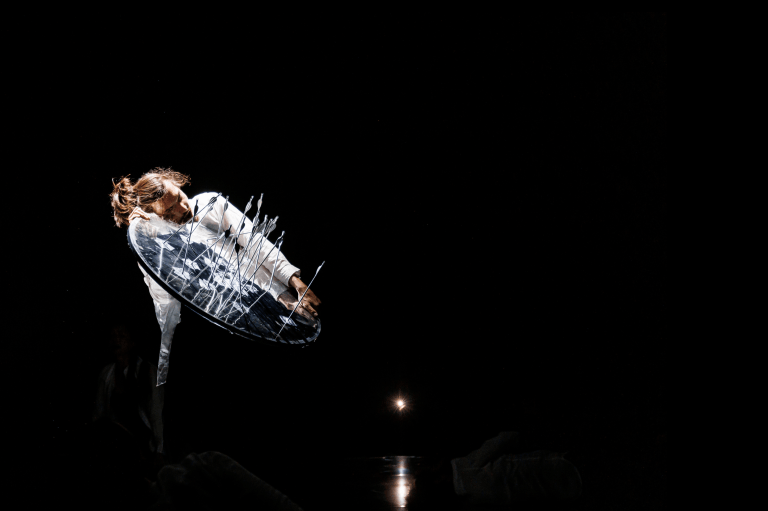
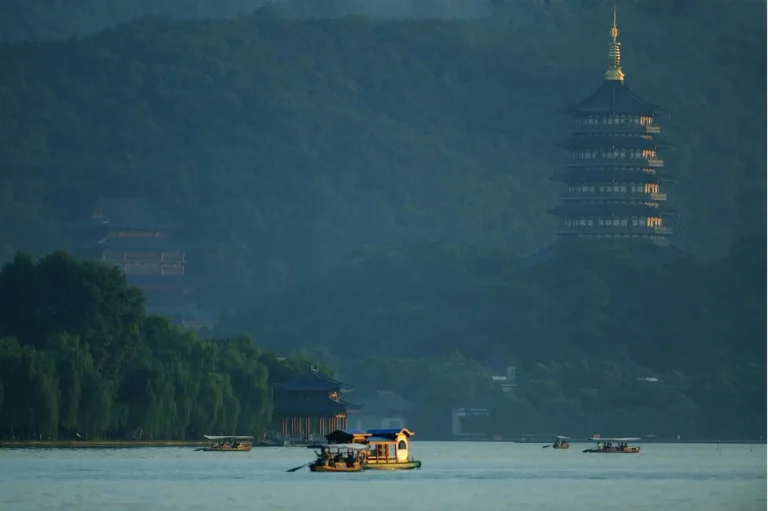
WE SPEAK WITH EMERGING CURATOR, FOO WEE SAN, ABOUT BETWEEN LANDS, AN EXHIBITION GATHERING WORKS ON MIGRATION AND DISPLACEMENT, PRESENTED IN SINGAPORE AT THE ASIA-EUROPE CULTURAL FESTIVAL 2025 CLOSING CURTAIN.
1. This exhibition is curated by you and two other emerging curators, Goh Cheng Hao and Phyllis Chan. How did you approach curating as a collective of young curators from Singapore, and what was the collaborative process, between yourselves but also with the artists, like?
As a collective that shares the same love for Southeast Asian contemporary art, it was quite unchallenging to approach curating for Between Lands— that is to say, our curatorial vision for the exhibition did not differ greatly from each other’s. Our ideas were quite aligned right from the conceptualisation of the exhibition, which is to evoke a unified showing of what it means to be a migrant artist in the 21st century—a thematic concern that resonates strongly, in particular, for us Southeast Asians, who now inhabit postcolonial lands and are still finding their place in the world amidst displacement and political upheavals.
The Southeast Asian artists selected for the exhibition are part of the Sub+ Residency programme—past and present. We are deeply humbled by their trust in us and the organising team, as we mark our first official foray into curating Southeast Asian contemporary art. Our collaboration with the artists included emails and studio visits to discuss how to show their works, and even to participate in the ideation of some of the more recent artworks. It has been a gratifying and enriching process working alongside these esteemed artists—an opportunity to go beyond the classroom and put our knowledge and skills into practice.
A lot of support from Dr. Iola Lenzi—our Southeast Asian contemporary art lecturer in NTU—was instrumental in helping us along the curatorial process as well. Her longstanding body of work engaging with Southeast Asian contemporary art, and her relationships with the artists showing at our exhibition, lent us credibility by proxy and research support in making the exhibition happen fruitfully. And of course, the entire ASEF team, The Substation team, and the Goethe-Institut Singapore team which all had a stake in allowing us to curate an exhibition that we hope will strike a chord and provoke critical thinking in today’s sociopolitical climate.
2. Please tell us more about the title of the project – specifically, what did the creative team and artists hope to evoke with the positioning of migration as a process of ‘transformation’?
To be very honest, we went back and forth on quite a few exhibition titles prior to the one we landed on. It was not the easiest undertaking to conceptualise a title that would be able to encompass the range of works and breadth of practices that will be shown in the exhibition, and we really wanted to do the artists and artworks justice by coming up with a title that encapsulates the artists’ impetus for art-making. Additionally, the title primes audiences for the art they will encounter at the exhibition and sets the tone for what they can and should expect, which means that this would not be a straightforward task.
After many late-night Zoom discussions and consultations with members of the organising teams, Between Lands: Migration as Transformation emerged as the chosen title. ‘Between Lands’ highlights the range of works we will be showing, which includes artists from Singapore, Vietnam, Myanmar, and Thailand. The term also acknowledges the migrant artist being in transit—contending with new cultures, histories, political climates, place-making and identity (re)formation—which are key themes that are exemplified in their varied practice. The subtitle highlights the contention of the abovementioned issues, and the resulting art that is inspired by the lived reality of being a migrant. It is crucial for us to acknowledge that migration as a form of transformation does not only indicate a change in geographical location—an act which is sometimes voluntary, but often compelled—but it also indicates growth and reconsideration of one’s own identity and links to nationhood amidst this change. What does it then mean to be Southeast Asian in a foreign land? Though migration brings about instability and oftentimes turmoil, it can also spur creativity, give rise to hybrid identities and the formation of new artistic languages—a multifaceted migrant experience as seen from various regional perspectives in the works of Between Lands: Migration as Transformation.


3. The seven artists featured in the exhibition all come from different backgrounds across Southeast Asia, gathered together to refine their works through the Sub+ Residency 2024/2025 programme that took place in France. Featuring a broad variety of mediums from textiles to video art, how do you think the works of the seven artists speak to each other across different cultural and social contexts?
For the seven artists featured in the exhibition, despite having come from varied cultural backgrounds, art-making becomes the shared language through which they interrogate what it means to be a migrant—engaging with the issues of cultural displacement, the effects of national policy, geopolitical turmoil, and even climate disruption.
For instance, Thai artist Jakkai Siributr’s participatory needlework engages with notions of trauma and statelessness, which resonate strongly with the practices of Yadanar Win, Nge Lay and Aung Ko—Myanmar artists—whose works similarly draw from their statelessness and the accompanying effects brought about by migration. Vietnamese artist Bui Cong Khanh presents a film work illuminating the plight of Vietnamese labourers displaced to France during the colonial era, a narrative which complements the work of Singaporean artist Justin Loke, who effectively explores the pseudo-scientific practice of physiognomic classification as a means of othering; of being a foreigner in a foreign land and its associated implication of renewed identity-making. Singaporean artist Jason Lim rounds up the discourse by probing East-West ideological tensions through a transnational performance.
Ultimately, these artists show how art (in its various manifestations through a multitude of mediums) is a language that can speak to everyone and encourage both criticality and discourse—regardless of race, ethnicity, mother tongues and socioeconomic standing.
4. Can you highlight one artwork that, for you, captures the essence of migration as an ongoing, shared human experience?
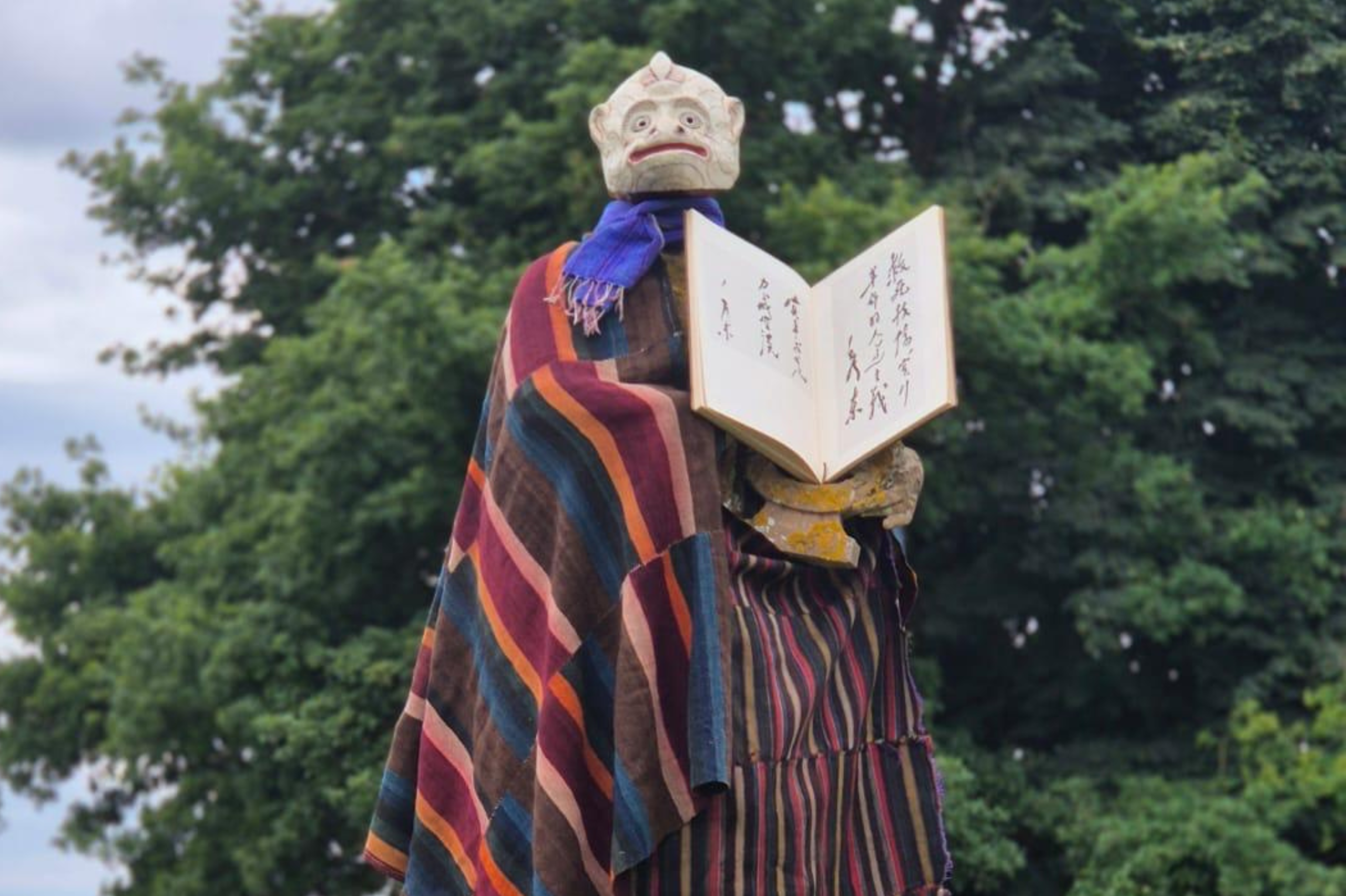
It is definitely very hard for me to pick one artwork that highlights the essence of migration in such a way, as I do believe that all of the artworks and artists have shown that migration is a journey that we all undertake as part of being human in contemporary times. However, if I were to pick one that I particularly love, it would be Yadanar Win’s The other faces of Frans (2025). This is a new performance-based photography work by Yadanar, made during her time with the Sub+ Residency in partnership with Fondation la Roche Jacquelin in France.
On the garden grounds of Château de La Roche Jacquelin, where the Fondation and residency are based, stands an 18th-century European statue, which Yadanar dresses up in a series of masks, garments and objects that recall the layered histories of Myanmar and her cultural traditions, transforming the statue into a hybrid format of being representative of both Western and Southeast Asian ideologies. Yadanar not only reconsiders the validity of monuments from our past—physical, but also ideological and cultural ones—but also dissolves fixed historical identities, blurring the boundaries between cultures, identities and temporality. This work becomes a manifestation of the artist’s ruminations on what it means to be in exile; a disruption of static heritage and hierarchy—a proclamation on how the concept of identities has always been and will be a fluid and evolving state.
Yadanar’s work is a reminder of how migration presents itself as a dilemma, one involving constant renegotiations between self, place, community, culture and history. This condition is not unlike the plights faced by migrant workers leaving their homelands to seek favourable economic opportunities, or the political refugee leaving a place of danger in hopes of preserving mortality, or even the movement of citizens across the world away from their countries because they do not recognise home anymore. Yadanar shows us migration—and its associated conditions—was, and is, still an ongoing shared human experience, and it will be so for a long time to come.

5. How do you hope audiences—especially those in a country like Singapore, which was and is built through migration—will connect with the themes of displacement and belonging?
Mainly, I hope that Singaporeans can recognise that many of our migrant friends here are compelled to leave their homelands and embark on a volatile journey to seek better prospects not just for themselves, but for their families as well. This is a condition forced upon them. The buildings we comfortably inhabit and the smooth pavements we walk on everyday did not appear by chance. They exist in large part due to the time, sweat and blood of the migrant workers who have given up opportunities to spend time with their loved ones so we can do the same in our swanky HDB flats and shopping malls.
With the tumultuous political landscapes of our neighbouring countries in the region, many Singaporeans have taken on the stance of feeling grateful and counting ourselves ‘lucky’ to not need to experience what it really means to fight for freedom, equality and democracy. That is because contemporarily, we are not forced to fight for those rights; we are afforded those rights by the individuals who have fought for them before us. We believe that this exhibition can help audiences foster a deeper sense of regional compassion, encouraging them to empathise with collective concerns and to recognise our shared futures as neighbours.
The Southeast Asian artists in the exhibition have thoughtfully and intricately embodied the inner workings of a migrant through their art. We hope their works allow audiences to take some time to pause and reflect on what it means to be a ‘migrant’ on a deeper level, the associated effects and impetuses that drive one to become ‘migrant’, and to generate compassion and understanding for the often unseen builders of our city-state.
Foo Wee San is a final-year undergraduate reading a double major in English Literature and Art History at Nanyang Technological University. An avid writer, his research interests concern the creative nonfiction genre and the study of animist and spiritual motifs across Southeast Asian modern and contemporary art. His creative works have been featured in Atelier of Healing, an online anthology on trauma and healing. If Wee San’s not rushing essays, he is editing video content for Mediacorp’s social channels. The responses for this interview were also reviewed and edited with the help of Wee San’s fellow curators, Cheng Hao and Phyllis.
Cover photo: Between Lands: Migration as Transformation © ph Jakai Siributr
Attendance for the vernissage and exhibition, Between Lands: Migration as Transformation, are free by donation. Register here to secure your spot.
Discover the full AECFest programme.
SHARE THIS ARTICLE