WE SPEAK WITH ICONIC THEATRE AND MOVEMENT ARTISTS, XIAO KE AND JÉRÔME BEL, ON THEIR LATEST COLLABORATION - A UNIQUE 'AUTO-BIO-CHOREOGRAPHY', MAKING ITS CHINA DEBUT IN SHANGHAI AT AECFEST 2025.
1. Please introduce yourself and your creative practice. As a contemporary artist who draws on various disciplines, what inspirations have guided your approach to making art?
Xiao Ke: My creative work is rooted in theatre, and my pieces are presented in contemporary theatre settings, outdoor public spaces, and also touch on photography, video, live performance, and installation art. I focus on the individual body and explore the limits of expression in the context of Chinese public life. I aim to reintegrate artistic concepts into daily life, completing the life cycle of the concept of “born from life, fading into life”. Creation has become an important part of my life. In simple terms, as a creator in contemporary theatre, much of my work is difficult to present in a ‘traditional’ theatre setting. However, this is positive for me, as the environment constantly inspires me to challenge the definition of theatre. I believe the core significance of creation lies in the questions: Why create? For whom? Rather than creating solely for a specific audience.
Jérôme Bel: I am a French choreographer based in Paris. I work in the field of dance, which means I have a broad view of dance. Dance is not just about dancing; it is also a way that can be approached differently, in a theatrical way by producing discourse on dance, or in a social way by working, for example, with non-dancers, such as people with disabilities or amateurs. To sum up, I have an experimental approach to dance, and I try to work on its blind spots.
2.The collaboration was initiated through a commission from the Centre Pompidou x West Bund Museum in Shanghai, with communication taking place via teleconference because of Bel’s ecological stance. Could you share a little bit about why you chose to embark on this project and what the initial stages of it were like?
Jérôme Bel: The Pompidou Center in Paris offered me a collaboration with Chinese artists for the West Bund Museum in Shanghai. I accepted the idea, but only on the condition that I would not have to travel to Shanghai. The Pompidou Center, knowing that I no longer fly for environmental reasons, accepted this condition. I thought it would be wiser to work with a single performer, so I posted on my social media asking my followers if they could recommend an interesting dancer and choreographer in Shanghai. Xiao Ke was mentioned by 50% of respondents. So I contacted her and told her I wanted to create a solo for her, without knowing what the result would be. She was interested in the idea. Since we didn’t know each other, we spent a lot of time talking about Xiao Ke’s life, which I found very interesting from an artistic and historical point of view. It seems to me that her career represents the history of the last 40 years of modern dance in China. So I suggested to Xiao Ke that she do an autobiographical solo, which she accepted. The process was great, and finally she performed the solo called “Xiao Ke.”
Xiao Ke: This was in February 2020, when the COVID-19 pandemic was just beginning to spread in China. I was at home at the time and was delighted to receive the invitation, and I was happy to collaborate. We began our discussions via Zoom video conferencing and continued to use this method for specific rehearsals. Initially, Jérôme Bel asked me to recall and write about my own dance experiences. As I wrote, we had many interesting discussions. Where he didn’t understand something, I would provide some background information and explanations. Through the memories I had written down, we gradually revised and developed a theatrical text. During this process, Jérôme Bel asked me, “What if it were a monologue performance where you tell your own dance story?” I agreed. However, for me, this was a challenge because I had never created a work based on my personal history before. I wasn’t sure what significance my personal story would hold, as I had previously focused more on observing others’ stories and drawing creative inspiration from them.
The collaboration went very smoothly. I felt that Jérôme Bel and I shared a common aesthetic vision in theatre, so there were no major disagreements. Our discussions and developments focused on selecting the text content, how to integrate dance into it, and how to convey the intended message to the audience.
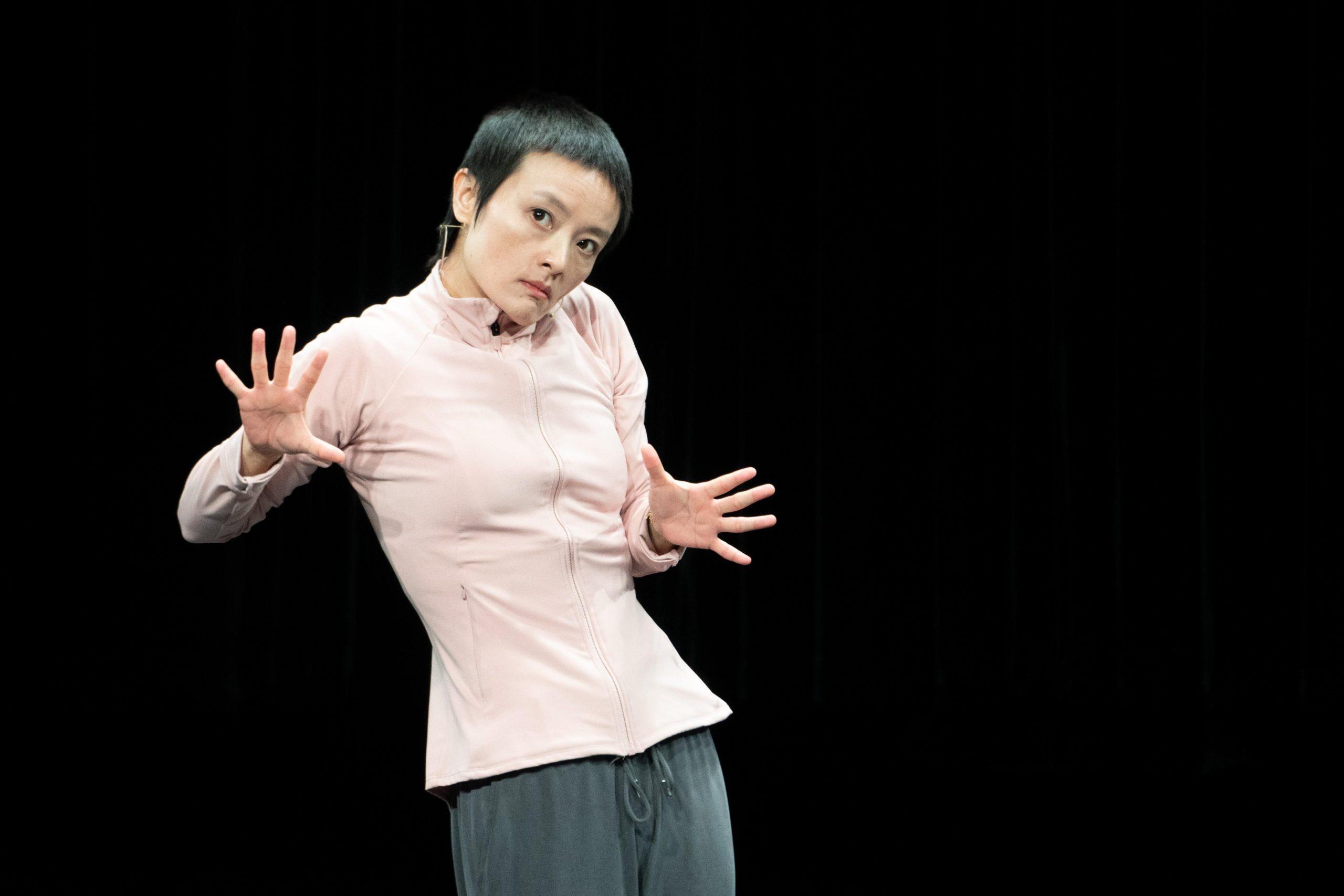
3. [For Xiao Ke] Your collaborations with Jérôme Bel are one of many new forms of transborder partnerships taking place solely through digital means. How did you react to working entirely at a distance, and how has this mode of collaboration shaped the final performance? In your experience, how does developing a partnership digitally compare to a more traditional, in-person process?
Working entirely online without meeting in person was indeed a first for me. In 2020, I believe this approach was an unavoidable choice for most people around the world. Of course, even without COVID-19, my collaboration with Jérôme Bel would have taken this form, aligning with his environmental philosophy of ceasing air travel. This method felt natural and smooth in our collaboration, though I acknowledge it may not suit all theatre creators. I believe that for a fully online creative collaboration, both parties need to have a clear and defined creative approach and relatively consistent aesthetic sensibilities. This helps avoid misunderstandings or communication difficulties that can arise from not working face-to-face. So I feel fortunate that this approach is very suitable for my collaboration with Jérôme Bel. We both reject using the theatre to create illusions; we aim to present a reality closer to everyday life. For the dance movements, we don’t need any embellishments or choreographic logic-based physical guidance. I authentically reflect how I dance at each moment, and Jérôme handles the laughter. Of course, every detail is carefully discussed and chosen, such as the music, my genuine emotions in a particular dance segment, and so on.
This purely online collaboration makes me reflect when I’m alone or after a performance. This person named Jérôme Bel—we briefly met in Japan when he was still flying, but we weren’t close. Now, I feel like I know him well, yet I’ve never hugged him. This feeling is both abstract and concrete. He’s like someone who never existed, yet he actually exists in your heart. I think nowadays, we switch between identities in the metaverse and the three-dimensional world every day. However, both Jérôme Bel and I are our authentic selves in these two worlds. We are more like intellectual and linguistic communicators, after all, we’ve never embraced each other—we live in each other’s imagination.
Another interesting thing is that the work ‘Xiao Ke’ has two versions. One is my monologue performance on stage, where I speak Chinese. This version was performed in Chinese-speaking cities from 2020 to 2023. The other version is in Europe, where Jérôme is on stage, I am at home in Shanghai, and the audience is in the theatre, watching the real Jérôme and the giant screen showing me, my living room, and my cat. This version has been performed many times in different theatres across Europe. For me, every late-night performance at home for the live European audience was a magical experience. I was alone with five cats, with no audience around me, feeling like a sleepless madman—talking, dancing, crawling, and falling. But thousands of kilometres away, a group of people are sitting in a theatre, watching me intently. I can’t hear the audience’s feedback, so every time I direct Jérôme Bel, who is sitting on stage helping me with translation, to turn the camera towards the audience so I can see them. Every time, the audience is particularly enthusiastic, perhaps because they know I can’t hear their applause. They clapped enthusiastically each time, hoping to send their applause all the way to my home in Shanghai. This ‘not being together’ yet ‘being together’ experience is truly fascinating. It also makes me reflect on the future possibilities of the theatre and its core value. I believe that for both Jérôme and me, we are constantly learning and redefining our preconceived notions through these concrete practices.
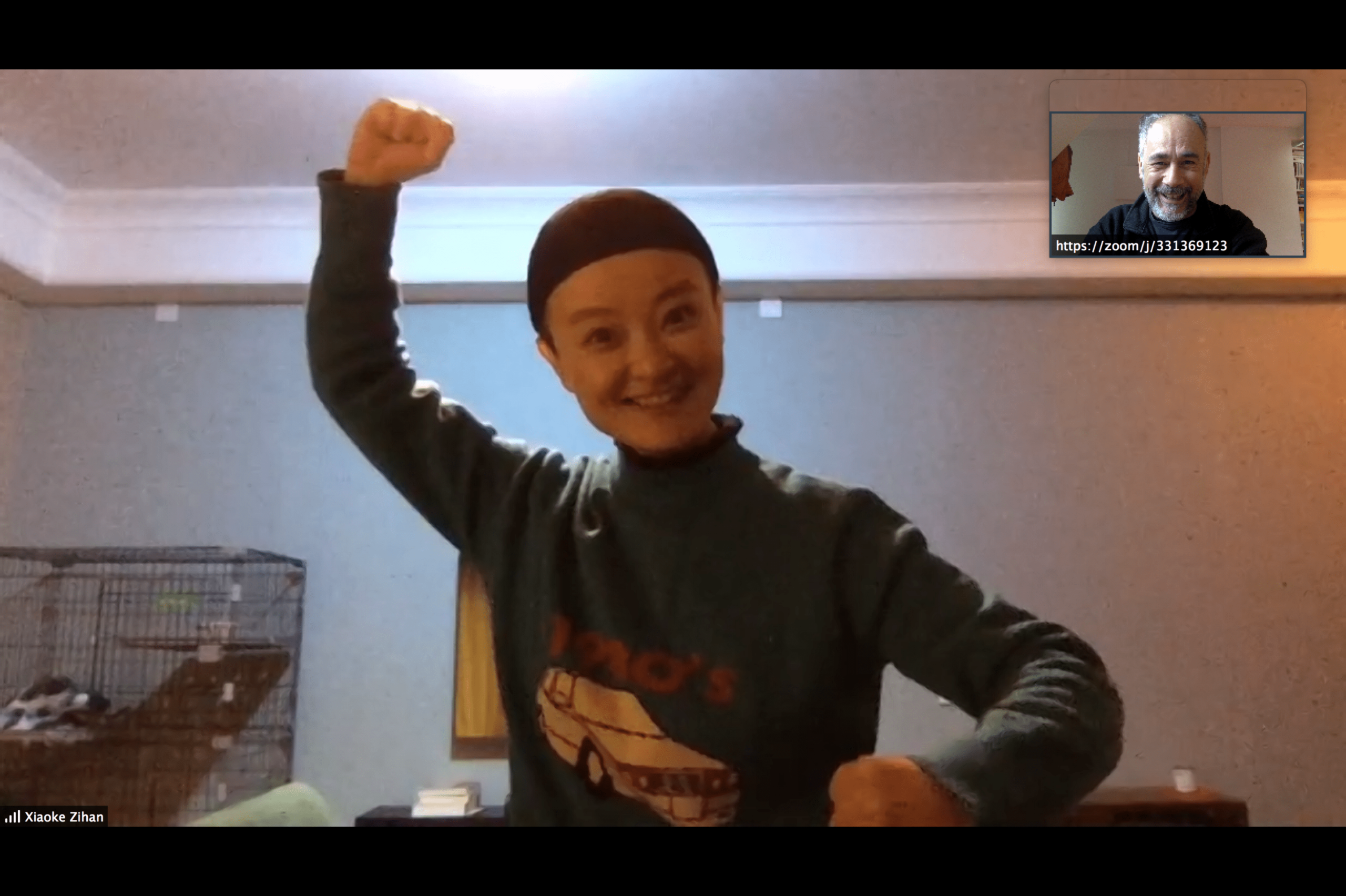
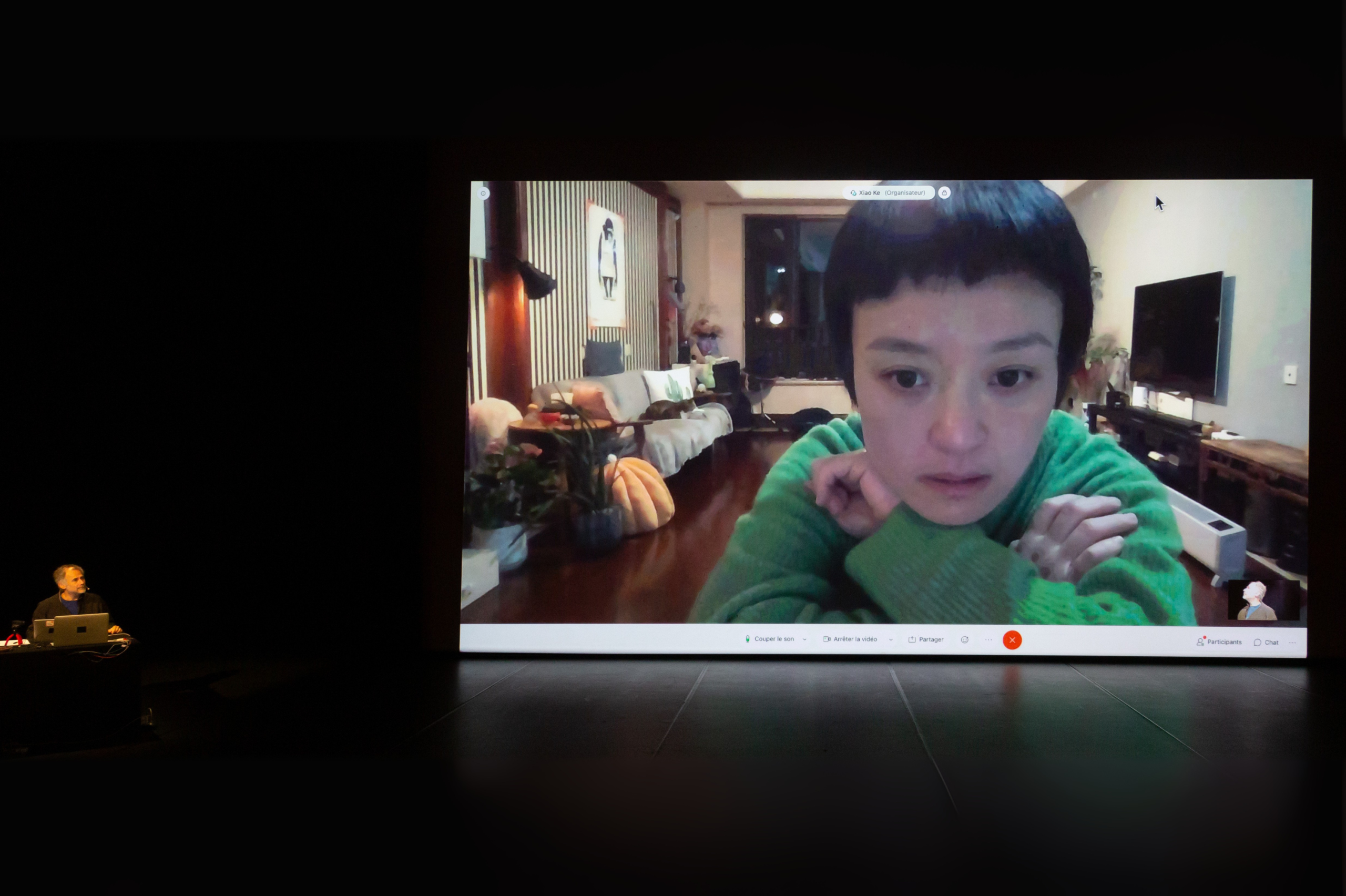
4. [For Jérôme Bel] You made the decision to stop flying for ecological reasons back in 2019, well before the pandemic made remote collaboration the norm. In many ways, this positioned you as a pioneer of long-distance, online artistic collaborations. How has this shift shaped your creative process, and what have you discovered about the possibilities—and limitations—of working remotely in choreography and performance?
This new way of working has advantages and disadvantages. I no longer waste time traveling, and I can work on several pieces in the same day across the globe by connecting to different time zones! But above all, I have to collaborate more than usual. Since I have less control over things in videoconferencing than in the studio or theater, I have to trust the performers more, so it’s more collaborative, and that’s something I really enjoy. We discuss things more, I’m no longer alone in making the final decision, and the pieces have to be more adapted to the performers. It’s very enriching for me. Socially, it’s less rewarding because after rehearsal we don’t meet up at a café or restaurant to talk about other things in a more relaxed way. That’s a bit frustrating. I’d like to hang out and chat about anything and everything with Xiao Ke. It makes me think that maybe we should organize dinners or tea parties after certain rehearsals so that we can also have this kind of non-professional relationship! Yes I should do that!
5. [For Xiao Ke] Your first collaboration with Bel, eponymously titled ‘Xiao Ke’, has been described as offering a broad overview of the history of modern China through movement art. This work brings together two artists from distinct cultural backgrounds—not only to tell your story, but also to reflect on the evolution of dance in China. Given your own interest in addressing social issues in your home country, did collaborating with someone from a different culture—and perhaps with a different perspective on China—shape how you approached the subject matter or chose to present the country’s history in the performance?
This is a great question because it involves collaboration, and Jérôme and I come from different cultural backgrounds that have shaped us. Therefore, in selecting the text for the work, there must be mutual understanding and choice between both parties. Within the one-hour runtime of the theatre piece, we need to carefully curate the textual content and cannot include everything. We also need to consider the composition of the audience. Jerome makes his choices from the perspective of European audiences, while I make my judgments from the perspective of Chinese audiences and audiences in Chinese-speaking regions.
Fortunately, our differences are not too significant. In some areas where he particularly wants to emphasise certain points, if I have questions, we will discuss them. We are both skilled at using metaphors. Some of the text I write is supplemented by Jerome with background explanations during European performances to help European audiences understand. When performing the Chinese version, during post-performance discussions, I always answer audience questions honestly. The one-hour presentation is the result of two people exchanging ideas under two different cultural backgrounds. Chinese-speaking audiences generally understand and accurately interpret the underlying implications of the work’s text. I believe this is because the work is simple, sincere, and the authentic voice of an individual. It inevitably carries some of the biases of this individual (myself). These biases are a window through which I understand myself and the world. It is a personal history piece, using personal history to showcase fragments of a cultural environment, fragments that resonate with certain moments and consciousness in the nation’s development. We cannot comprehensively present a nation’s dance history through a single work, but it is closely intertwined with the nation. This is the story of my dance journey so far.
6. [For Jérôme] In Jérôme Bel, which you describe as an ‘auto-bio-choreography,’ your life and artistic journey are narrated not by you, but by an actress from a different cultural and linguistic background. What motivated you to frame your autobiography through another person’s voice and body, and how do you see this act of displacement shaping the audience’s perception of authorship, identity, and representation?
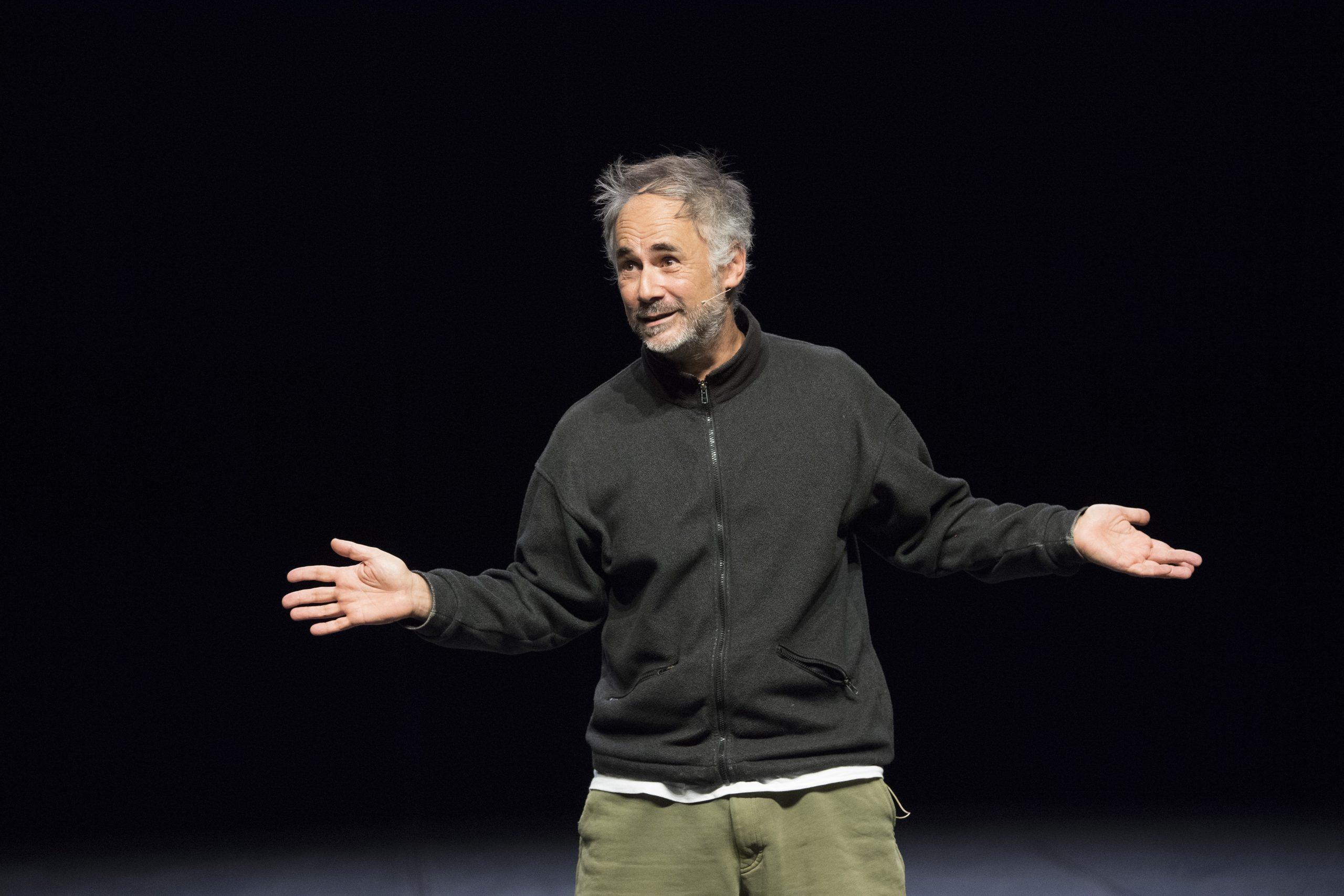
Alongside these videoconference rehearsals, I wondered how I could take things further. I was thinking about it and suddenly I realised that the most environmentally friendly shows were plays. Indeed, to put on a play by Chekhov, for example, or Shakespeare, all you need is the translated text, to hire local actors, and to stage the show. There’s no need to bring in actors from Moscow or London! I then thought of a play that could be staged by anyone in the world in their own language. All you would need to do is perform a character named Jerome Bel, who would be 57 years old and a choreographer, with a daughter, and who would be a relatively ordinary, quiet person, not particularly difficult to portray. That’s how I wrote my auto-bio-choreography, where the character sits quietly at a table and gives a lecture on his work, reading the text easily from his computer, without any kind of dramatization. Easy! Moreover, in contemporary theatre, the audience no longer has a problem if, for example, Hamlet is played by a woman or a person of color… That’s why Jérôme can be played by a Chinese woman without any problem. I find it even more exciting!
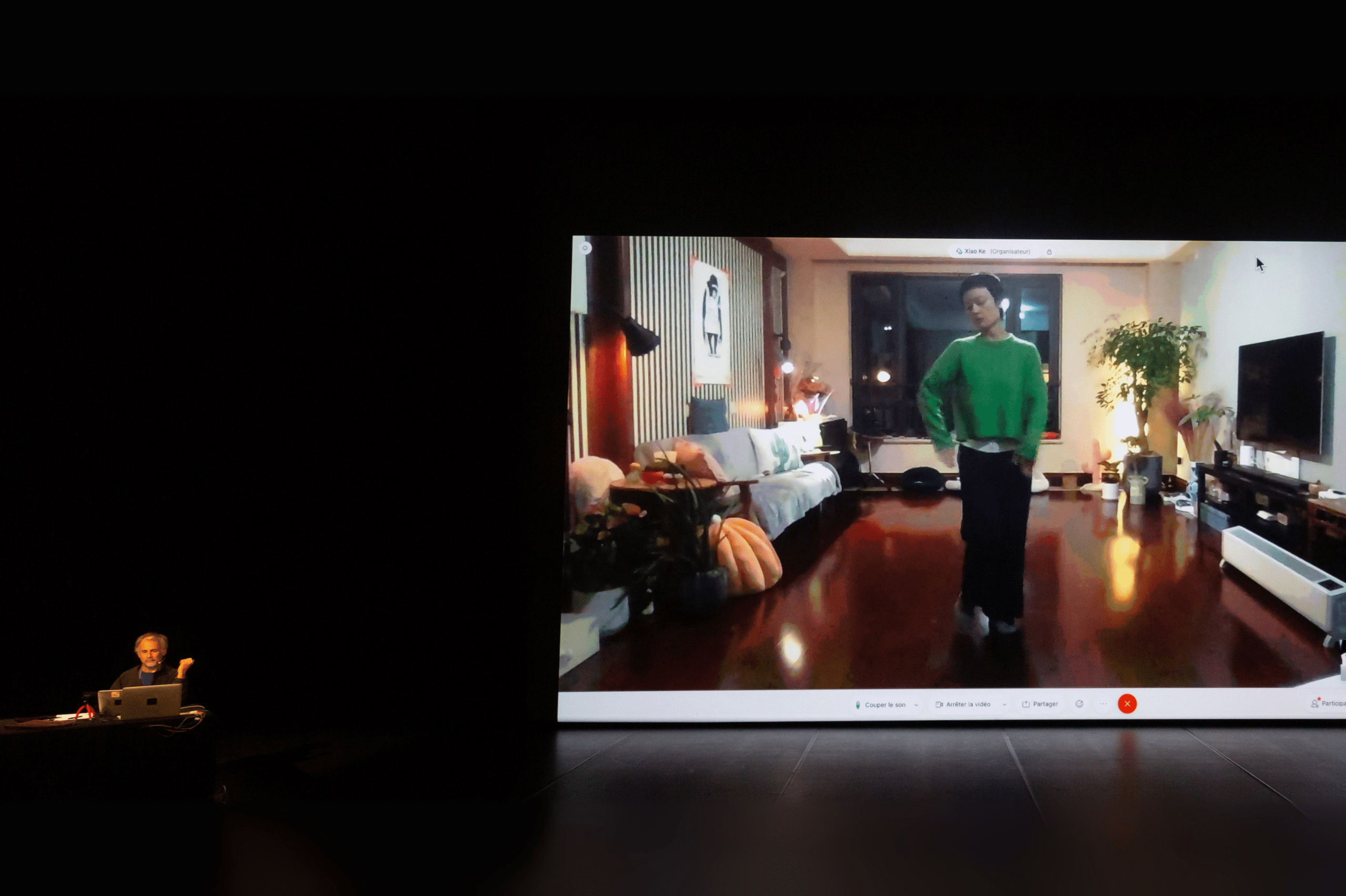
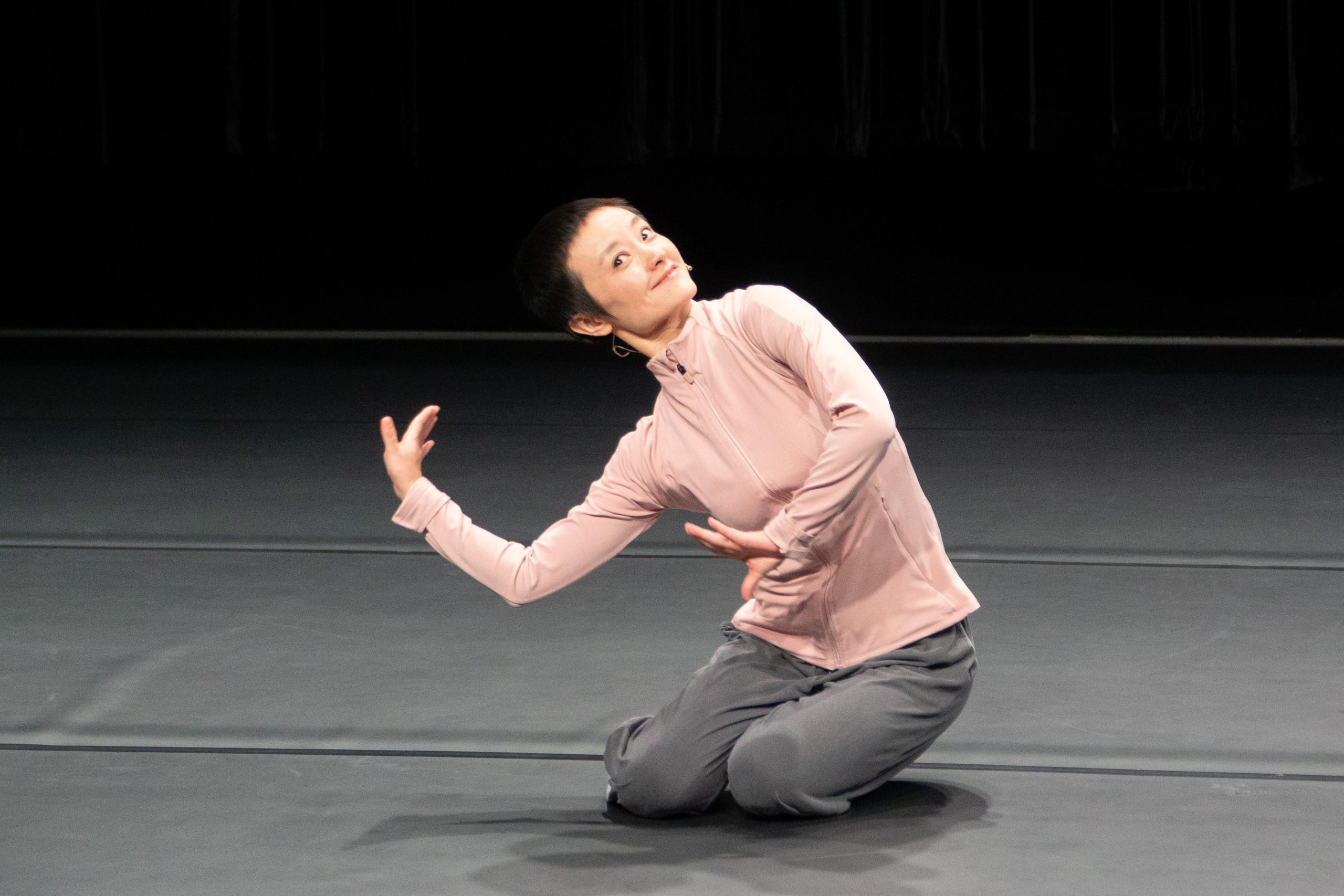
Jérôme Bel is one of the most important choreographers in the history of contemporary dance. His conceptual dance practice has led to an historical change in the fields of dance, theatre, and contemporary art. His innovative and daring performances, presented in a simple and clean manner, have challenged the very definition of convention and the avant-garde. Essentially, all of his works explore the meaning of a performance, and also what it means to be human.
Xiao Ke’s works have been invited and shown in different art, dance festivals and theaters in Europe and Asia. Touring more than 20 countries in different cities, and built-up communication network to introduce China’s independent theater and performance art. In 2021, Xiao Ke initiated a new framework to involve amateur practitioners in theater creation.
Cover photo: Performance of ‘Xiao Ke’ at West Bund Museum, Shanghai © West Bund Museum / ph Feng Yifei
Production Credits:
Production of the performance: R.B. Jérôme Bel (UK version produced by ArtHouse Jersey)
Co-production: Ménagerie de Verre (Paris), La Commune centre dramatique national d’Aubervilliers, Festival d’Automne à Paris, R.B. Jérôme Bel (Paris)
The writing of the text of this performance is part of the creative process of Sustainable theatre:
Conceived by Katie Mitchell, Jérôme Bel and Théâtre Vidy-Lausanne
Co-produced by STAGES – Sustainable Theatre Alliance for a Green Environmental Shift
Co-funded by European Union: Dramaten Stockholm, National Theater & Concert Hall, Taipei, NTGent, Piccolo Teatro di Milano -Teatro d’Europa, Teatro Nacional D. Maria II Lisboa, Théâtre de Liège, Lithuanian National Drama Theatre, Croatian National Theatre Zagreb, Slovene National Theatre Maribor, Trafo Budapest, MC93 Maison de la culture de Seine-Saint-Denis
Get your tickets for Jérôme Bel at the Asia-Europe Cultural Festival 2025 here (EN) or by scanning the QR code below with your WeChat app (CN):

Discover the rest of AECFest 2025 programme.
SHARE THIS ARTICLE