The ASEF Education Policy Programme stimulates practice-based and policy-oriented dialogues and solutions with a focus on cooperation between education, business and industry sectors, Lifelong Learning, and Technical and Vocational Education and Training (TVET) as key priorities of the ASEM Education Process.
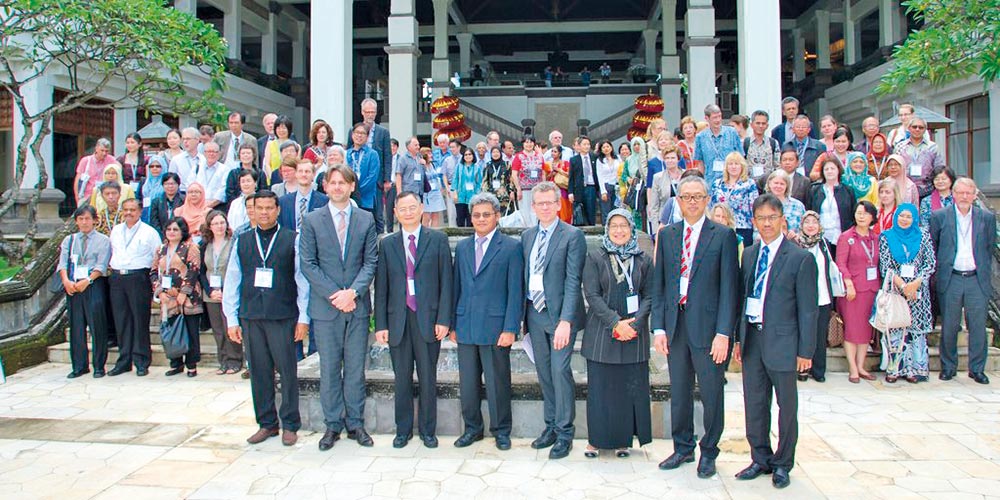
ARC4 on “University-Business Partnerships: Asia and Europe Seeking 21st Century Solutions” brought together over 130 university leaders, business representatives, government officials and delegates of related international organisations and associations to address how universities can better cooperate with the business sector. Participants discussed how collaboration can equip students with employability skills, foster entrepreneurship and create new learning environments through information and communication technologies. A Students’ Forum was held in conjunction with ARC4. The rectors and students each developed a set of policy recommendations, which were delivered to the 5th ASEM Education Ministers’ Meeting (ASEM ME5) in April 2015 in Riga, Latvia. These recommendations were also included as an annex to the ASEM ME5 Chair’s Statement.
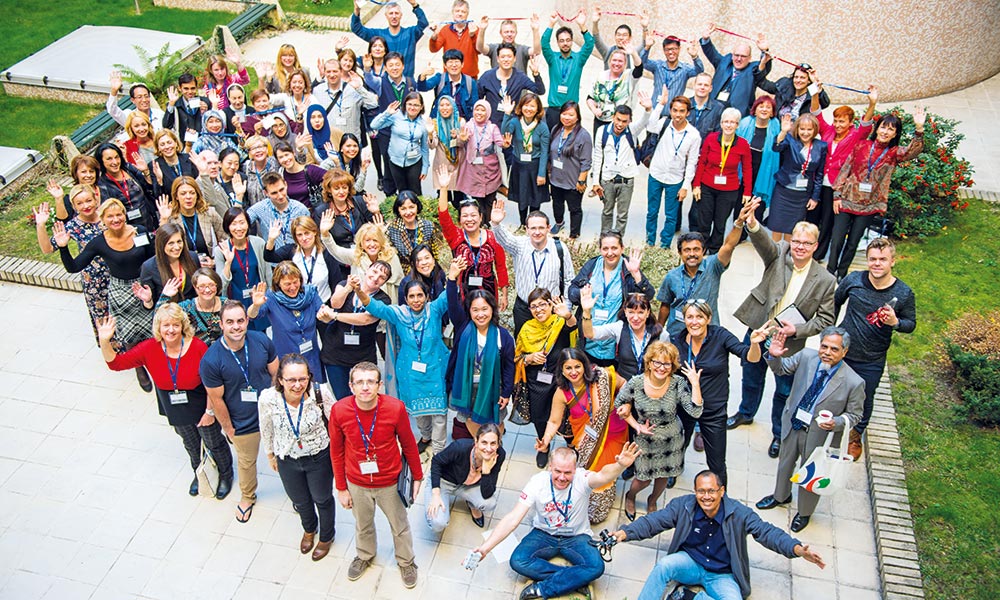
Participants at the ARC4 Students’ Forum.
ASEM ME5 was organised by the Latvian Ministry of Education and Science in cooperation with the ASEM Education Secretariat, the Latvian Ministry of Foreign Affairs, and the Secretariat of the Latvian Presidency of the Council of the European Union. ASEM ME5 set the working agenda for the next 2 years of ASEM education cooperation until the 6th ASEM Education Ministers’ Meeting (ASEM ME6) in 2017 in Korea. The Ministers agreed on the need to increase tangible, result-oriented cooperation activities while maintaining the informal nature of the process within the framework of the existing 4 ASEM priority areas: quality assurance and recognition; engaging business and industry in education; balanced mobility; lifelong learning in technical and vocational education and training. ASEF reported on the results and outcomes of its projects within these 4 priority areas. For the first time, ARC4 participants, 1 rector and 2 students, were invited to attend an ASEM ME.
The ASEM Senior Officials for Education met in Latvia prior to the 5th ASEM Education Ministers’ Meeting (ASEM ME5) for the final preparations of and amendments to the ministerial meeting’s agenda. ASEF participated in the meeting and provided input to the deliberations with reference to the outcome of ASEF’s education policy projects.
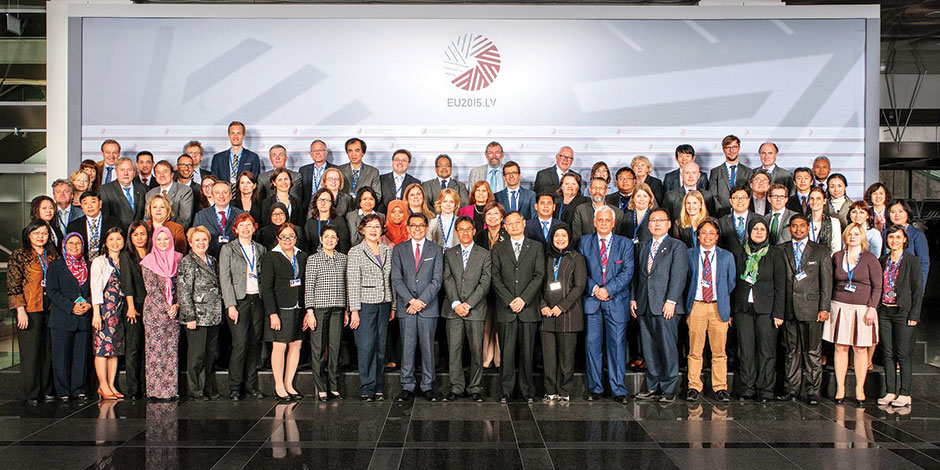
ASEM representatives at the 5th ASEM Education Ministers’ Meeting.

The largest annual event of the ASEM Education Policy Conference Series gathered over 100 researchers, policy-makers and practitioners from various ASEM countries. The forum on “Renewing the Agenda for Lifelong Learning” developed innovative strategies and effective models for lifelong learning in ASEM countries.
The participants reflected on lifelong learning practices and policies in Asia and Europe. They also discussed the role of researchers and policy-makers in creating lifelong learning opportunities for all.
The forum was organised by the ASEM Education and Research Hub for Lifelong Learning and supported by ASEF.
Participants at the ASEM Forum on Lifelong Learning 2015
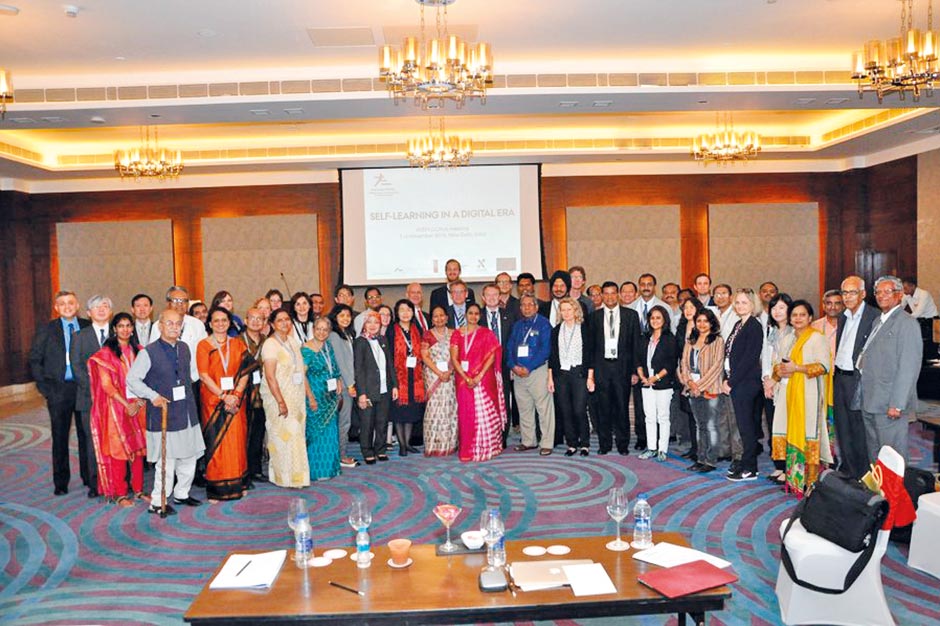
Around 60 academics from 25 countries gathered for the Asia-Europe lifelong learning research network’s meeting on “Self-learning in a Digital Era” as part of the ASEM Education Policy Conference Series. The researchers shared their knowledge and future comparative evidence-based research, which focused on concepts and practices for lifelong learning, contemporary possibilities of self-learning in a digital era and key concepts for policies and practices in Asia and Europe.
The meeting was organised by the ASEM Education and Research Hub for Lifelong Learning and supported by ASEF.
Participants at the ASEM LLL Hub Meeting “Self-learning in a Digital Era” in New Delhi, India.
This project is co-funded by the European Union.
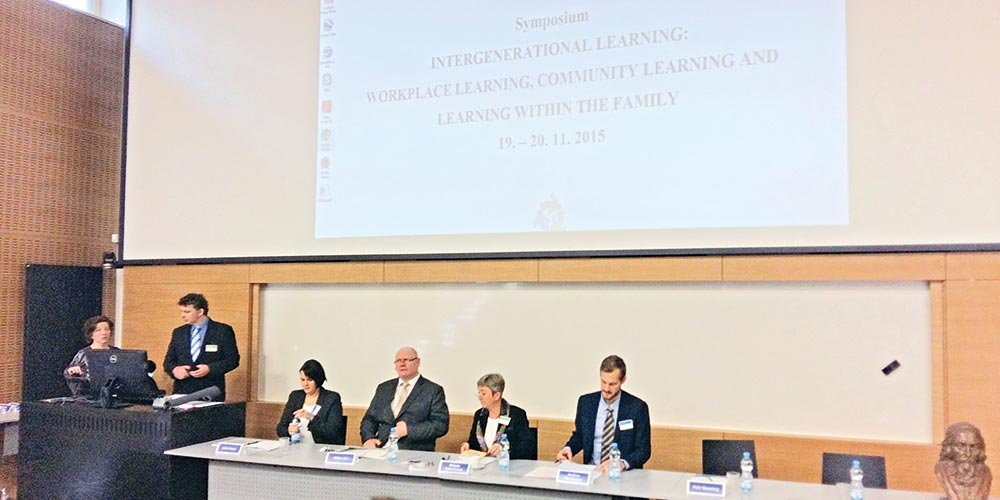
More than 50 researchers gathered for the ASEM LLL Hub Symposium “Intergenerational Learning: Workplace Learning, Community Learning and Learning within the Family”, which was the 2nd Asia-Europe research network meeting held in the framework of the ASEM Education Policy Conference Series. The participants shared research, good practices and case studies on the intergenerational learning in different cultures, environments and contexts. Besides learning about different approaches for intergenerational learning in Asia and Europe, the researchers also explored more innovative methods for workplace learning.

The symposium was organised by the ASEM Education and Research Hub for Lifelong Learning and supported by ASEF.
Participants at the ASEM LLL Hub Symposium on “Intergenerational Learning” in Brno, the Czech Republic.
This project is co-funded by the European Union.
During the last ASEM Education Policy Conference Series activity in 2015 on “Engaging Young People in Lifelong Learning: Asian and European Policies and Practices”, researchers discussed topics such as the impact of the recent economic crisis on young people’s engagement in education, work and welfare, as well as the trend of growing privatisation in the education sector and how this affects lifelong learning opportunities. Representatives from the ASEF Young Leaders’ Summit (ASEFYLS) and the ARC4 Students’ Forum participated in the discussions with the researchers, reported on the outcome of their youth meetings and provided a youth perspective to the academic exchange.
The conference was organised by the ASEM Education and Research Hub for Lifelong Learning and supported by ASEF.
This project is co-funded by the European Union.
This meeting invited representatives from 5 societal sectors, namely social enterprises, corporations, public organisations, education institutes and start-ups, to share their holistic understanding of entrepreneurship and its role in promoting youth employment in both regions.
The 10 participating experts outlined a strategic proposal of how entrepreneurship for youth employment can be better promoted on an Asia-Europe level. The meeting concluded with a site visit to the co-working space Start-Up People 46 (SUP46) to learn more about the local start-up tech-scene.
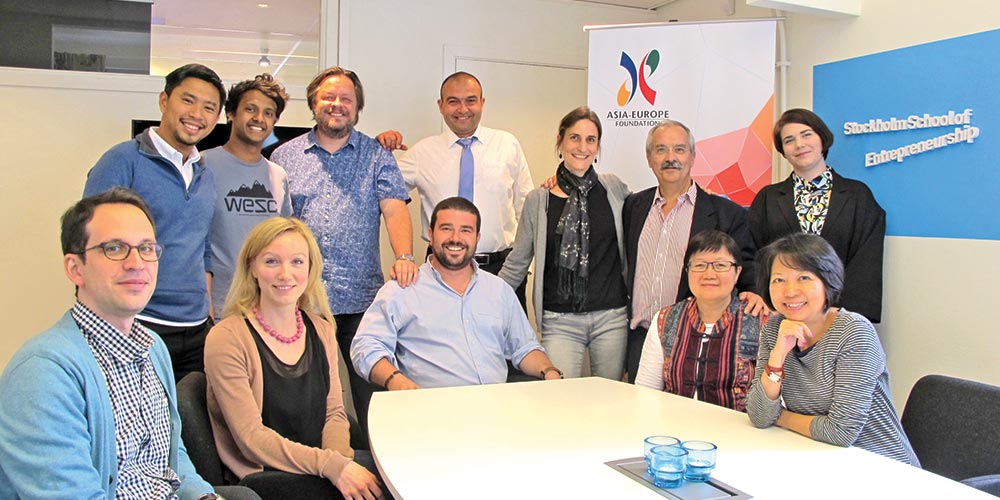
Participants of the ASEF Experts’ Meeting on “Entrepreneurship & Youth Employment: Re-engineering Tactics for Asia and Europe”.
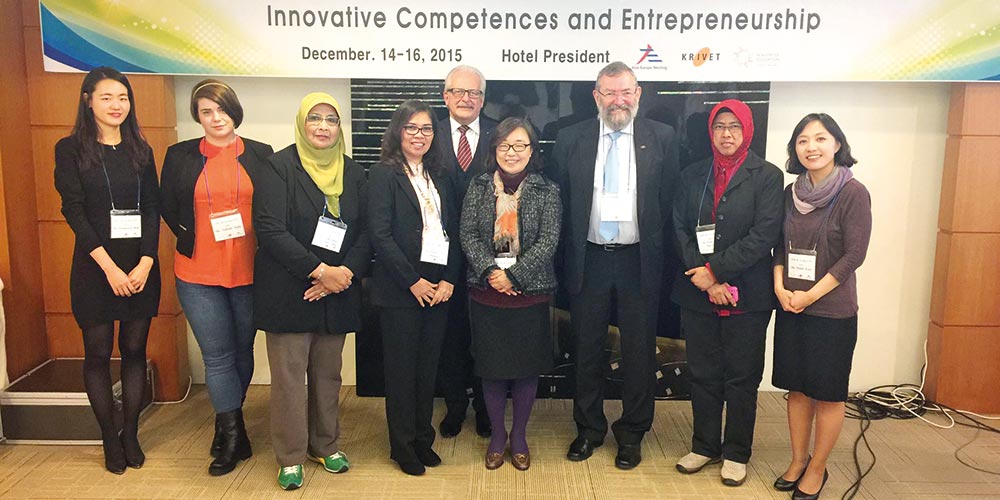
With its project expertise in the field of entrepreneurship and youth employment, ASEF participated in the ASEM Initiative and ASEM Working Group on “Innovative Competences and Entrepreneurship Skills”. The group members addressed the following areas: national guidelines and political endorsement; the perception of policy-makers; strategic sourcing and the use of resources. They will report on the outcomes of their discussions at the upcoming ASEM Education Senior Officials’ Meeting (ASEM ME SOM) in 2016.
Participants of the ASEM Working Group on “Innovative Competences & Entrepreneurship”.
The ASEF Young Leaders Programme provides platforms for dialogue and solution-centred pragmatic skills-development, which also enable youth to establish networks and create direct connections with the ASEM policy-makers.
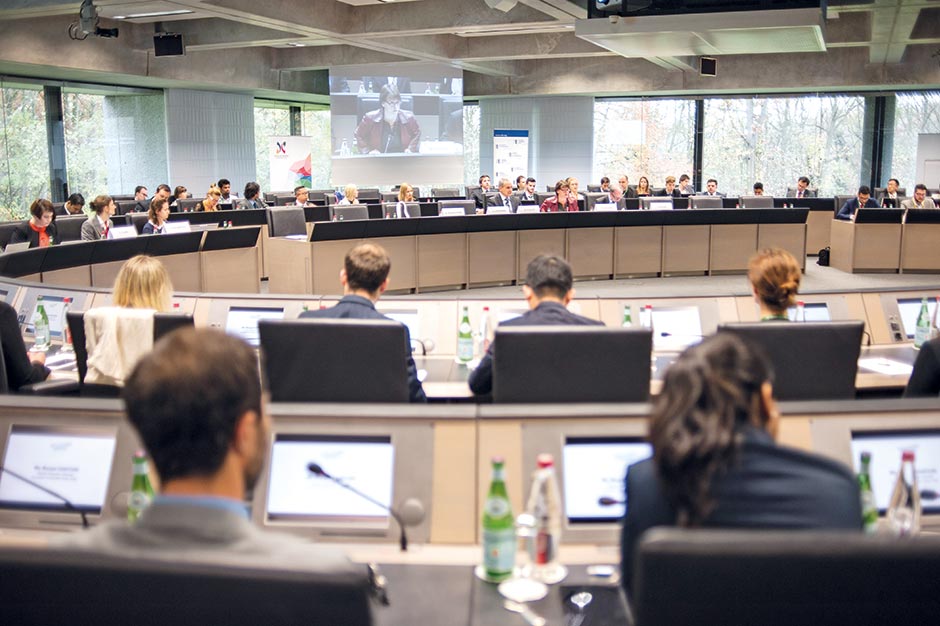
Held in conjunction with the 12th ASEM Foreign Ministers’ Meeting (ASEM FMM12), ASEFYLS addressed the topic of “Entrepreneurship and Youth Employment”. It brought together over 100 Young Leaders from all 51 ASEM countries, who jointly developed a Call for Action on the said topic. The participants, selected from a pool of 6,000 applications, exchanged experiences with renowned government and business leaders and urged the ASEM Governments to enrich entrepreneurial spirit and skills among the youth as means to promote youth employment across both continents. 4 ASEFYLS participants presented the Call for Action at ASEM FMM12 and personally handed it over to the Chair of ASEM FMM12.
The Call for Action was furthermore conveyed to additional platforms, including the ASEM Lifelong Learning Conference on 30 November – 2 December 2015 in Melbourne, Australia; the 5th ASEM Employment and Labour Ministers Meeting (ASEM LEMC5) on 3-4 December 2015 in Sofia, Bulgaria; and the Meeting of the Education Committee of the EU Council on 3-4 December 2015 in Luxembourg.
This project is co-funded by the European Union
This project is sponsored by the Government of Japan.
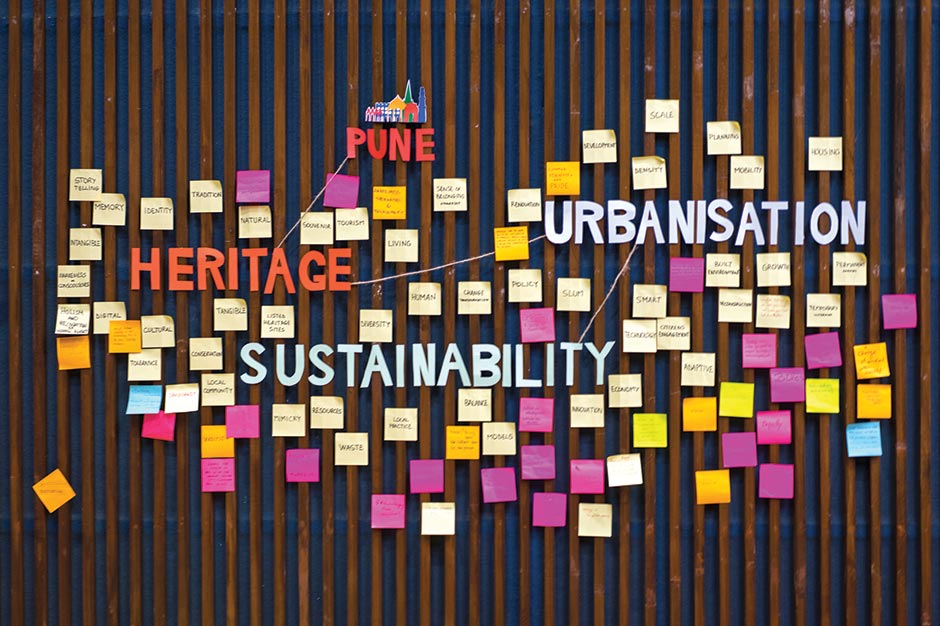
50 participants from 46 ASEM countries gathered for this interdisciplinary 2-week project on “Sustainable Urbanisation in Heritage Cities”. ASEFSU was ASEF’s first interdisciplinary hackathon and offered the students a solution-centred platform for exchanging ideas as well as practical and intercultural collaboration. Ranging from anthropologists, architecture students, artists to urban planners and computer scientists, the participants explored the intersection between heritage preservation and urbanisation. They worked with local civil society groups on the development of 6 digital prototypes, social impact approaches and business plans. The project concluded with an ASEFSU Showroom where the participants presented their ideas and products to all partners and representatives from involved communities.
This project is co-funded by the European Union
In line with the current global trend in primary and secondary education by private and government schools across Asia and Europe, this conference focused on the topic of “Coding for Education”. It promoted the use of technology and online-based tools in secondary and high-school education through the sharing of good practices, case studies as well as training and guidance by technology and education experts. Attracting about 100 teachers from 39 ASEM partner countries, the conference was also a platform for teachers to initiate first contacts and jointly develop online collaborations across both regions.
Participants of the 12th ASEF Classroom Network (ClassNet) Conference.
This project is co-funded by the European Union
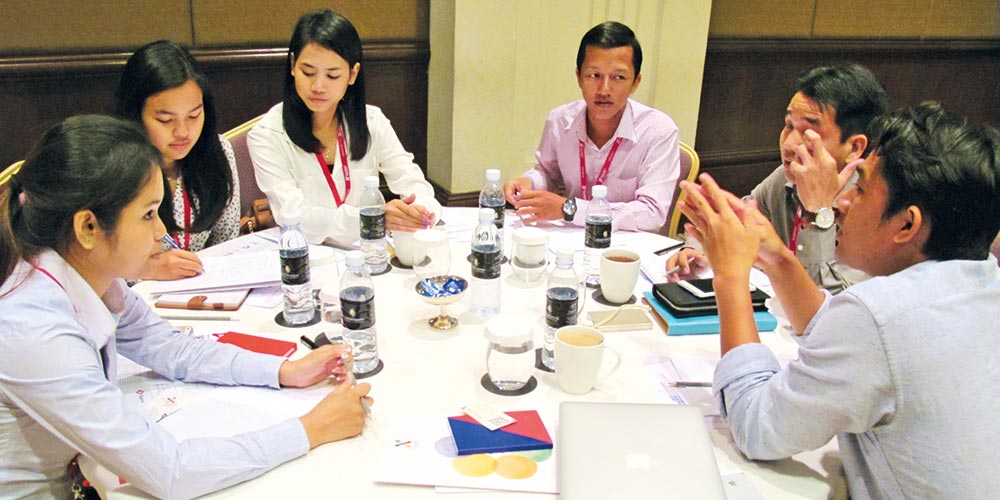
As a spin-off activity of the ASEF Young Leaders Summit 2015 (ASEFYLS) in Luxembourg, the ASEF Capacity Trainings on Leadership and Entrepreneurship are designed to bring together renowned business and public sector leaders to train young leaders in selected ASEM countries. The Phnom Penh training was the first in this series and gathered more than 60 young Cambodian leaders. Mr Emad ZAND, Chairman of Board, Sqore (Sweden), and Ms Maria TANDECK, International Relations and Legal Officer at Profesja (Poland), conducted the training.

Participants engaged in a group discussion.
Simulating the proceedings of the actual ASEM Summit, the 1st Model ASEM spin-off event attracted over 100 Singaporean and international students. Students had the opportunity to enhance their skills in public speaking, negotiation and consensus-building while playing the roles of political leaders and delegates of the ASEM Partners.
The programme included plenary sessions and working groups on ASEM and resulted in the creation of a consensus-based Model ASEM Singapore 2015 Chair’s Statement. The conference also included visits to 10 Embassies and High Commissions of ASEM Partners in Singapore.
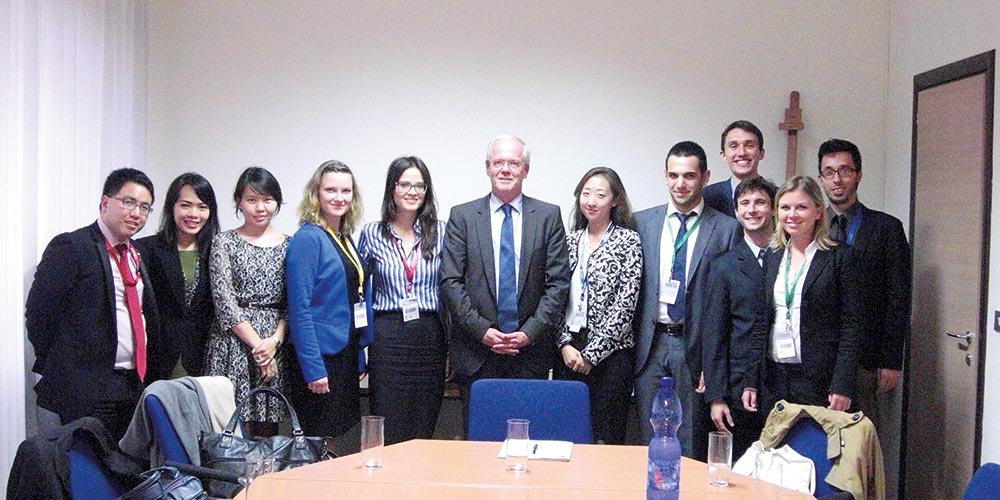
Model ASEM Singapore 2015 participants at the German Consulate in Singapore.