WHAT WAS THE ASIA-EUROPE YOUTH SUMMIT ON SCIENCE AND TECHNOLOGY DIPLOMACY?
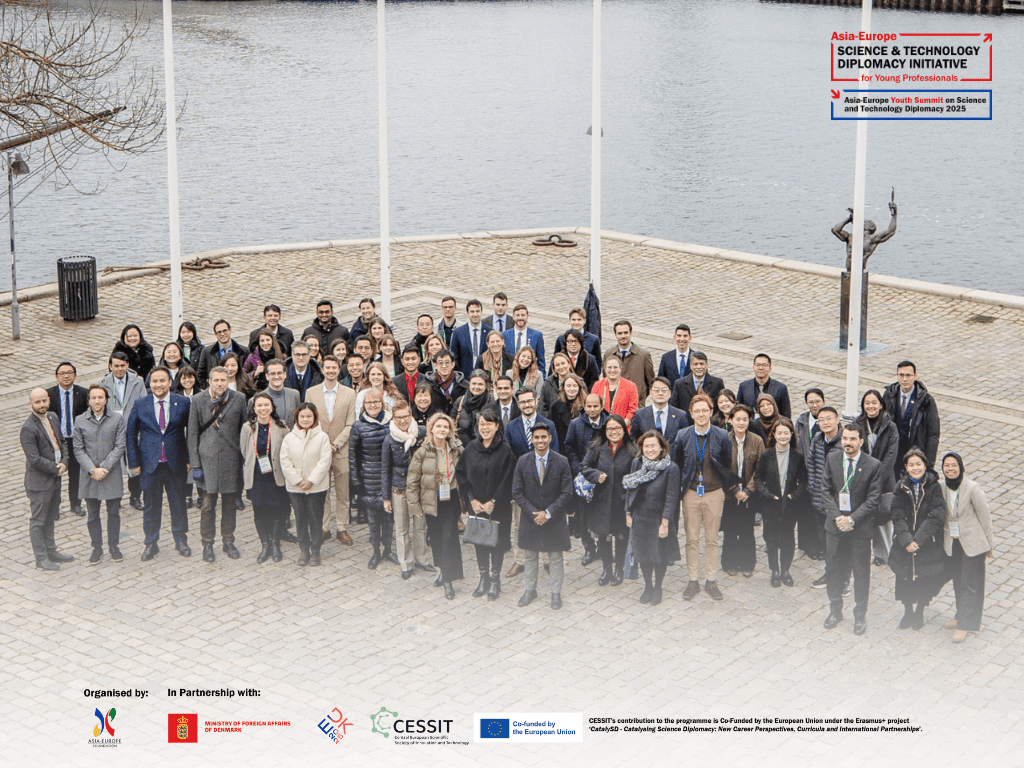
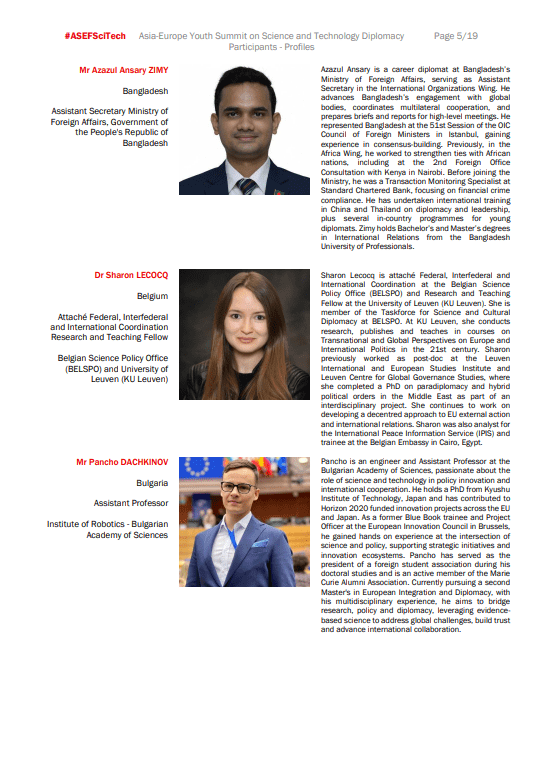
40 young diplomats, government officials, and research & science managers, coming from 29 countries across Asia and Europe, gathered in Copenhagen, Denmark, between 14-18 December 2025, for the first Asia-Europe Youth Summit on Science and Technology Diplomacy.
The Youth Summit marked the culmination of the Asia-Europe Training on Science and Technology Diplomacy, organised under the Danish EU Presidency and in correlation with the 2nd European Science Diplomacy Conference, where the participants presented their Asia-Europe Youth Communiqué on Science and Technology Diplomacy’.
The Youth Summit was a unique opportunity for the participants to engage in people-to-people dialogue, learn in a vibrant local context, and for them to make invaluable connections with experts, peers, and other professionals working in this intersection of science, technology, and international relations.
The Youth Summit was organised in collaboration with the Ministry of Foreign Affairs Denmark, our gracious hosts, and the Central European Scientific Society of Innovation and Technology (CESSIT).
A special thank you to our funders: the Ministry of Foreign Affairs Denmark, the Embassy of Italy to Singapore, and the United Kingdom.
WHO WAS PART OF THE YOUTH SUMMIT?
We invited selected participants from the Asia-Europe Training on Science and Technology Diplomacy Conference with the following profiles to join the Youth Summit:
- Civil Society: Research and Science Managers, who has a supervisory or coordination role (e.g. managing research projects or teams, overseeing research areas, or supporting institutional research strategy), who are involved in international science, technology and innovation cooperation.
- Government: Diplomats and Government Officials working in the intersection of science, technology, innovation and international relations in the Ministry of Foreign Affairs or relevant government institutions
PROGRAMME
DAY 1: ASIA-EUROPE YOUTH SUMMIT ON SCIENCE AND TECHNOLOGY DIPLOMACY 2025
On behalf of the Asia-Europe Foundation (ASEF), Ambassador Beata STOCZYŃSKA, Executive Director, Asia-Europe Foundation (ASEF) opened the programme on 15 December 2025, after the welcome dinner on 14 October, where participants had a chance to begin getting to know one another.
We welcomed representatives from our partners and Ambassadors & representatives from Asian and European diplomatic missions in Copenhagen to officially kick off the programme.
A special thank you to HE Ms Anne Marie ENGTOFT MELDGAARD, Tech Ambassador at the Ministry of Foreign Affairs of Denmark, and Dr Gábor PÖRZSE, President, Central European Scientific Society of Innovation and Technology (CESSIT), for welcoming the participants.
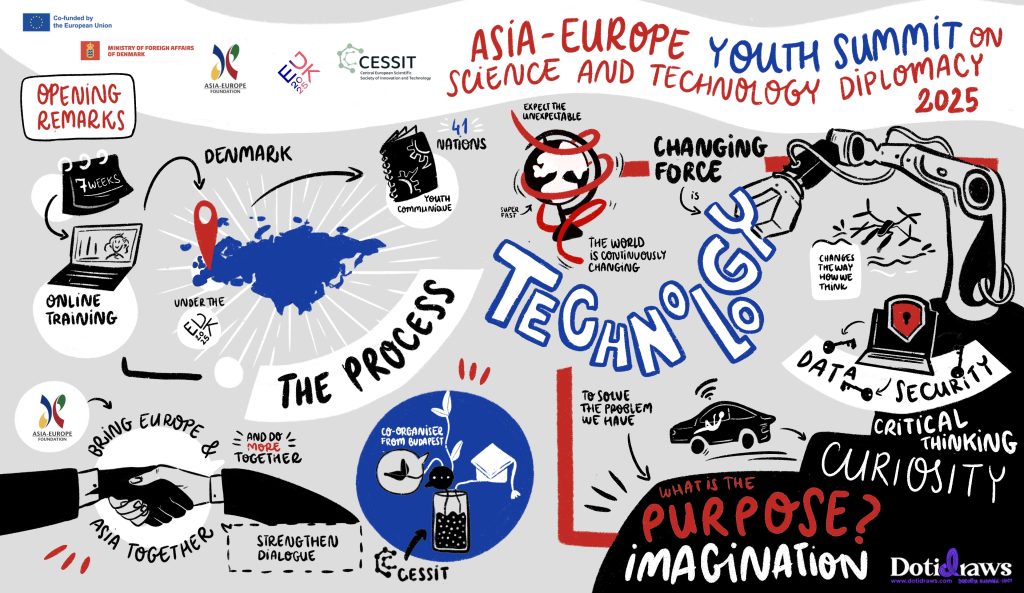
The morning continued with a keynote by HE Ms Anne Marie ENGTOFT MELDGAARD, Tech Ambassador at the Ministry of Foreign Affairs of Denmark. She shared reflections on her role as the Danish Tech Ambassador – inviting the young professionals to see science and technology diplomacy as the arena where humanity decides what kind of future it wants to build, not just which tools it will use.
Drawing on her experience, she discussed the world as it is today – where emerging technologies, from AI to deep tech, are treated as global public goods that require courage, imagination, and cross-border collaboration rather than narrow competition.
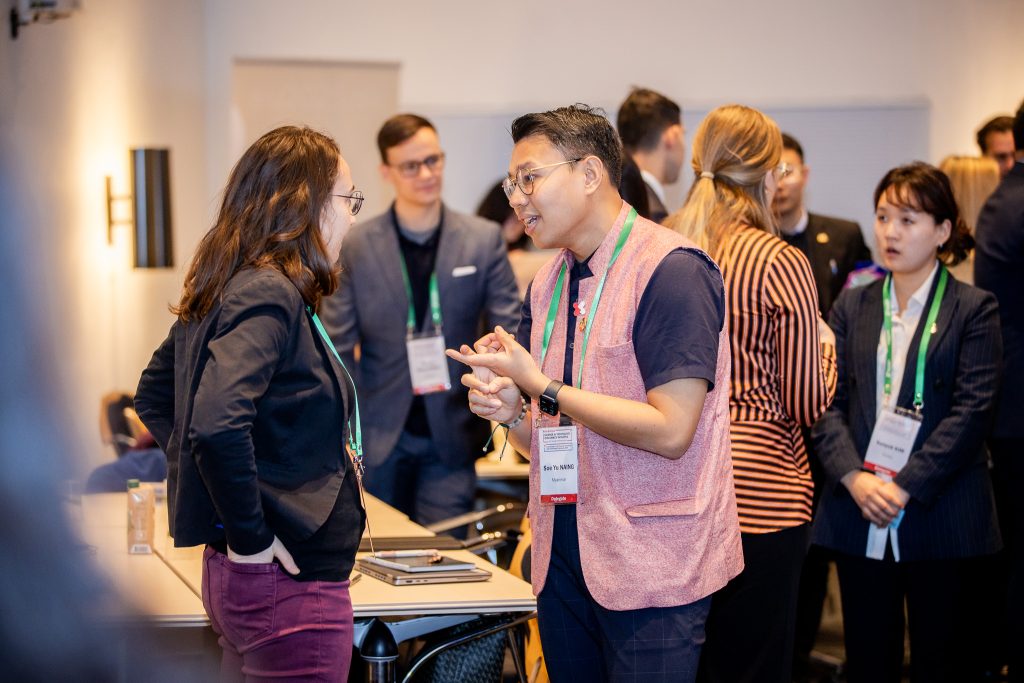
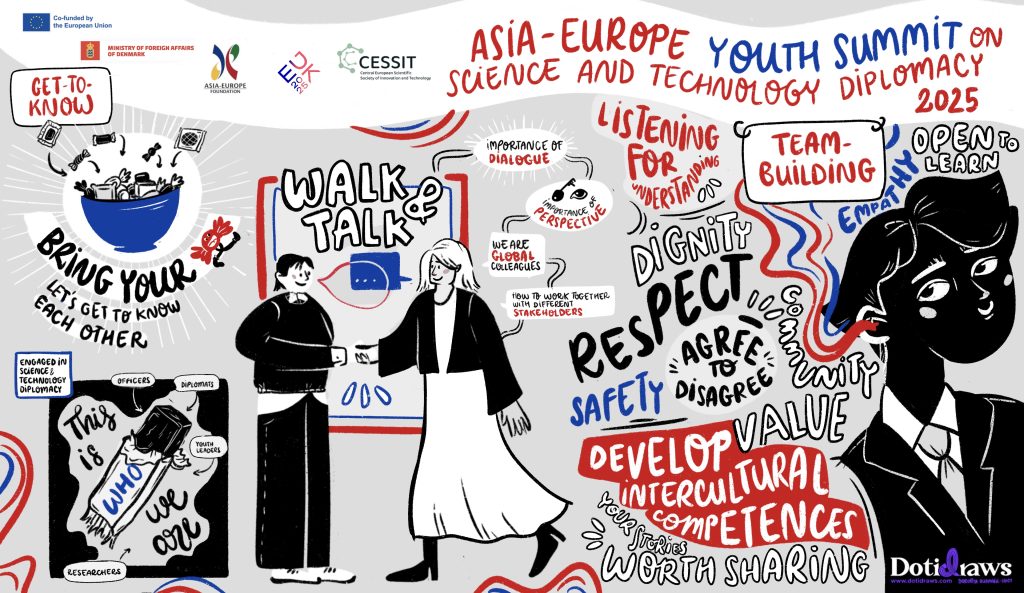
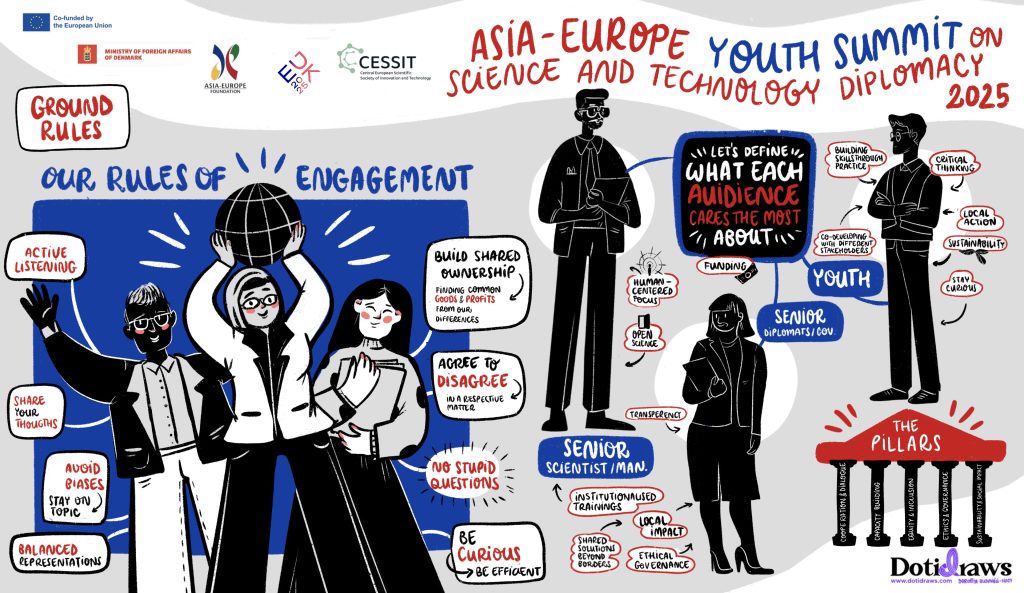
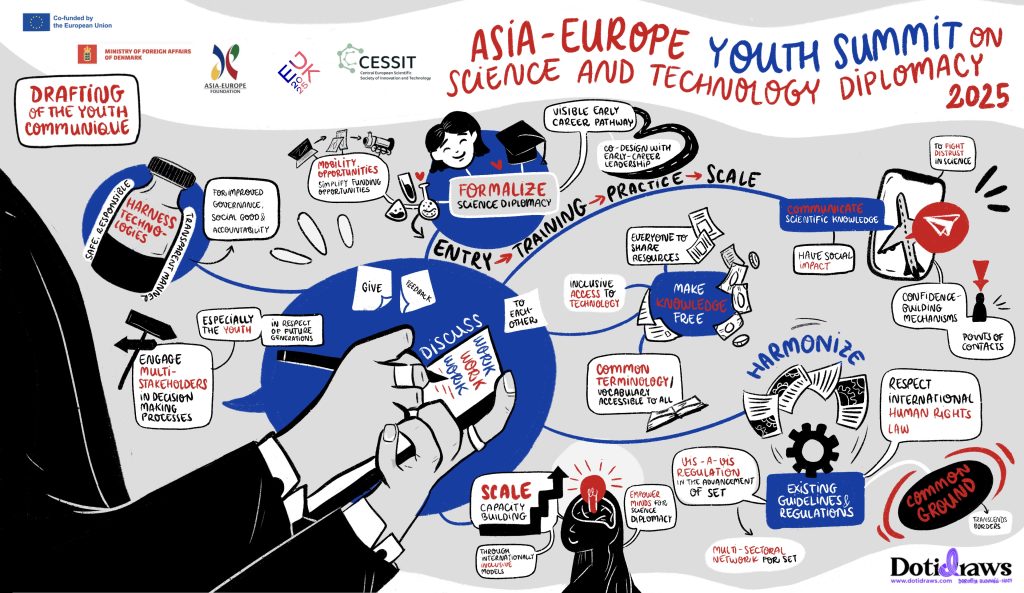
Following the welcome addresses, participants had the chance to start getting to know one another through different exercises facilitated by Ms Freya CHOW-PAUL, Youth Project Lead, Education Department, ASEF, and Ms Linnea REGNELL, Project Executive, Education Department, ASEF, with the aim of creating a solid foundation of trust and mutual understanding to build upon as they will develop their Asia-Europe Youth Communique. They also engaged in workshops, facilitated by Mr João MOURATO PINTO, Assistant Professor of Diplomacy at the University of Minho, Portugal, to brainstorm their ideas for the Communique. At the end of the first day, the ideas were coming together and they had established the 5 pillars of the recommendations which would become their Youth Communiqué, exploring how science and technology can strengthen international collaboration and shape a more connected, innovative future.
Day 1 finished with a visit to Tivoli and a dinner hosted by the Ministry of Foreign Affairs Denmark where participants got to enjoy a traditional Danish meal, whilst experiencing some of the Christmas spirit at the Tivoli gardens.
DAY 2: ASIA-EUROPE YOUTH SUMMIT ON SCIENCE AND TECHNOLOGY DIPLOMACY 2025
WORLD CAFE DIALOGUE: SCIENCE DIPLOMACY IN PRACTICE: WHEN THEORY MEETS REALITY
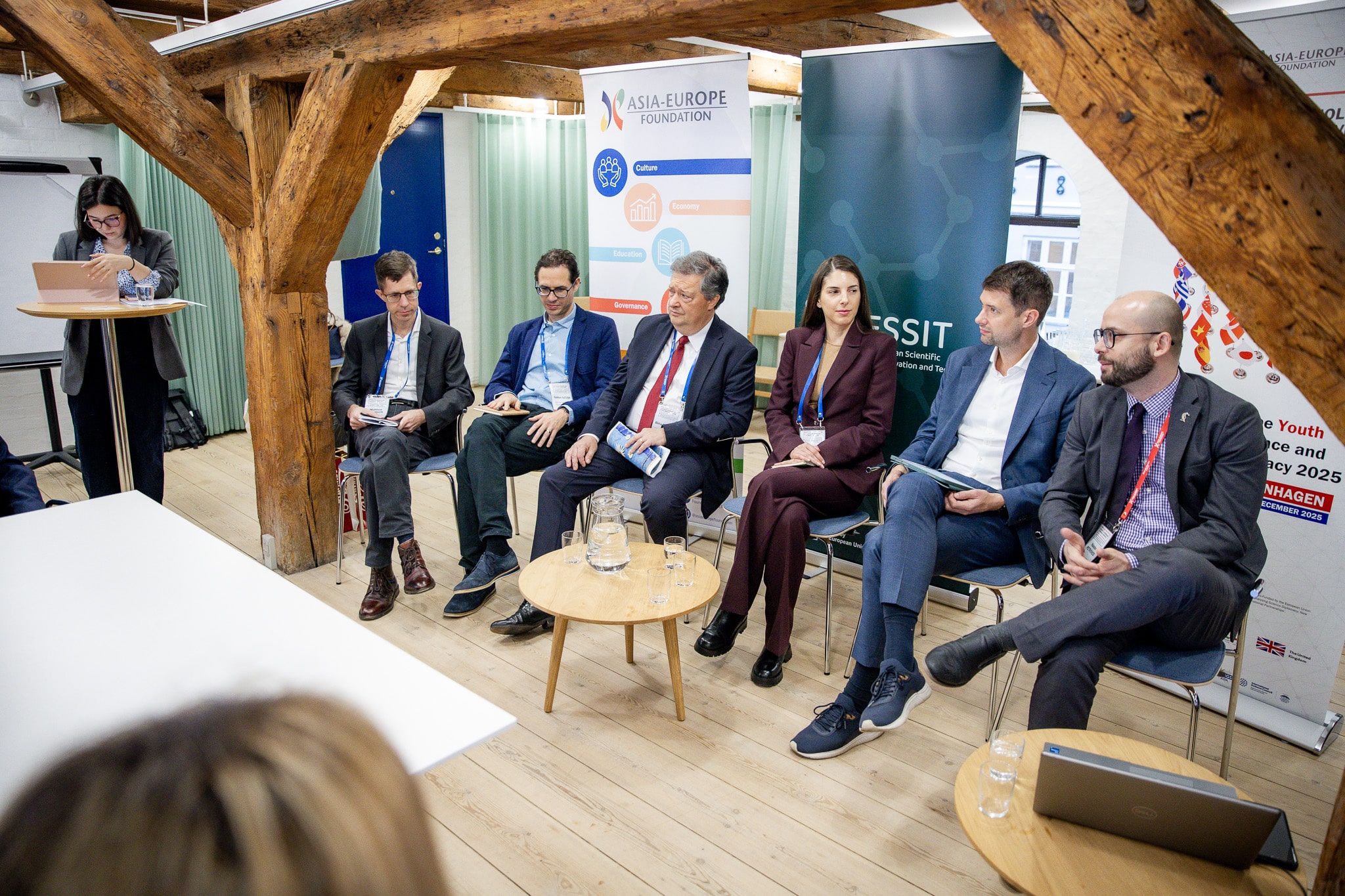
To help the participants and guide them in their dialogue as they worked on their recommendations, ASEF and the partners at the Central European Scientific Society of Innovation and Technology organised a World Cafe Dialogue with a panel of practitioners in the field of science and technology diplomacy – offering their input on the different perspectives and aspects of this complex ecosystem.
We were grateful to welcome Dr Béla KARDON, Chief Scientific Officer, Regional Centre for Information and Scientific Development (RCISD), Vice President, Central European Scientific Society of Innovation and Technology (CESSIT); Dr Gábor SZÜDI, Senior Researcher, Project manager, Centre for Social Innovation (ZSI); Dr Matthew ADAMSON, Associate Professor, McDaniel College Budapest; Dr Dijana ŠTRBAC, Research Associate, Institute of Economic Sciences (IEN); and Dr Tomaž GORENC, Director, Institute for Health and Environment (IZO).
The dialogue was moderated by Mr Nándor PETROVICS, Senior Research Expert and Research Impact Manager, Corvinus University of Budapest
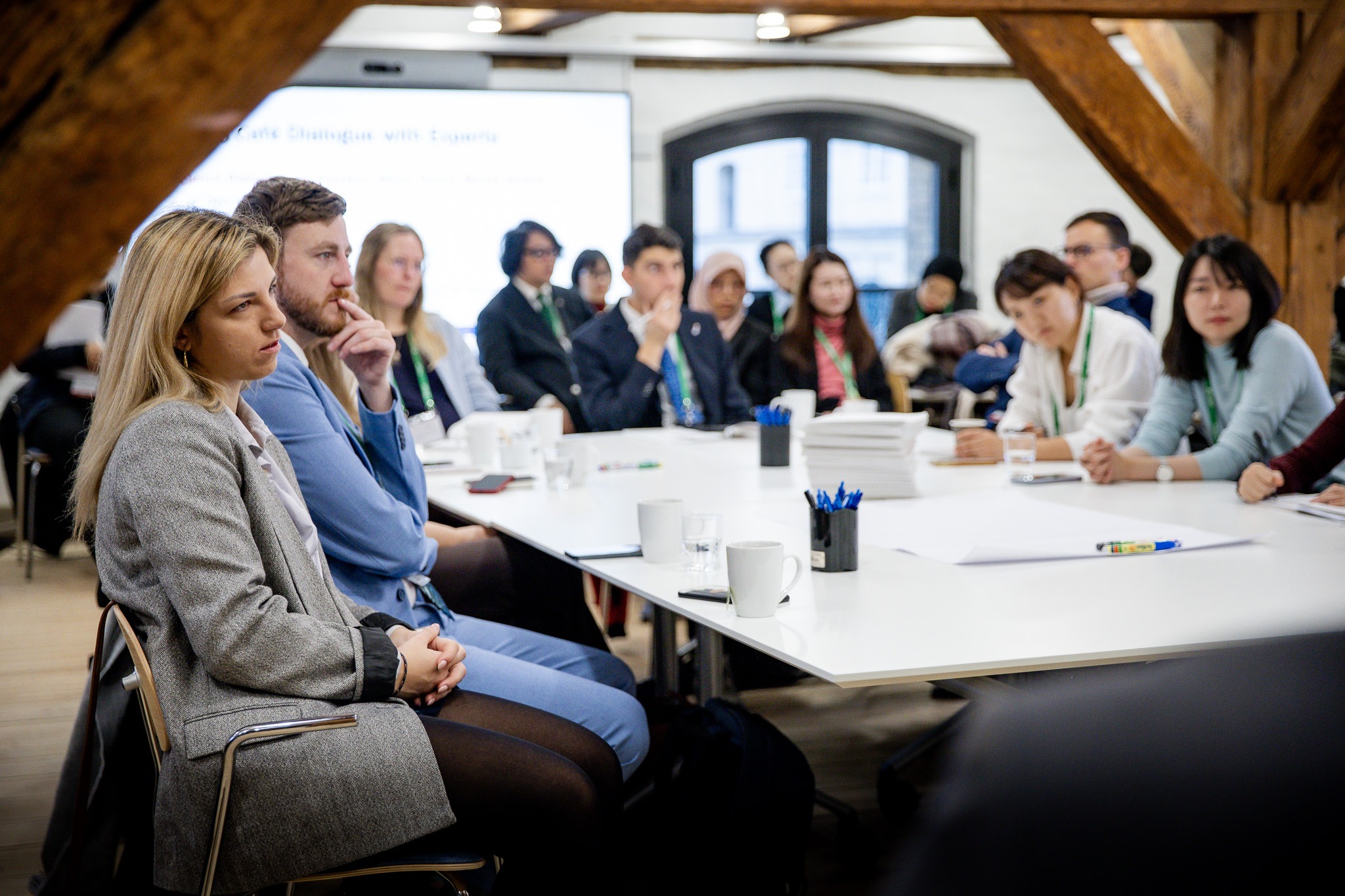
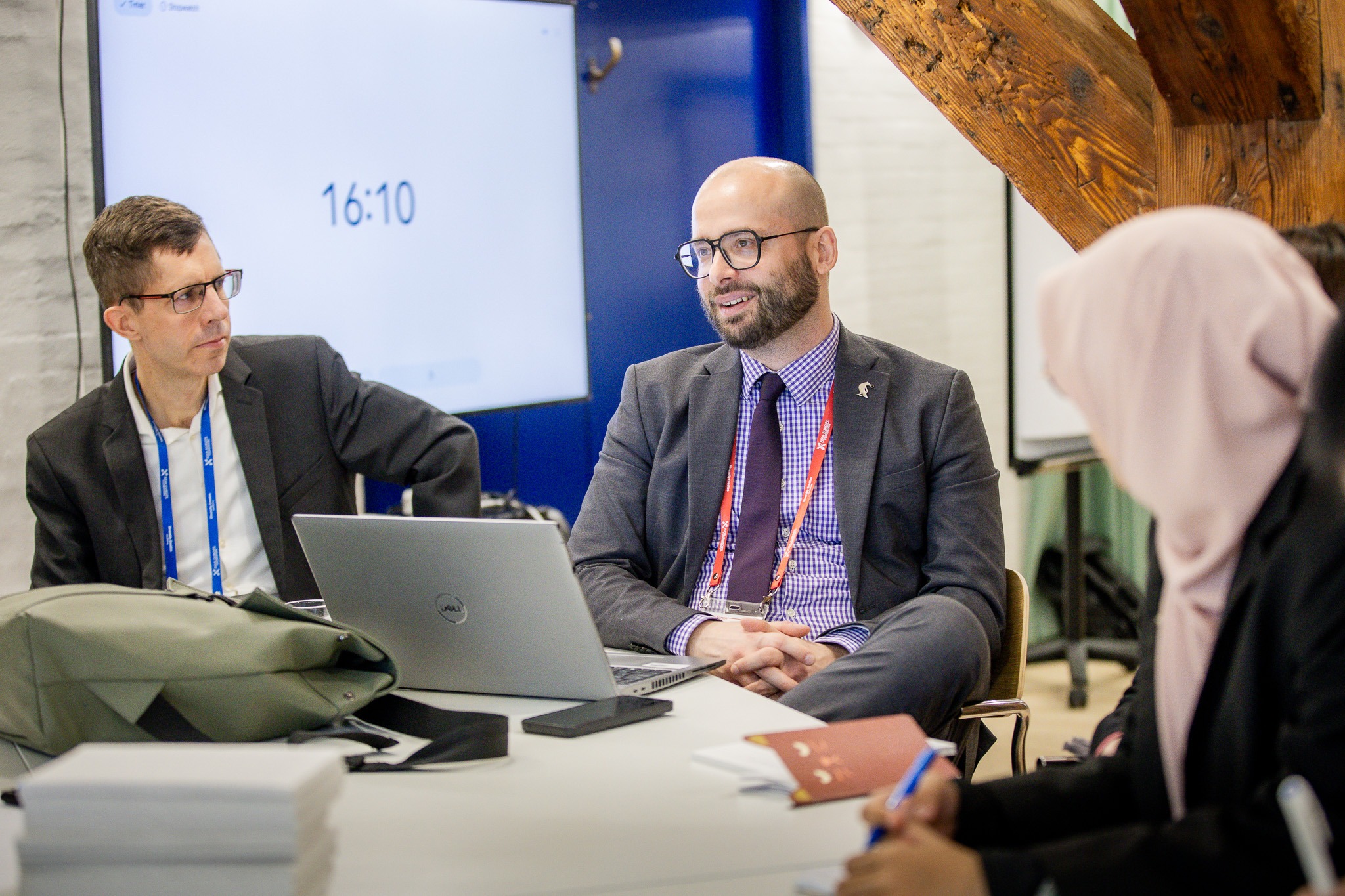
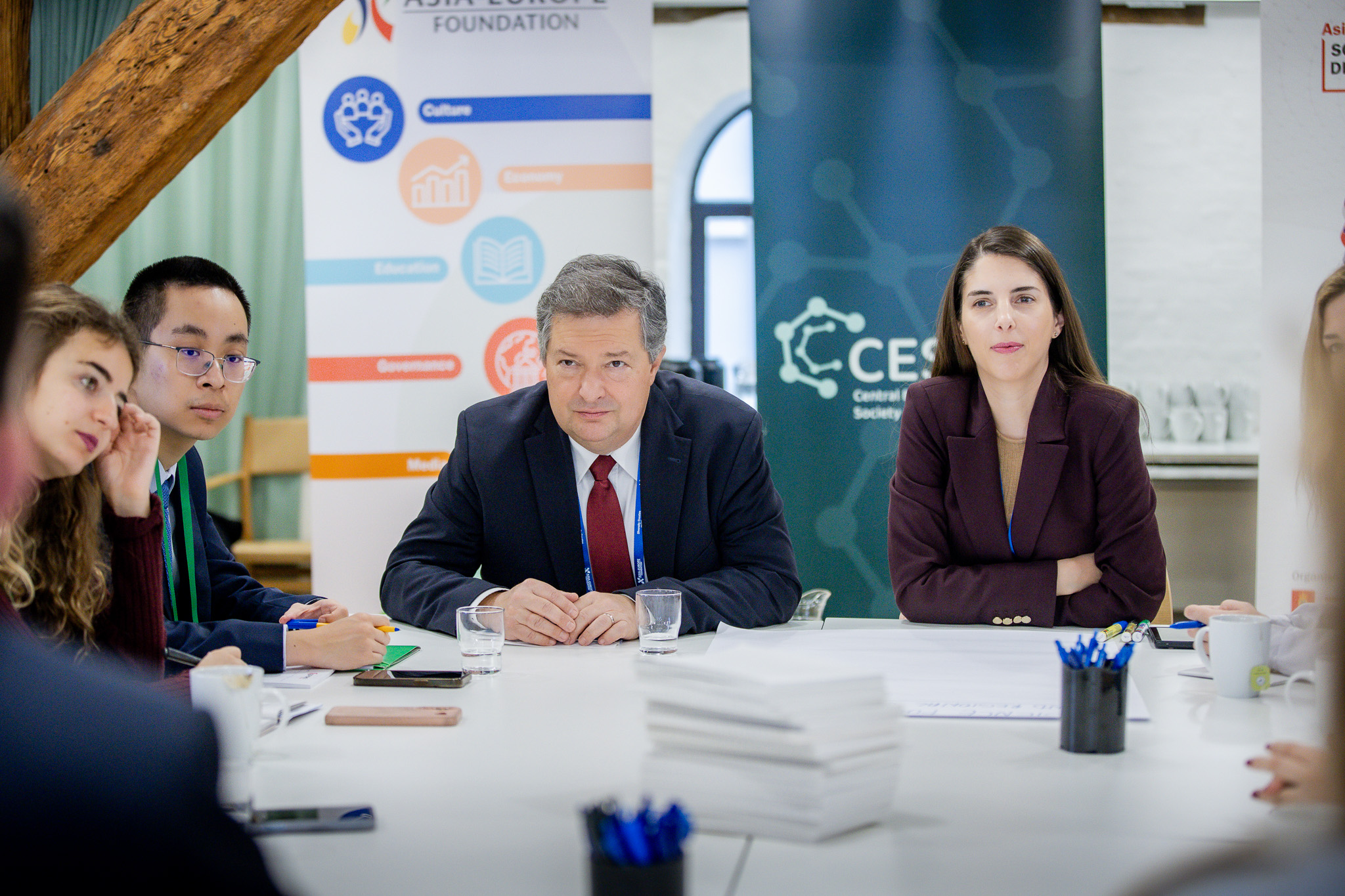
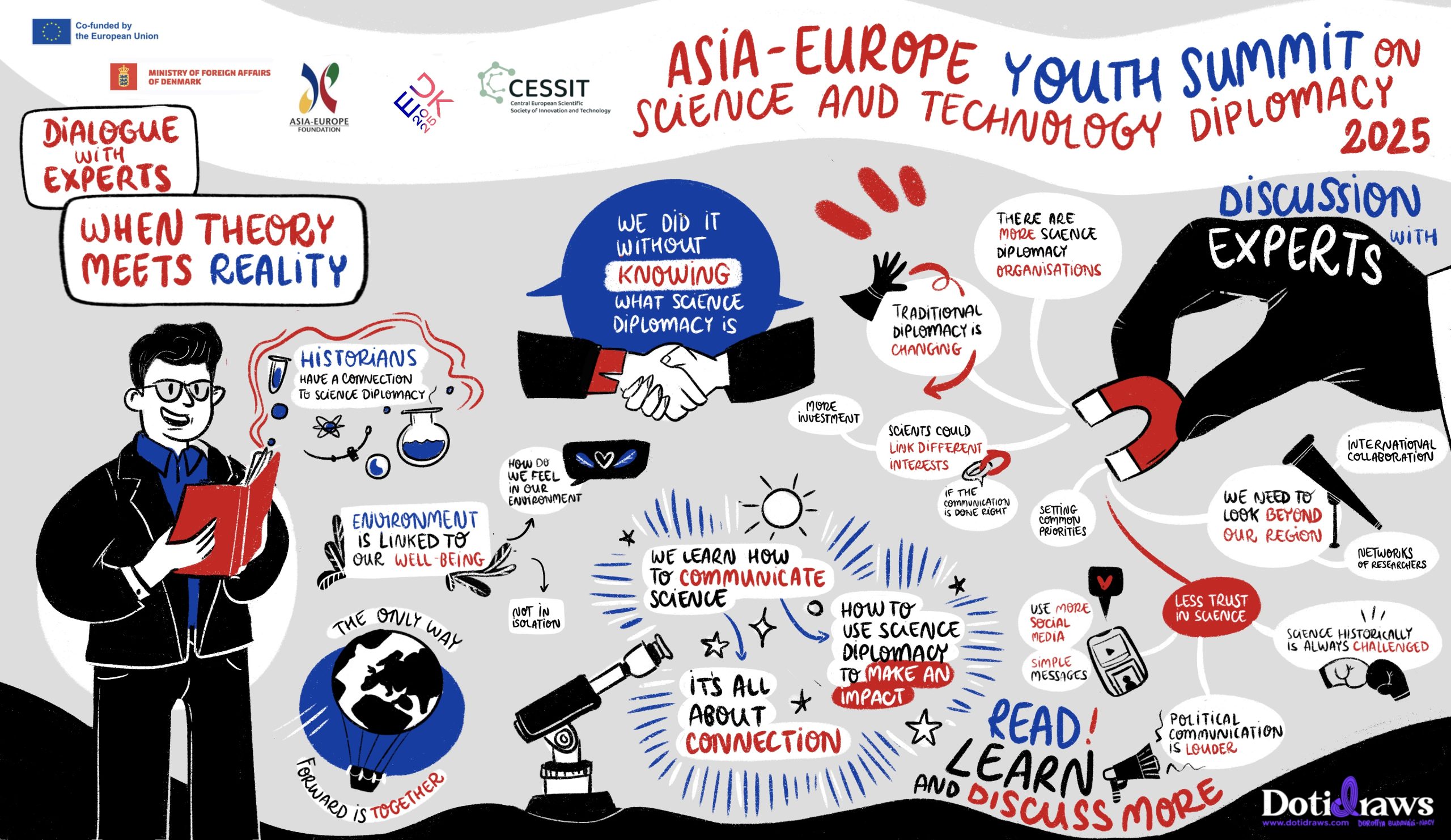
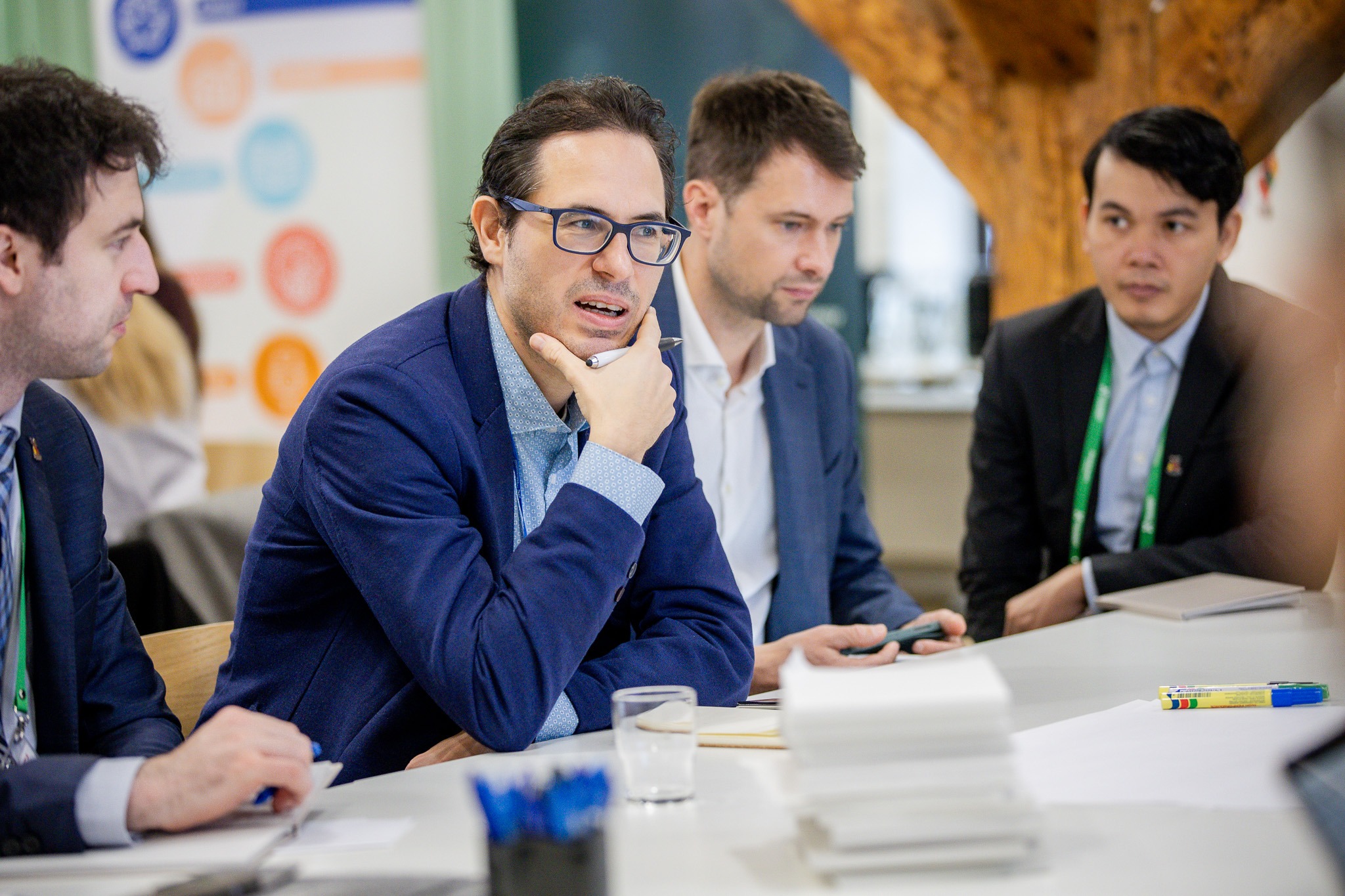
Following the dialogue, Mr João MOURATO PINTO continued to guide the delegates through different workshops and opportunities for facilitated peer-to-peer feedback sessions towards the development of their Youth Communique.
EXPERT FEEDBACK SESSION: SCIENCE & TECHNOLOGY DIPLOMACY ACROSS ASIA AND EUROPE
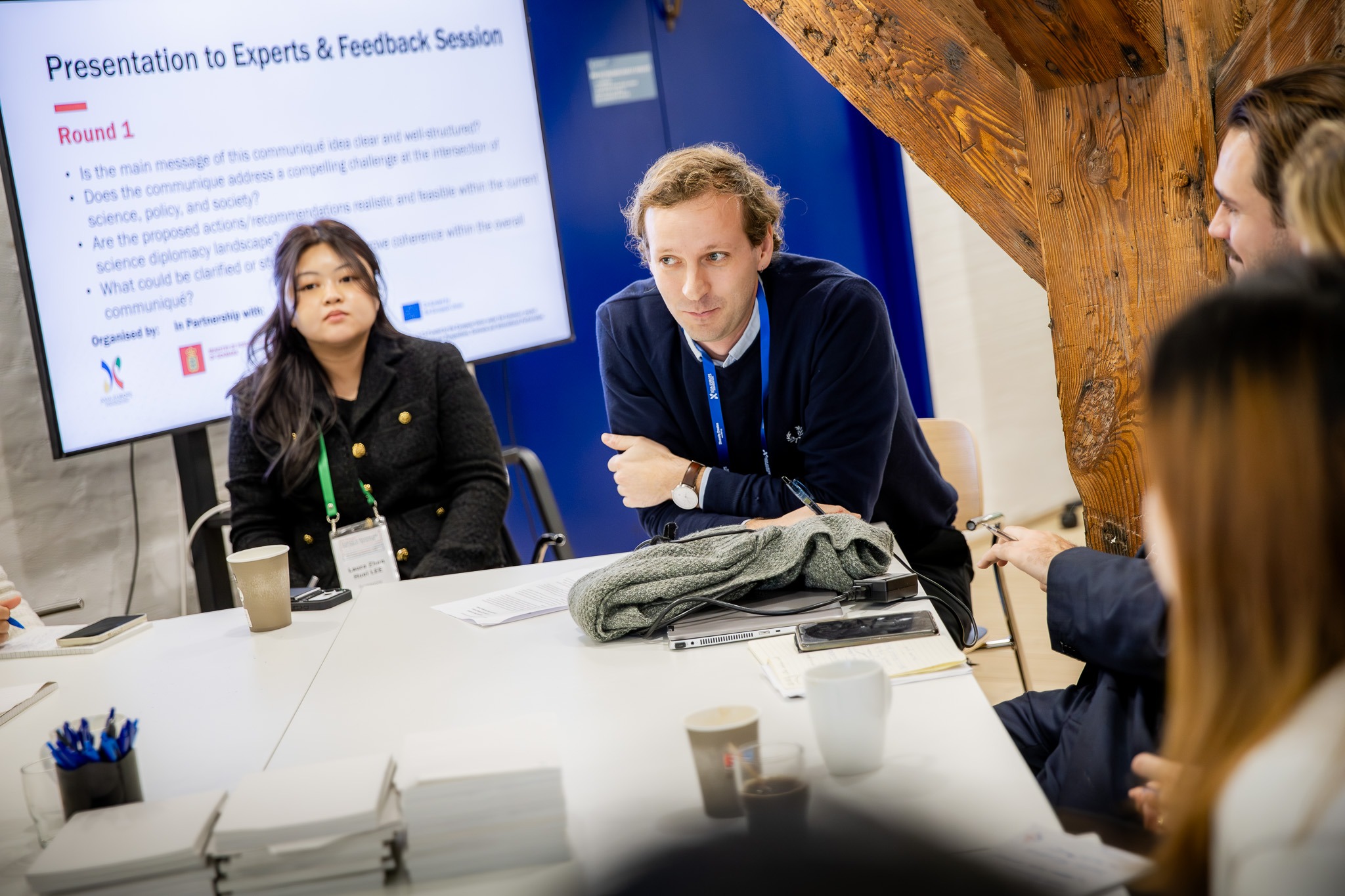
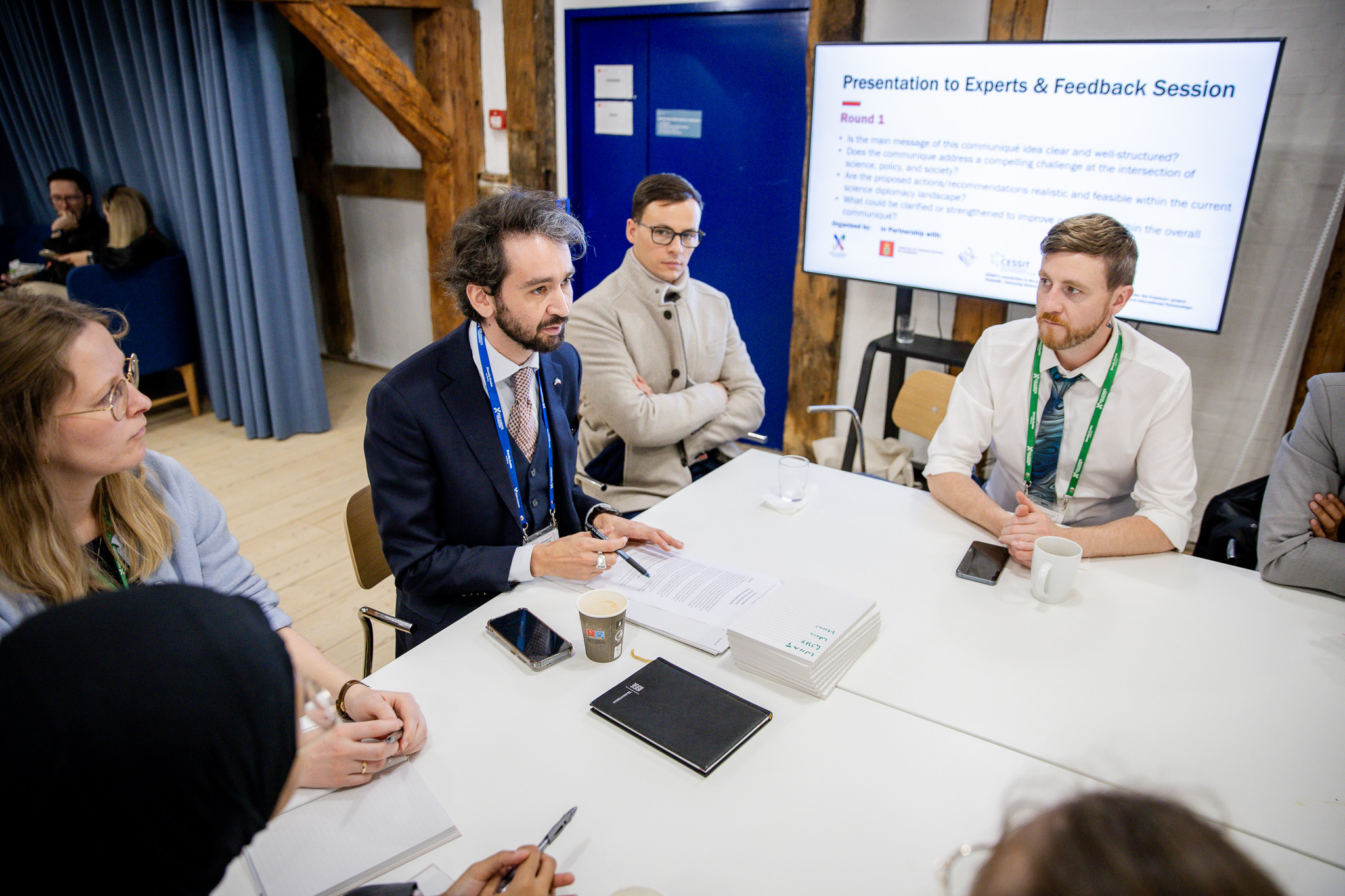
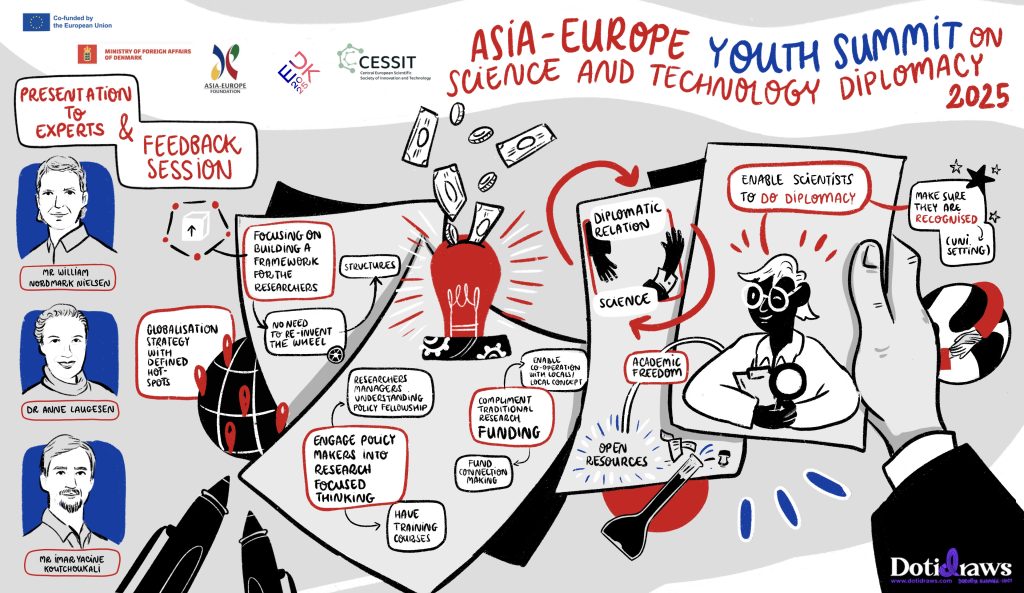
To help refine the Youth Communique, participants had the chance to present their ideas for the Asia-Europe Youth Communique on Science and Technology Diplomacy to a panel of experts. Through roundtable discussions with constructive dialogue and feedback, they refined ideas, considering diverse perspectives from policy, research, and diplomatic fields. This exchange helped strengthen the quality, coherence, and global relevance of the youth communique before its finalisation.
We were grateful to welcome the perspectives of Mr William NORDMARK NIELSEN, Head of Section, Centre for Research, Innovation and International Collaboration, Ministry of Higher Education and Science, Denmark; Dr Anne LAUGESEN, Science and Technology Officer, UK Science & Technology Network, British Embassy Copenhagen; Mr Imar Yacine KOUTCHOUKALI, Science Attache, Ministry of Foreign Affairs, Estonia.
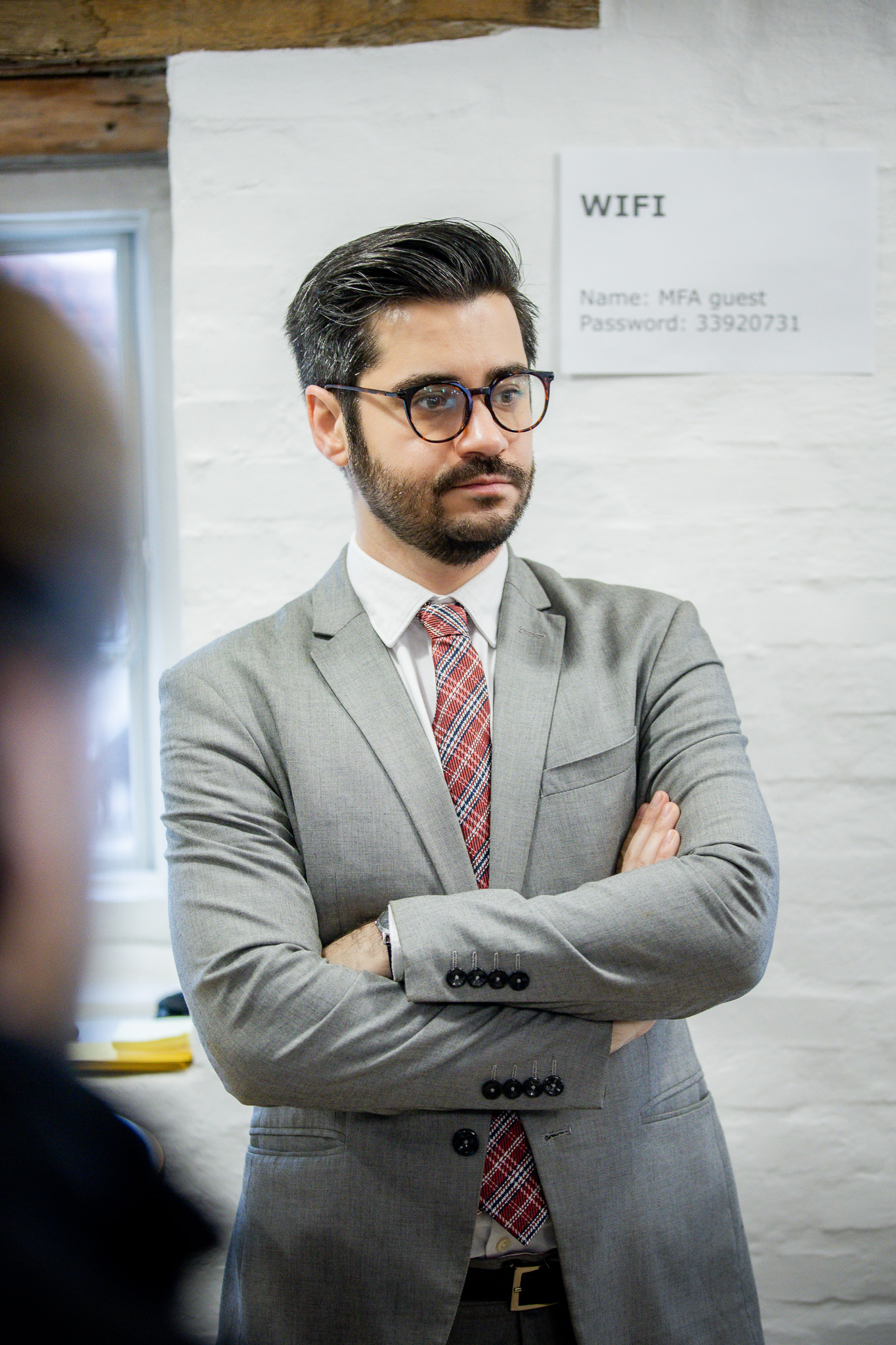
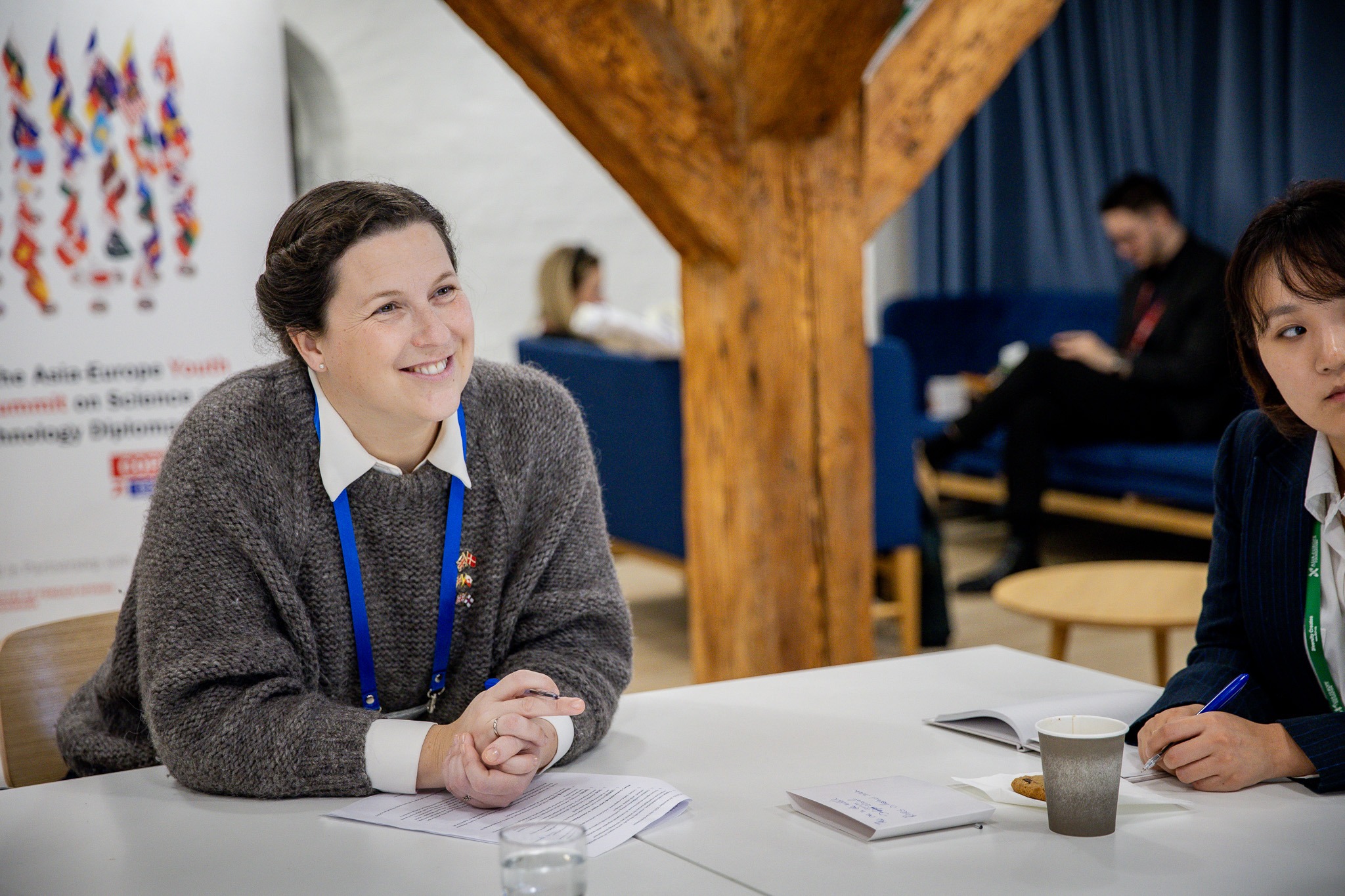
After the feedback, the participants had one last chance to refine their document – finalising the work they had been doing for the past 2 months as part of the online Training and the in-person Youth Summit, and prepare for the presentation of the document as the 2nd European Science Diplomacy Conference.
2nd EUROPEAN SCIENCE DIPLOMACY CONFERENCE
Between 16-17 December 2025, the participants were invited to join the 2nd European Science Diplomacy Conference: Bridging Divides in a Fragmented World, organsied by the Danish Presidency of the Council of the European Union and the European Commission and hosted at the Copenhagen Business School.
During Day 1 of the Conference, participants got to attend interactive panel discussions blending senior policymakers, researchers, and “disruptive voices” from early-career scientists, emphasising non-state actors and regional perspectives, offering insights into Europe’s science diplomacy priorities amid global divides.
The day wrapped up with a networking event where the participants could connect and build their networks with likeminded peers and experts in the field.
Day 2 continued with parallel sessions, inspirational keynotes, and discussions on ways in which we can use science as a bridge across political and societal divides – providing the participants with a lot of food for thought to bring back and reflect upon in relation to their professional lives.
PRESENTATION: ASIA-EUROPE YOUTH COMMUNIQUÉ ON SCIENCE AND TECHNOLOGY DIPLOMACY
Finally, at the Closing Ceremony, Ms Siti Nurlisa BINTI HAZIM (Malaysia) and Ms Elena OLMOS CARBONELL (Spain), as representatives of the cohort, delivered the ‘Asia-Europe Youth Communiqué on Science and Technology Diplomacy’ – sharing their 20 recommendations for the diplomatic and scientific community for a equitable and sustainable future for science and technology diplomacy.
The Communique is structured into five pillars: Cooperation and Dialogue, Capacity Building, Equity and Inclusion, Ethics and Governance, and Sustainability and Social Impact. Together, it calls for stronger cross-border collaboration, clearer career pathways and training in science diplomacy, more equitable access to science and technology, responsible standards for emerging technologies, and investments that maximise social and environmental impact.
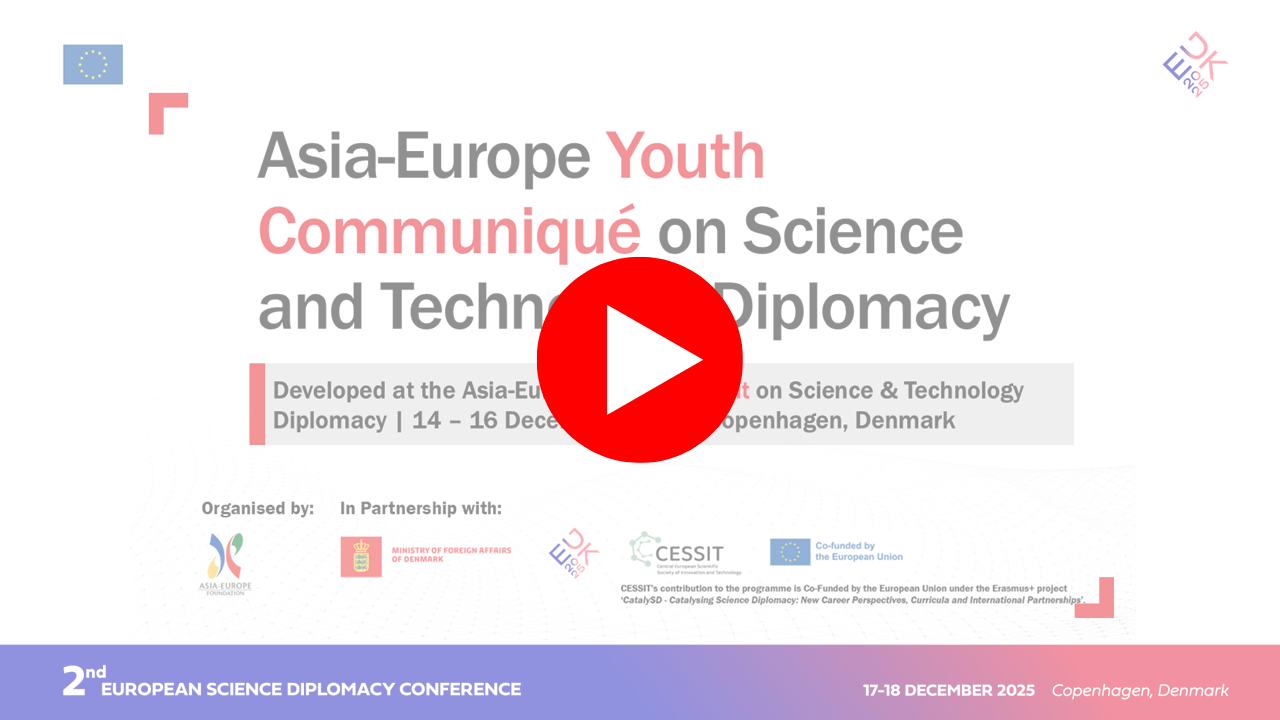
Livestream of 2nd European Science Diplomacy Conference
Watch the recording of the presentation of the Youth Communiqué here!
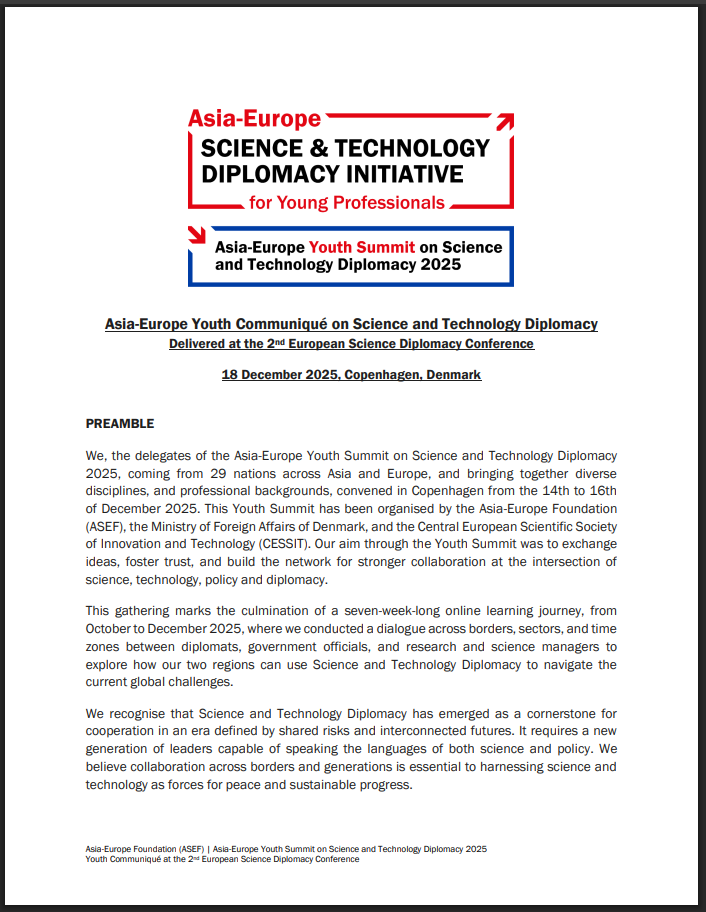
'Asia-Europe Youth Communiqué on Science and Technology Diplomacy'
Read the full document here!
CLOSING RECEPTION
On 18 December, following the closing of the 2nd European Science Diplomacy Conference, the participants gathered for one last time for the closing reception of the Asia-Europe Youth Summit on Science and Technology Diplomacy. This was the time to congratulate on another for the delivery of the Youth Communique and to celebrate the achievement together.
We were glad to welcome Prof ZAKRI Abdul Hamid, Founding Director, Institute for Science Diplomacy and Sustainability, UCSI, Malaysia; and Dr Marga GUAL SOLER, Executive Director, Capacity and Leadership, GESDA, at the reception who both gave some inspiring closing remarks to the participants.
This marks the end of a 2-month journey. Our wish is that the participants will use their new-found knowledge and the connections built to bridge the two regions to better navigate this complex landscape of Science and Technology Diplomacy in Asia and Europe.
Watch the highlights from the Youth Summit below!
You can read about the full programme here.