
Who should decide how AI shapes teaching and learning?
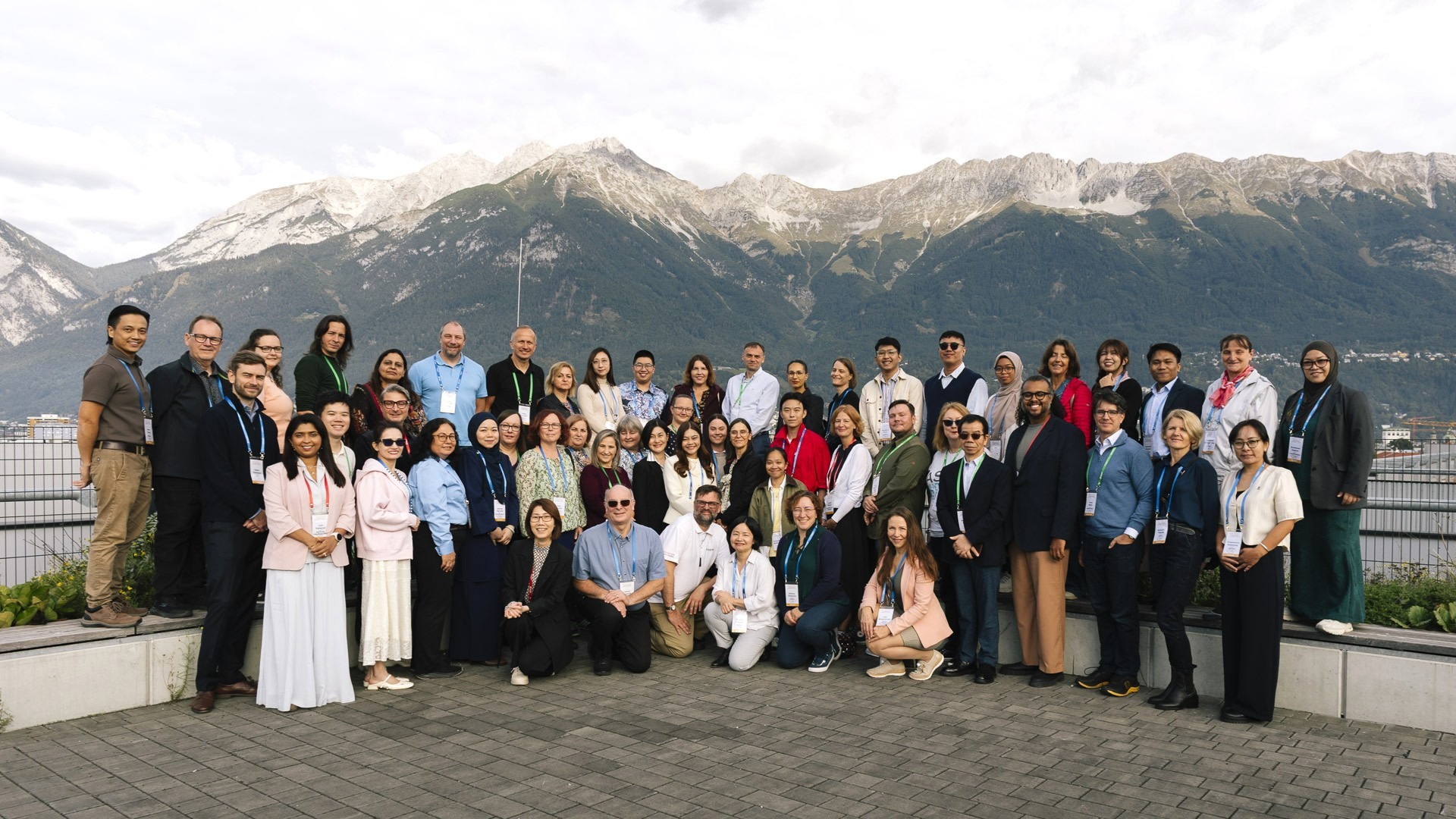
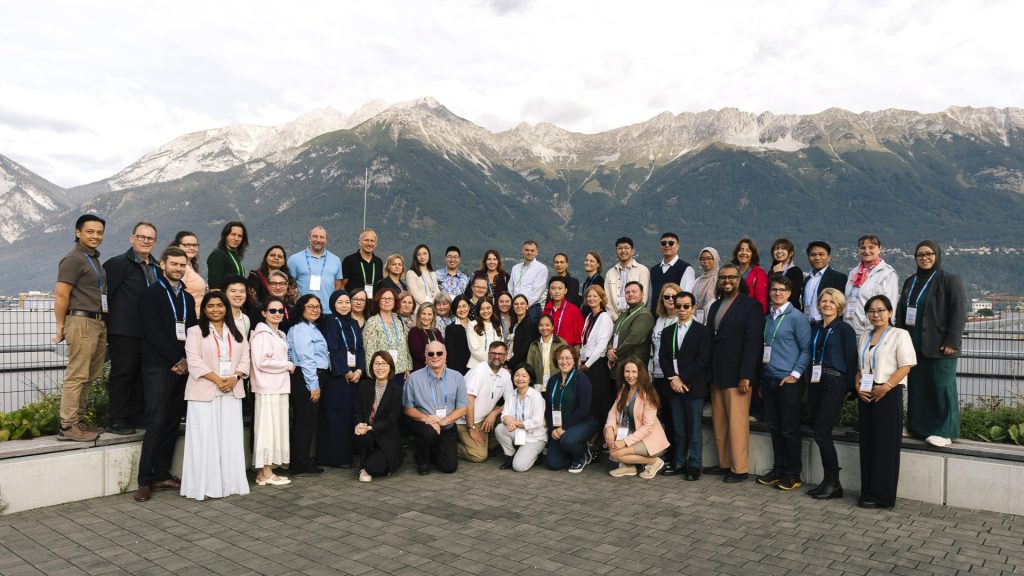
That question brought more than 70 educators and education leaders from over 30 countries across Asia and Europe to Innsbruck, Austria, for the 19th ASEF Classroom Network Conference from 21 to 25 September 2026. Under the theme “Future-Ready Teaching: Human Agency in the Age of AI”, participants examined how teachers and learners can remain active decisionmakers as AI becomes part of education.
The conference was the final stage of a longer learning journey. Earlier in the year, educators had learned with experts, worked in international teams to design Innovative Teaching Practices (ITPs), and piloted those ideas in their own schools. They came to Innsbruck with classroom experiences to share and questions to explore with their peers.
Imagining the future, then testing ideas together
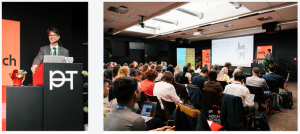
The gathering began with a welcome reception at the University College of Teacher Education Tyrol (PH Tirol). At the official opening the following morning, participants were welcomed by Mr Zhang Lei, Deputy Executive Director of the Asia-Europe Foundation (ASEF); Ms Elisabeth Mayr, Deputy Mayor of Innsbruck; Ambassador Sylvia Meier-Kajbic, ASEF Governor for Austria; and Dr Prof Regine Mathies, Rector of PH Tirol.
In the opening keynote, Dr Kevin Martin, Managing Director of the Digital Education Futures Initiative at Hughes Hall, University of Cambridge, asked participants to consider whose visions of the future influence education today. His session invited educators to imagine futures in which teachers and learners have a greater say in how AI is used.
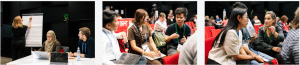
Participants then turned to their own practice. In a practical Agile workshop facilitated by Ms Jyoti Rahaman of ASEF, teachers revisited the classroom challenges behind their ITPs and explored ways to strengthen their ideas. During parallel Innovathon sessions, ITP teams shared what happened when they piloted their practices in schools. Fellow educators, mentors and local teachers offered questions and feedback to help the teams develop their work further.
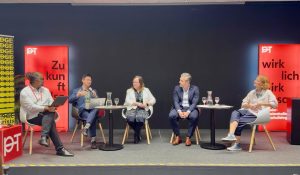
The day closed with a roundtable, “Ethical AI for Ensuring Teacher & Learners’ Agency: Policy Reflections and Classroom Realities”. Professor Seng Chee Tan, Professor Linda Corrin, Dr Prof Claus Oberhauser and teacher and ASEFClassNet alumna Mrs Claudia Müllauer, with Mr Jason Means as moderator, brought research, policy and classroom perspectives into dialogue. Their discussion focused on a practical challenge: how can ethical principles guide the decisions teachers and learners face every day?
Perspectives from Asia and Europe
Wednesday opened with two keynotes that approached the conference theme from different directions. In the keynote from Asia, Professor Seng Chee Tan of Singapore’s National Institute of Education explored “The Co-Evolution of Pedagogy: Adapting Teaching for Tomorrow’s Classrooms”. He considered how teaching can evolve alongside new technologies while continuing to cultivate critical thinking, adaptability and curiosity.
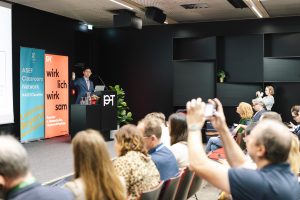
In the keynote from Europe, Professor Tim Crane of Central European University asked participants to rethink what we mean by intelligence. His talk, “Against Intelligence? Rethinking Human and Artificial Minds in Education”, examined the differences between artificial systems and human thinking, and what those differences mean for knowledge, judgement and learning.
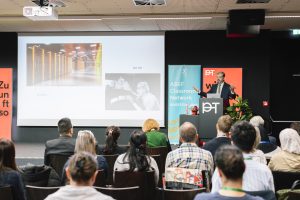
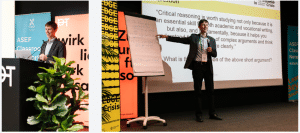
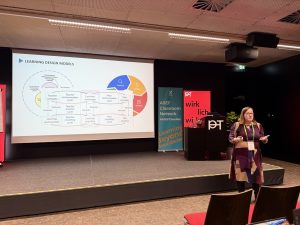
The discussion then moved into two thematic workshops. Dr Simon Rippon of Central European University and Knowledge in Crisis led a session on critical reasoning. When AI can generate a persuasive answer in seconds, how can educators still help students examine claims, develop arguments and find their own voices? Later, Dr Linda Corrin of Deakin University explored how AI can support creativity and learning design while keeping teachers’ choices and learners’ ownership at the centre.
Learning from Austrian schools
One of the conference’s most direct encounters with local practice took place during visits to PH Tirol’s model and research schools for primary and lower secondary education. Participants learned about teaching approaches and educational priorities in the Austrian context, then had opportunities to compare those experiences with their own.
For an international group of educators, the visits offered more than a showcase of local innovation. They created space to ask which ideas might travel across borders, what would need to change, and how schools can learn from one another while responding to the needs of their own learners.
Putting teachers’ work in the spotlight
Thursday began with a closing keynote by Dr Prof Anja Steiner of PH Tirol. She introduced the PCRR Framework as a pedagogically grounded way to use AI while strengthening learners’ reflection, critical thinking and subject knowledge.
The focus then shifted to the ITP teams. In the Innovation Award competition, teachers delivered short pitches about the practices they had developed and piloted, followed by questions from the jury. The jury comprised Professor Ronghuai Huang of Beijing Normal University, Dr Kevin Martin, Dr Linda Corrin and Ms Monika Leitner, a student at PH Tirol. Including a student on the jury gave a learner a voice in considering ideas designed for learning, a meaningful expression of the conference theme.
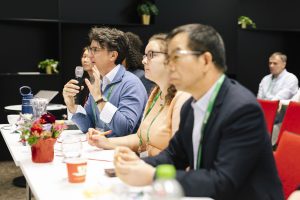
After the Innovation Award Competition, the ASEFClassNet19 Conference celebrated five educator teams through the ASEFClassNet19 Innovation Awards, recognising Innovative Teaching Practices developed collaboratively across Asia and Europe and piloted in real classroom settings. Project Autonomy received the Gold Award, Neural Nomads the Silver Award, The Confluence Collective the Bronze Award, while Arc-itects and The Control Group received Special Awards. The awards recognised not only the ideas presented at the Conference, but also the teams’ collaboration, experimentation and commitment to strengthening teacher and learner agency in the age of AI.
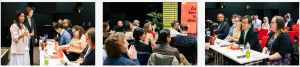
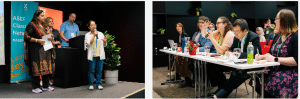
Here is a brief overview of the awards:
🏆 Gold Award — Project Autonomy
Represented at the Conference by Nurulhazwa Hashiem, Brunei Darussalam, and Valters Didribsons, Latvia.
Other team members include Olivia Van Grinsven (Australia). This ITP was mentored by our alumna Ms Juliette Bentley (Australia).
🥈 Silver Award — Neural Nomads
Represented at the Conference by Bibiane Blauensteiner, Austria; Kyaw Wana Lin, Myanmar; and Johann Sievering, Switzerland. Other team members include Cherry Mae Batayola (Philippines). This ITP was mentored by our alumnus Dr Michael Harvey (New Zealand)
🥉 Bronze Award — The Confluence Collective
Represented at the Conference by Yanbing Fu, China; Tina Grimm-Svahn, Finland; Andrew Hancock, New Zealand; and Marjorie Gracieuse, Switzerland. This ITP was mentored by our alumna Ms Juliette Bentley (Australia).
✨ Special Award — Arc-itects
Represented at the Conference by Katarzyna Pietrzak, Poland; Ana Bodea, Romania; Laurel Mason, New Zealand; and Joanne Narksompong, Thailand. This ITP was mentored by our alumnus Mr Lauri Hellsten (Finland).
✨ Special Award — The Control Group
Represented at the Conference by Georgios Villias; Niamh Mc Nally, Ireland; Jethromel Meneses, Indonesia; and Nichapa Ruksut, Thailand. This ITP was mentored by our alumnus Mr Yuqing Long (China).
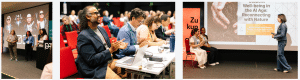
The afternoon looked beyond the competition. Ms Juliette Bentley and Mr Lauri Hellsten shared how ASEFClassNet alumni have continued to lead through EmpowerEd projects. PH Tirol educators Mr Patrick Pallhuber his work helping future vocational teachers engage with AI through prompt engineering, fact-checking and AI cooperation. The programme concluded with the ITP awards, reflections from participants and partners, and a farewell celebration.
ASEFClassNet19 began with teachers identifying challenges in their classrooms. It brought them together across Asia and Europe to design responses, test them with students and learn from the results. In Innsbruck, those individual experiences became a shared conversation about the future of teaching. The next steps belong in the classrooms and schools to which educators now return, where choices about AI, learning and human agency are made every day.
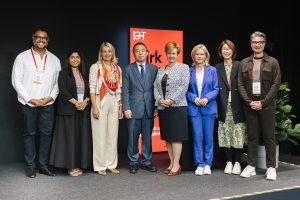
The conference was organised by ASEF in partnership with local institutions in Austria, PH Tirol and Knowledge in Crisis led by Central European University. It was supported by Austria’s Federal Ministry for European and International Affairs and Federal Ministry of Education. The overall ASEFClassNet19 project was co-funded by the Ministry of Foreign Affairs of Denmark and the Ministry of Foreign Affairs of Japan.
Photo Credits: ASEF and Aslan Kudrnofsky
Learn more about the overall ASEFClassNet19 project here: ASEFClassNet19 Project
Have questions about the project? Reach out to us at: classnet@asef.org