

ASEFClassNet19 has reached an inspiring practical stage, with 32 Innovative Teaching Practices (ITPs) successfully co-designed and now being implemented in classrooms across Asia and Europe. This marks a critical shift from ideas to action, where over 150 educators from 42 countries are actively exploring how AI can enhance teaching and learning while maintaining strong human agency and ethical aspects of AIED at the core of education.
As implementation begins, several key themes are emerging from the designed ITPs, offering valuable insights into how educators are navigating the opportunities and challenges of AI in diverse classroom contexts:
1. Human-AI Collaboration in Learning Design
Teachers are integrating AI tools to support lesson planning, formative assessment, and differentiated instruction, while retaining their role as critical decision-makers. AI is positioned as an enabler that enhances, rather than replaces, professional judgement and pedagogical intent.
2. Ethics, Critical Thinking, and AI Literacy
A strong emphasis is placed on helping students critically engage with AI technologies. Many ITPs foster ethical awareness, bias recognition, and responsible use, equipping learners with the skills needed to navigate an increasingly AI-driven world.
3. Inclusive and Contextualised Learning
Educators are adapting AI-enabled approaches to suit diverse classroom realities, ensuring that practices remain accessible, equitable, and locally relevant. This includes thoughtful consideration of varying levels of digital access, as well as cultural and educational contexts.
4. Student Agency and Co-Creation
Students are increasingly positioned as active participants in the learning process. Through inquiry-based learning, collaboration, and problem-solving activities, they are encouraged to co-create knowledge and engage more meaningfully with AI tools.
5. Interdisciplinary and Future-Oriented Skills
The ITPs connect AI with broader competencies such as creativity, systems thinking, and sustainability. This interdisciplinary approach supports the development of future-ready learners who can respond to complex, real-world challenges.
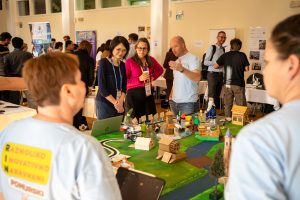
With the programme now in the Action Learning Phase, ASEFClassNet19 becomes a space of real-world experimentation, where committed educators across 42 countries are translating collaboration into practice and contributing to a growing body of knowledge on future-ready teaching and learning. This phase provides a valuable opportunity for our educators to experiment, adapt, and reflect, generating practical insights into what works, what needs adjustment, and how AI can be integrated in ways that are effective, inclusive, and ethically grounded.
The journey will conclude at the on-site conference in Innsbruck, where selected educators will meet face-to-face and share implementation outcomes and further develop their ITPs into scalable resources for wider use.
Stay connected to learn more as these efforts continue to take shape in classrooms, turning collaboration into meaningful learning experiences.
Curious to learn more about the project? Click here.
Have questions? Write to us at: classnet@asef.org