
Established in 2021, ASEFInnoLab is a design-thinking laboratory that enables higher education stakeholders to exchange knowledge, build capacity and collaboratively address global challenges. Its seventh edition explores how universities can help ensure that artificial intelligence is researched, governed and applied for the common good.
At the heart of ASEFInnoLab7 is the White Paper Lab, where participants have been collaboratively developing strategic papers outlining pathways for higher education institutions to align AI research, development and deployment with societal needs, ethical principles and long-term public value.
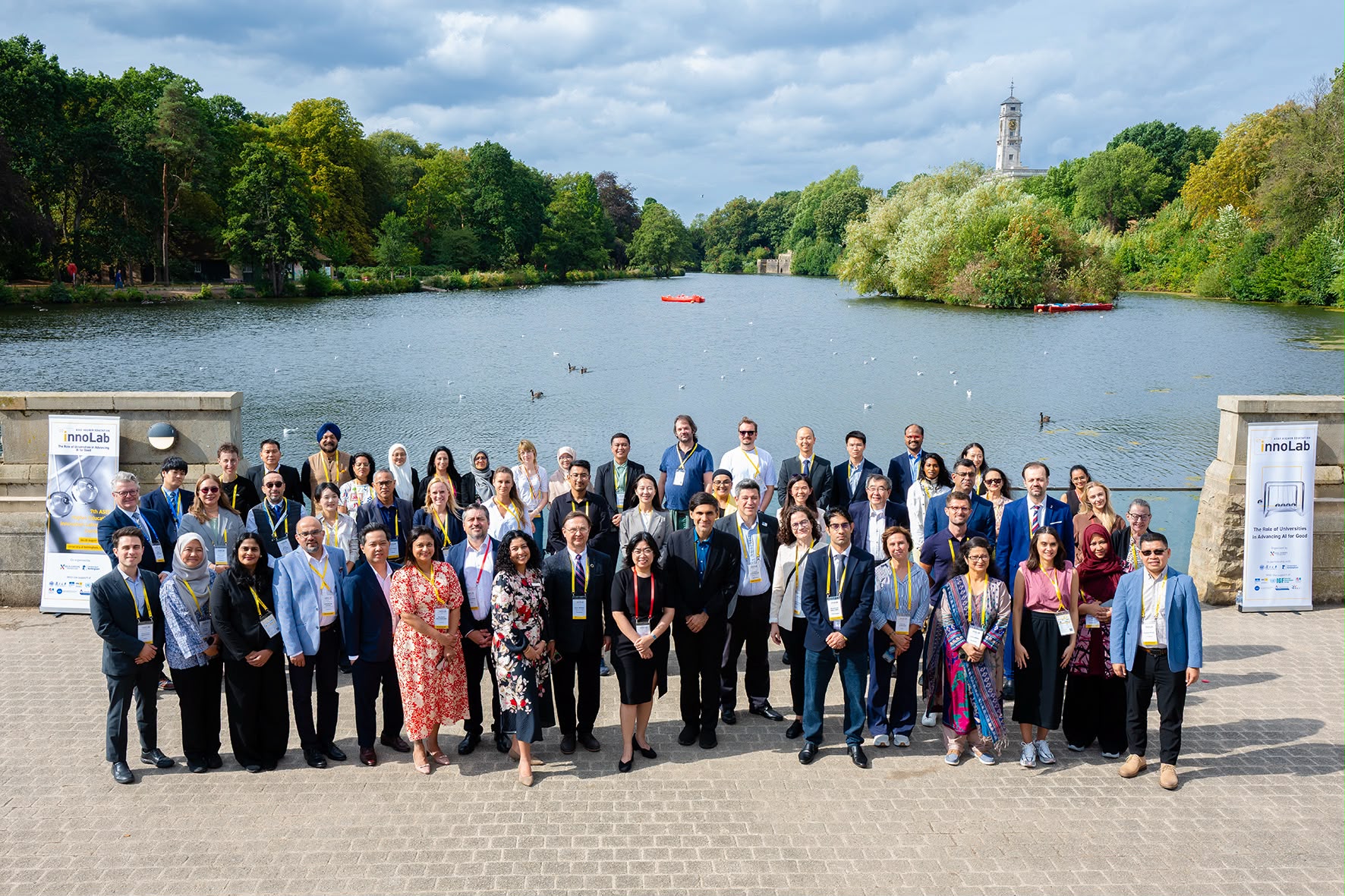
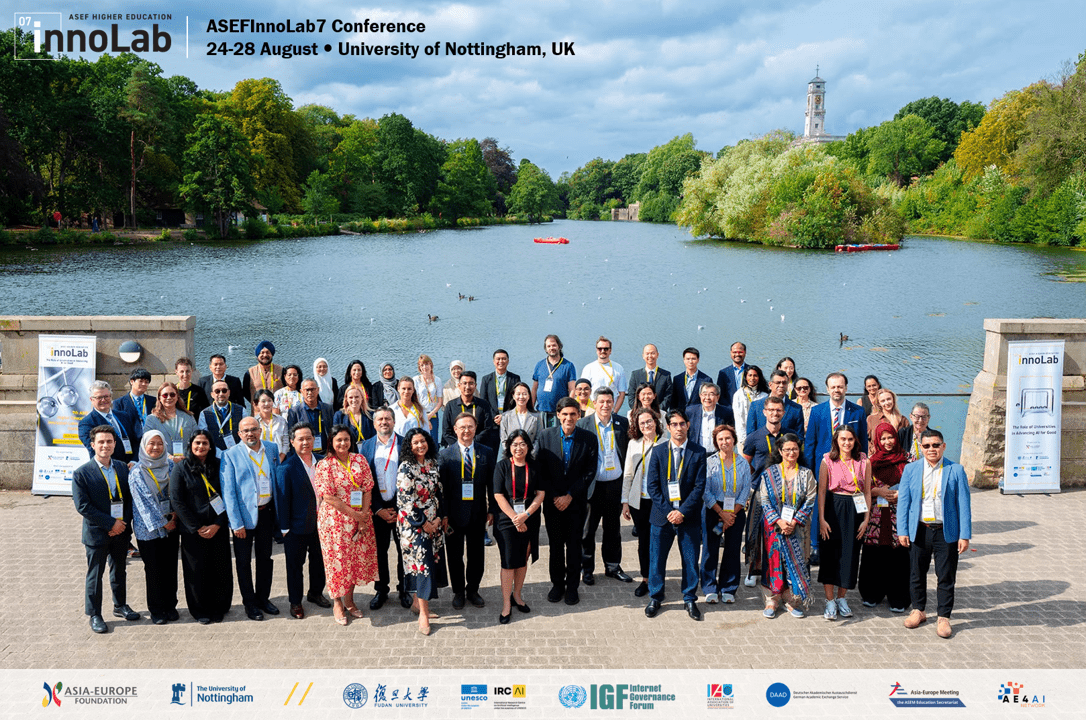
Last 24-28 August 2026, the 7th ASEF Higher Education Innovation Laboratory Conference brought together 75 higher education professionals, experts, academics and researchers from across Asia and Europe to explore “The Role of Universities in Advancing AI for Good“.
The ASEFInnoLab7 Conference marks an important milestone in this process, bringing participants together to present and refine their draft white papers, exchange feedback with peers and experts, explore emerging perspectives on AI and higher education, and strengthen Asia-Europe collaboration.
This event is co-organised by the Asia-Europe Foundation and the University of Nottingham, with strong support from partner organisations Fudan University, the International Research Centre on Artificial Intelligence, the International Association of Universities, the UN Internet Governance Forum, the ASEM Education Secretariat, the German Academic Exchange Service (DAAD), and the Asia-Europe for Artificial Intelligence Network.
 24–28 August 2026
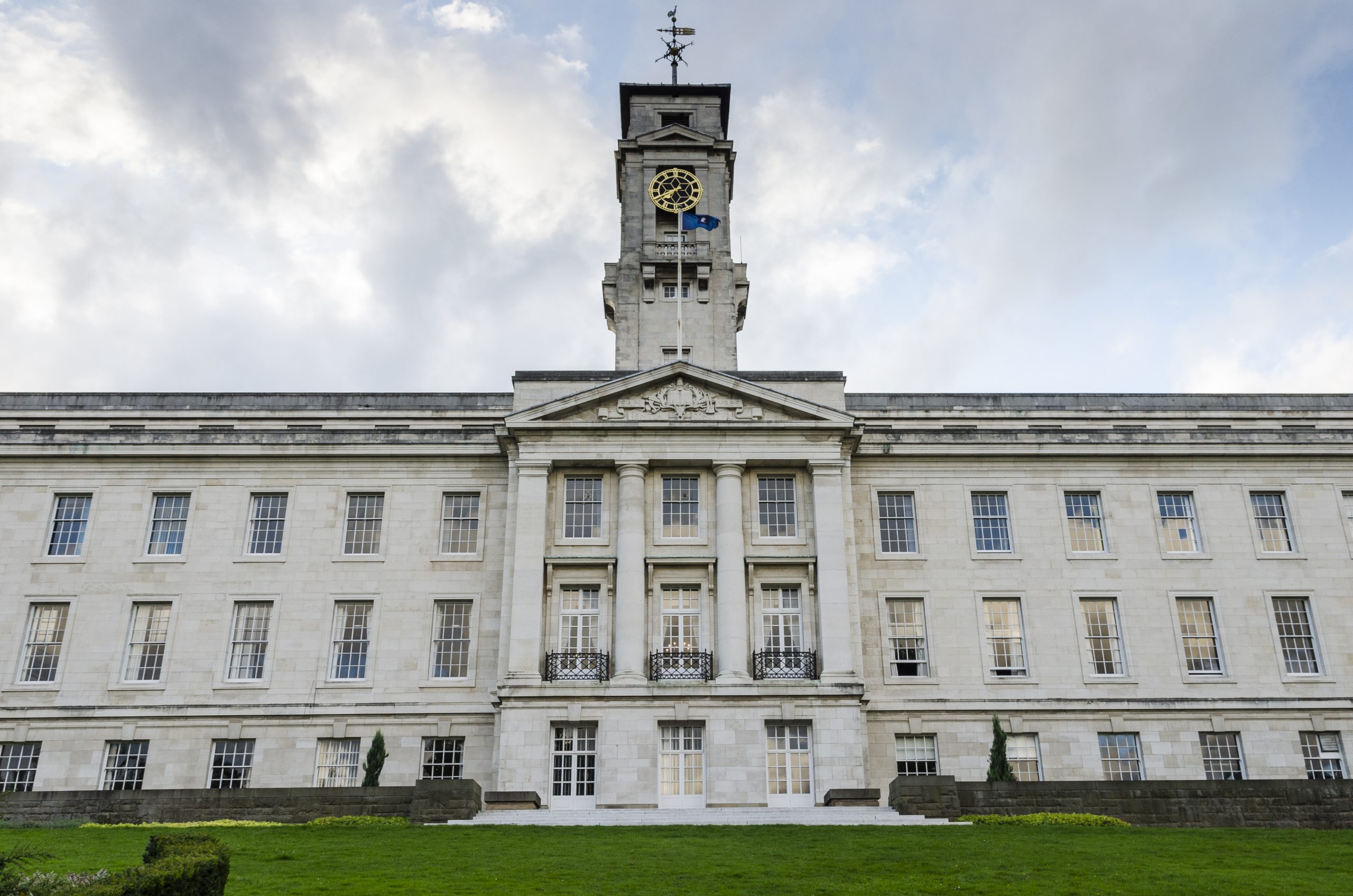
The conference took place across the University of Nottingham’s campuses and facilities, bringing participants into an immersive university environment for dialogue, collaborative white paper development, expert sessions and peer learning.
The programme began with registration and a welcome dinner on 24 August at 18:00 BST and concluded with the closing session on 28 August at 18:00 BST.

The cohort was warmly welcomed by Prof Tom RODDEN, CBE (Pro-Vice Chancellor for Research and Knowledge Exchange, University of Nottingham) and Ms Cleo CACHAPERO (Lead for Higher Education Projects, ASEF), with Dr Claudio RIVERA (RTU Riga Business School, Latvia) setting the scene for the week ahead.
Prof Barry O’SULLIVAN (University College Cork, Ireland) opened the substantive discussions with a keynote challenging universities to be brave in a rapidly changing environment. He emphasised the importance of universities protecting knowledge and critically examining dominant and emerging narratives around AI. He also shared practical advice for the teams as they continue developing their white papers.

On our opening day, three teams presented the highlights of their white paper draft:
- Bridge the Intelligence Divide through University Cooperation // Presenters: Mr ZHANG Shuyan (Co-Lead; Fudan University, China), Mrs Ramneek ATHWAL (University of Nottingham, UK), Dr Robert Kerwin BILLONES (De La Salle University, Philippines), Dr Lafifa JAMAL (University of Dhaka, Bangladesh), Dr Rachel TAN (INTI International University, Malaysia)
- Humanising Learning in the Age of Artificial Intelligence: Reframing Teaching, Assessment and Academic Formation for the AI Era // Presenters: Prof Mira KARTIWI & Prof Zainal SANUSI (Co-Leads; International Islamic University Malaysia), Dr Joey AVILES (Angeles University Foundation, Philippines), Prof Vanessa CAMILLERI (University of Malta), Prof Andri IOANNOU (Cyprus University of Technology), Ms Bogna LIZINIEWICZ (University of Nottingham, UK), Dr Aneela YASMIN (East Preston Islamic College, Australia)
- AI for Whose Good? Reorienting AI for Good with Underserved Communities // Dr Yang BONG (Co-Lead; University of Nottingham & Birmingham Newman University), Dr Minjia CHEN & Dr Neelima SAILAJA (Co-Leads; University of Nottingham), Ms Devisakti ANNAMALI (Universiti Sains Malaysia), Ms Leïla CELLÉRIER (University of Geneva, Switzerland), Dr Muhammad Zahid IQBAL (Teesside University, UK), Dr Vicente PITOGO (Caraga State University, Philippines), Mr Jin TADA (National Institute for Environmental Studies, Japan)
Day 2 opened with two thought-provoking keynotes from experts at the University of Nottingham, offering the cohort different perspectives on how AI and emerging technologies are shaping society and the human experience.
Prof James GOULDING shared the work of the N/LAB Research Centre, illustrating what becomes possible when big data and AI are applied to social challenges across areas such as healthcare, education and human rights.
Prof Steve BENFORD then invited the cohort to look at technology through a different lens, anchored in his work on somabotics. This includes our evolving relationship with technology, how it shapes the ways we live and work, and the emerging place of AI within the wider human experience.

The white paper draft presentations also continued, with two more teams sharing their work in progress:
- What policy reforms are needed to enable universities to support equitable lifelong learning and reskilling through AI? // Presenters: Prof Lampros STERGIOULAS (Lead; The Hague University of Applied Sciences, Netherlands), Ms Cinta GALLENT-TORRES (Universitat de València, Spain), Mr Anshumaan GOEL (OP Jindal Global University, India), Dr Munir SEWANI (Global Education Expert and Researcher, Pakistan), Mr David TIMIS (Global Governance Institute, Belgium)
- Artificial Intelligence in the University System for the Common Good // Presenters: Prof Daniel BURGOS (Lead, Universidad Internacional de La Rioja, Spain), Dr Rafis ABAZOV (Kazakh National Agrarian Research University, Kazakhstan), Ms Favour BOROKINI University of Nottingham, UK), Dr Radwan ESKHITA (Lucerne University of Applied Science, Germany), Dr Fernaz NUR (Daffodil International University, Bangladesh) and Mr Xaysavath SOUKCHALEUN (Souphanouvong University, Lao PDR).
The discussions continued with Prof Michel VALSTAR (BlueSkeye AI). He introduced the cohort to the company’s work at the intersection of AI, behavioural signals and mental health, translating research in areas such as facial expression and voice analysis into technology designed to support mental health and wellbeing.
To close the day, the cohort visited the university’s Cobot Maker Space, a research facility dedicated to exploring human-robot interaction and creating realistic scenarios in which people and collaborative robots can work alongside one another.
On this day, we welcomed members of the ASEM Education Expert Group on Digitalisation and AI, chaired by the German Academic Exchange Service (DAAD) who joined the remainder of the cohort after their hybrid closed-door meeting in the morning.
Two keynote talks brought complementary perspectives to the day’s discussions:
Ms Trine JENSEN (International Association of Universities), shared insights from the 2nd IAU Global Survey on Digital Transformation, highlighting how universities are navigating GenAI across teaching, assessment, institutional policy and governance. Her keynote underscored the importance of approaching digital transformation through both a whole-of-institution and global perspective.
Prof Elvira PEREZ VALLEJOS (University of Nottingham, UK), explored the sensitive context of death, dying and digital remembrance, using it to examine responsible human-AI interaction. Her keynote highlighted the importance of responsible research and innovation that keeps human values, inclusion and long-term societal implications at the centre of technology development.

The remaining four white paper teams also presented their work in progress for peer feedback:
- Cross-Regional Generative AI Governance in Higher Education: From Reactive Policies to Coherent Institutional Frameworks // Presenters: Dr Shalinka JAYATILLEKE (La Trobe University, Australia), Dr Akhtar Ali JALBANI (Virtual; Holmesglen TAFE, Australia), Prof Andrea MASCOLO (European Institute for Medical Studies, Malta), Ms Julija MIRONOVA (Riga Nordic University, Latvia), Dr Sunyub KIM (Science and Technology Policy Institute, Republic of Korea), Mrs Rashikala WEERAWARNA (Holmesglen TAFE, Australia)
- Co-Creating SDG-Informed Open Education with Trusted AI across the Europe-Asia Axis // Presenters: Dr João PITA COSTA, Mr DAVOR ORLIČ, & Dr Anja POLAJNAR (Co-Leads, International Research Centre for Artificial Intelligence), Dr Ajita DESHMUKH (MIT Art Design and Technology University, India), Mr Joost Groot KORMELINK (Virtual; TU Delft, Netherlands), Dr Weiyao MENG (University of Nottingham, UK), Prof Dr Ebba OSSIANNILSSON (Ossiannilsson Quality in Open Online Learning Consultancy, Sweden), Dr Chetanpal SINGH (RMIT, Australia)
- AI for Sustainable Development: Universities as Catalysts for Aligning AI Innovation with the Sustainable Development Goals // Presenters: Dr Sharina Yunus (Lead; University Teknologi Brunei), Mr Francesco AMIGHETTI (THINK.TANK Plus, Greece), Ms Nimisha PARASHAR (University of Nottingham, UK), Dr Muhammad SOHAIL (Mykolas Romeris University, Lithuania), Dr Nur Lisa ZAHARIN (Universiti Malaya, Malaysia)
- A Guide to Universities’ Role in Developing and Harnessing Various AI Technologies & Use Cases: A Bridge, A Sandbox, An Accelerator, and A Futures Architect // Presenters: Prof Tejpavan GANDHOK (OP Jindal Global University, India), Prof Marion Lux CASTRO (University of the Philippines Los Baños), Mr Rustam Shariq MUJTABA (Digital Transformations for Health Lab, Singapore), Mr Antonio PELEGRINA JIMENEZ (Universidad de Granada, Spain), Ms Zeynep YARADANAKUL (Erasmus Mundus Association, Finland)
Ms Anja GENGO of the UN Internet Governance Forum (IGF) opened our final day by taking us into the evolving landscape of global AI governance. Her keynote underscored the need to move from broad principles towards practical standards, safeguards and accountability. She also highlighted the importance of meaningful multistakeholder participation, with academia contributing evidence, expertise and critical perspectives to ensure AI governance serves the public interest.

The keynote was followed by three sessions aimed at holistically exploring perspectives on leveraging AI for good.
Reimagining Industry-Academe Collaboration in the Age of AI
To explore how academia and industry can work together to steer AI towards social good, we welcomed a panel composed of members of the Expert Group on Digitalisation and AI and representatives working at the intersection of industry and academia. Moderated by Dr Weiyao MENG (University of Nottingham, UK), the discussion explored opportunities for innovation, the support needed to enable collaboration, and the importance of widening these partnerships to include students as active co-creators. Here we welcomed Ms Christelle Mae AGUSTIN (SEAMEO Regional Centre for Higher Education and Development), Dr Inge DE WAARD (InnoEnergy), Dr Vanja LJEVAR (Kubik Intelligence, UK), and Prof Bundit THIPAKORN (King Mongkut’s University of Technology Thonburi, Thailand) as panelists.
Next-Generation Research Perspectives on AI for the Common Good
We then turned the spotlight to the next generation of researchers at the University of Nottingham. Moderated by Ms Krishika Haresh KHEMANI, the session showed different pathways AI research can take—from frontier AI, to using machine learning to understand investment inequalities; the ethics surrounding AI and avatars; responsible conversational AI; data-driven approaches to tackling loneliness and strengthening human connection; and the role of AI in gamified citizen science. Joining Ms Khemani in this series of flashtalks were Dr Muhammad ADAMU, Ms Ramneek ATHWAL, Ms Favour BOROKINI, Ms Bogna LIZINIEWICZ, and Ms Nimisha PARASHAR.
Harnessing AI for Good: Effective Policies, Good Practices, and Successful Use Case
For our final knowledge-sharing session, Ms Stefanie ENGERT (DAAD) moderated a discussion on effective policies and practices for harnessing AI for good, highlighting the importance of mission-led transformation, equitable and student-centred approaches, responsible use, and AI applications that strengthen learning and international student support. At this roundtable we heard from EG members Mr Marco COMOTTI (Erasmus Student Network), Ms Trine JENSEN (IAU), Prof Pushpanadham KARANAM (The Maharaja Sayajirao University of Baroda, India), and Ms Urszula LIS (European Students’ Union).
Following one final work session for our white paper teams, we officially welcomed the ASEFInnoLab7 cohort into the Asia-Europe for AI (AE4AI) Network—opening another avenue for the conversations and collaborations built throughout this programme to continue.
Finally, Prof Alexander TRAUTRIMS (Associate Dean, UoN Business School) and Mr ZHANG Lei, (Deputy Executive Director, ASEF) shared closing messages to conclude the programme.