
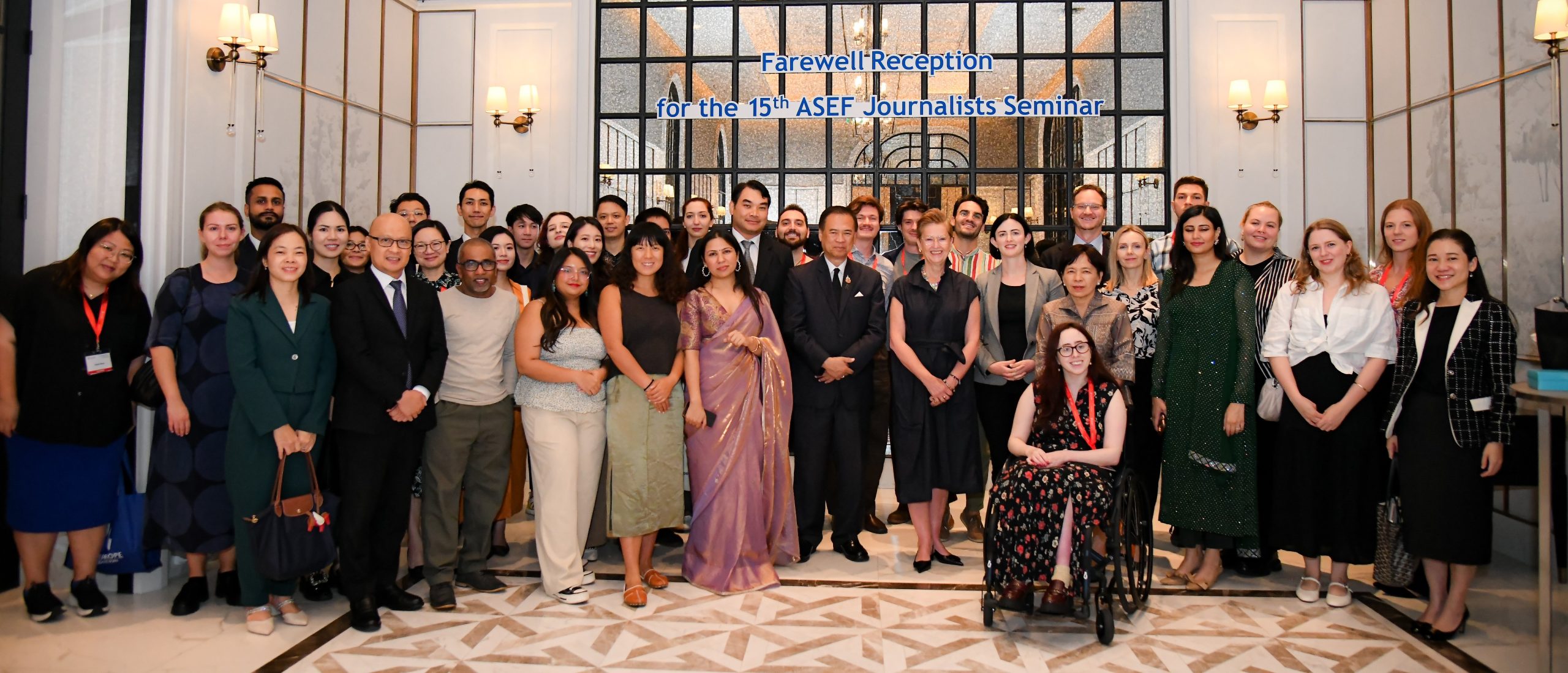
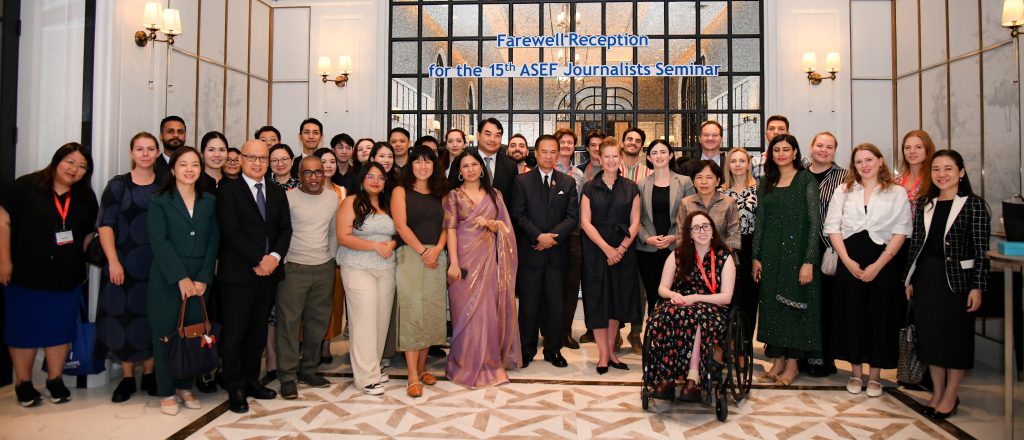

The 15th ASEF Journalists Seminar (ASEFJS15) brought together 22 journalists from 20 countries across Asia and Europe in Bangkok, Thailand, from 14–17 September 2026. Organised in partnership with Thailand’s Ministry of Foreign Affairs and supported by Konrad-Adenauer-Stiftung (KAS), the seminar covered various aspects of “Journalists’ Resilience in a Volatile World.”
Through discussions and practical exercises on geopolitics, media trust, fact-checking in the age of AI, safety and mental health, participants explored ways to respond to the pressures facing journalism today. The seminar also offered space to exchange experiences, build friendships and develop ideas for cross-border reporting.
Below, we share key takeaways and resources from the seminar’s modules.
Module 1: Overview of geopolitical situation in Asia and Europe and their impact on reporting
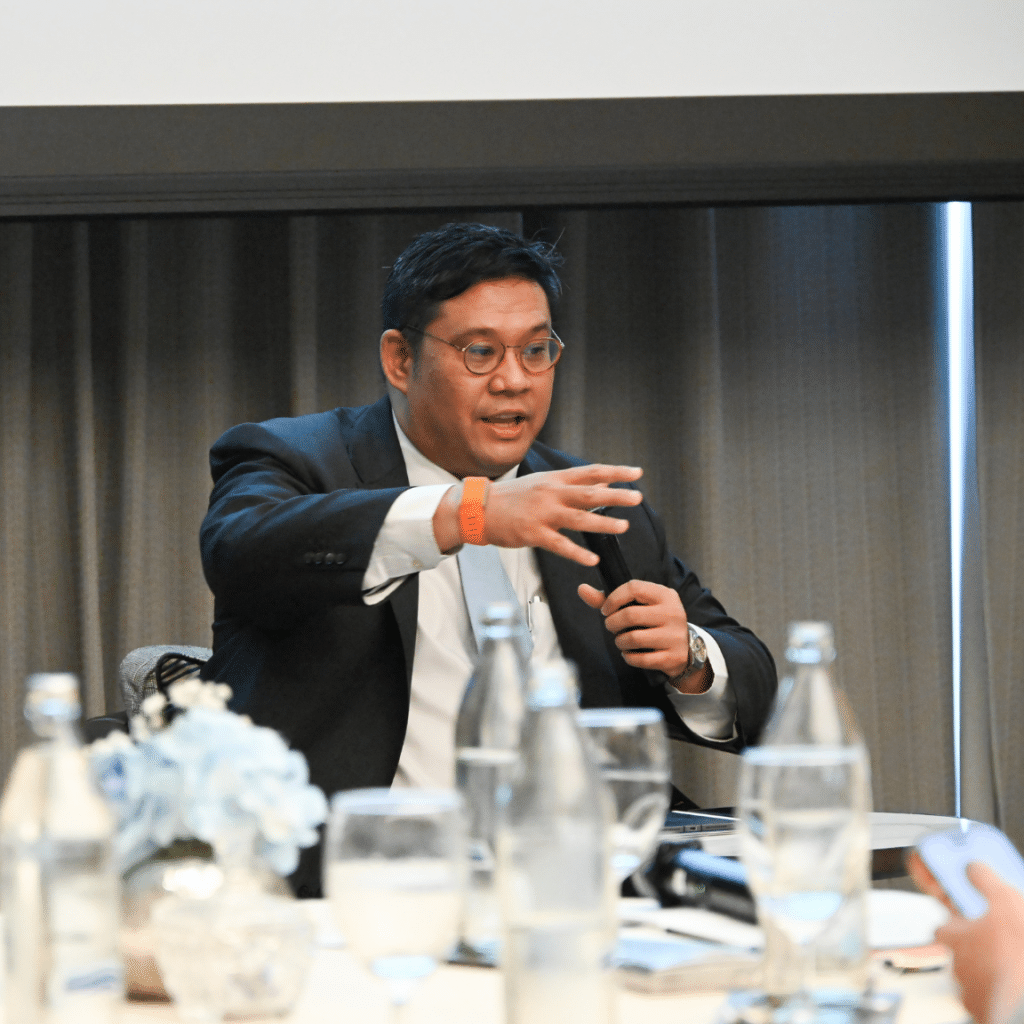
Speaker: Mr Panu Wongcha-Um, President of the Foreign Correspondents’ Club of Thailand (FCCT) and Reuters’ Senior Correspondent for Indochina
In this ice-breaker session, Panu drew on his reporting experience to explore the pressures facing journalists today. Discussions examined what impartiality means when covering aggression or abuse, and whether presenting “both sides” can mislead audiences when organised disinformation is involved. Participants also considered the challenges of reporting where access is controlled by one side, the declining presence of foreign correspondents and the implications for local journalists and international coverage. Changing audience interests and competition for attention on social media raised further questions about how to engage readers while maintaining editorial standards. Panu encouraged journalists to think broadly, seek opportunities amid crises and strengthen collaboration, while retaining the commitment and hope that brought them to the profession.
To read the summary click here.
Module 2: Media trust and resilience in the current situation – combatting news fatigue; political polarisation of media
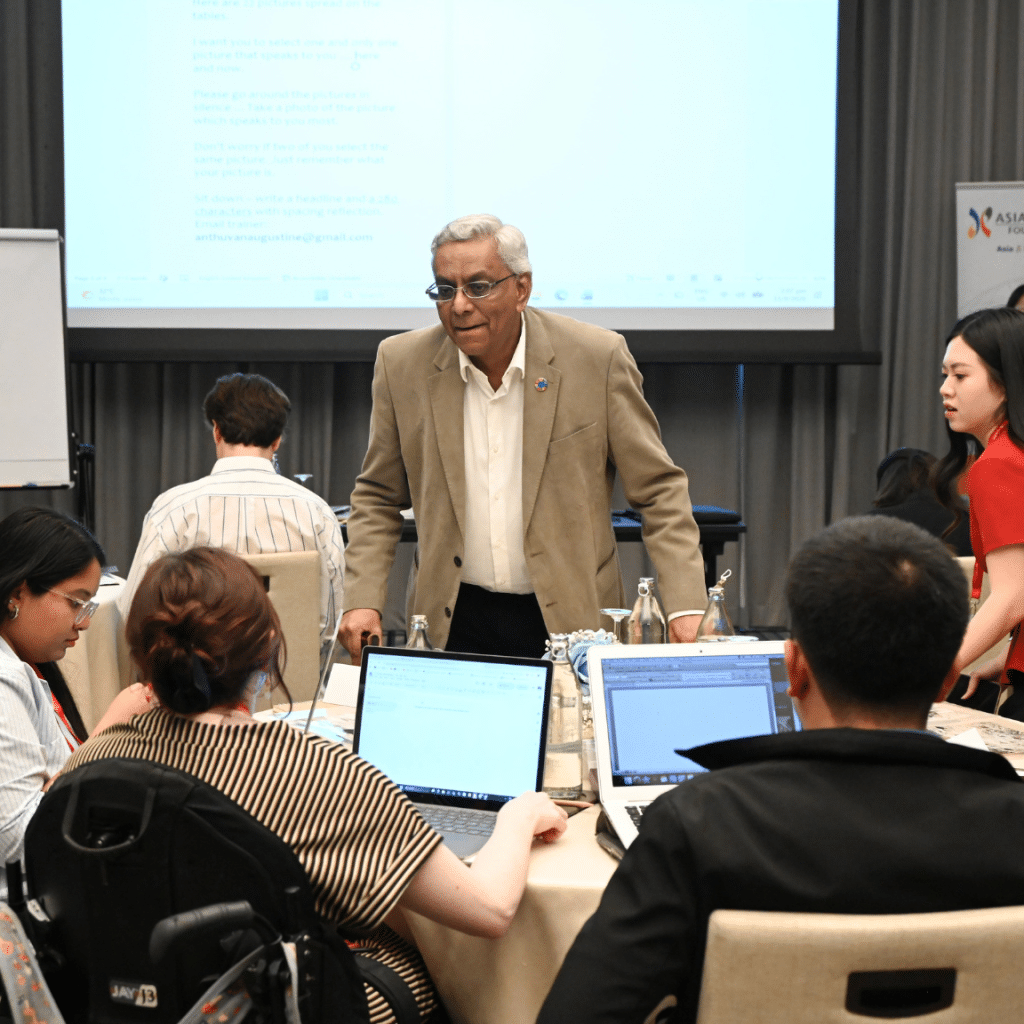
Trainer: Mr Augustine Anthuvan, Media Trainer & Crisis Communication Consultant
Augustine Anthuvan led participants through practical exercises exploring how personal experiences and cultural assumptions shape reporting. Building trust begins with the choices journalists make, from the images they select to the headlines they write. Using photographs and examples from his reporting in the Philippines after a typhoon, he highlighted how ethical, human-centred storytelling can convey the scale of a crisis while preserving dignity and showing communities’ resilience. Participants also worked in pairs to identify loaded language and rewrite headlines on sensitive issues, reducing polarisation without sacrificing accuracy. The session explored how explainers, context and solutions-oriented reporting can help audiences navigate news fatigue, and encouraged cross-border collaboration. Participants developed potential story ideas on AI-generated videos in India and Switzerland, and extreme heat in Asia and Europe.
To read the summary click here.
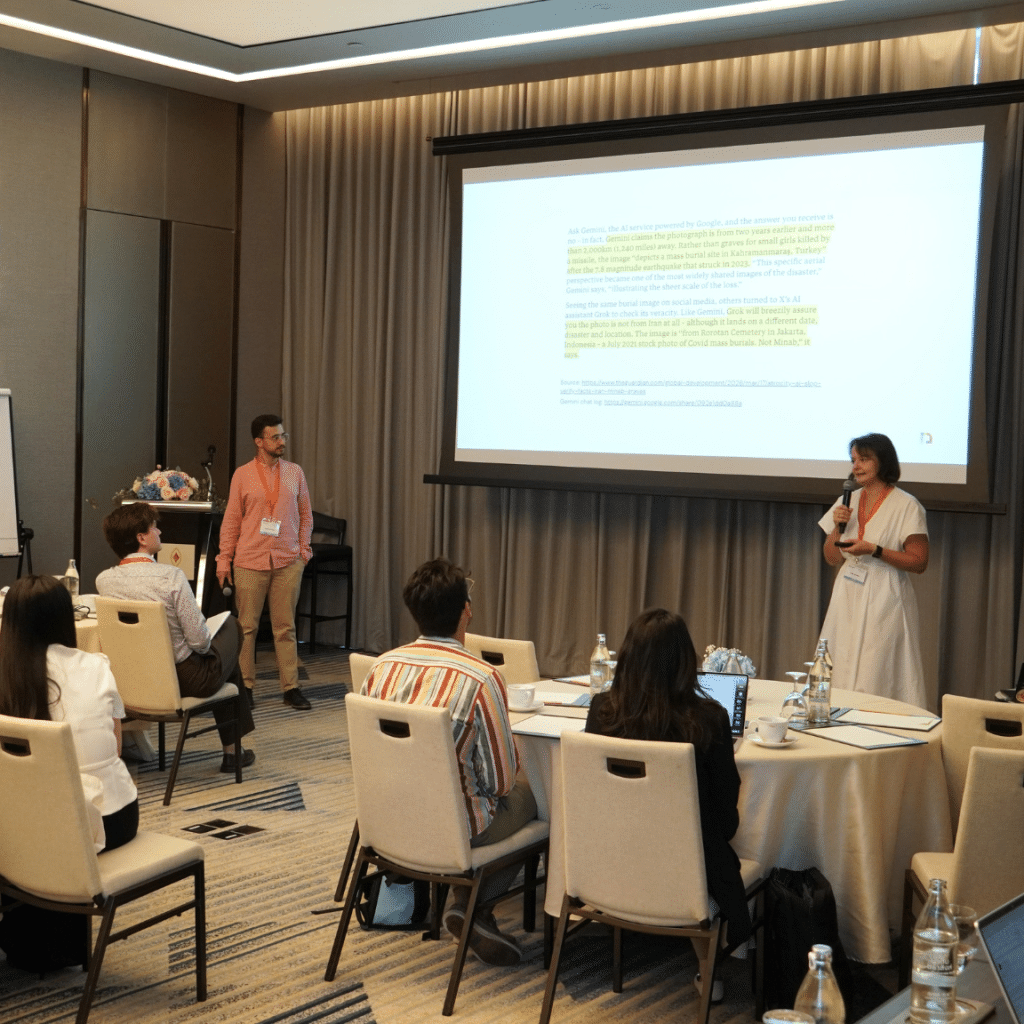
Module 3: Fact checking and credibility in the age of AI – verification woArkflows, AI-generated content, transparency
Trainers: Ms Jenny Romano and Mr Pedro Henriques, Newsroom.ai
As AI makes convincing images and stories easier to produce, journalists face a growing challenge: verifying what is real and helping audiences trust the evidence. Jenny Romano and Pedro Henriques from The Newsroom guided participants through practical ways to identify fabricated media, uncover genuine content shared with misleading context, and respond when authentic evidence is dismissed as AI-generated. Through hands-on exercises, participants explored reverse-image searches, source tracing and the limitations of AI detection tools. The session also examined how AI can help journalists navigate large collections of documents, while emphasising the need to check every citation and retain human editorial responsibility. Clear disclosure of AI use, transparent newsroom guidelines and content credentials were highlighted as ways to show how reporting is produced and strengthen public trust.
To read the summary, click here. For the presentation, click here.
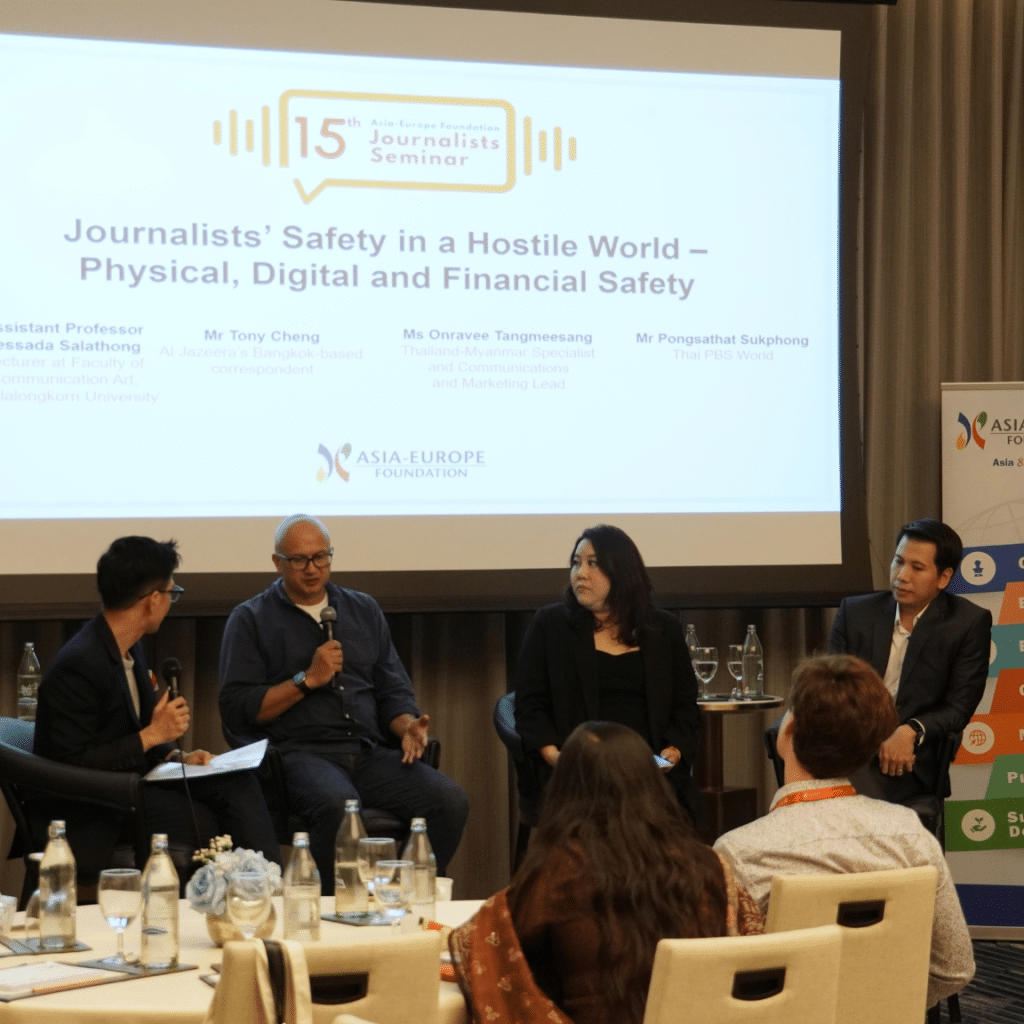
Module 4: Journalists’ Safety in a Hostile World – physical, digital and financial safety
Panellists: Assistant Professor Jessada Salathong, lecturer at Faculty of Communication Art, Chulalongkorn University; Ms Onravee Tangmeesang, Thailand-Myanmar Specialist and Communications & Marketing Lead; Mr Tony Cheng, Al Jazeera’s Bangkok-based correspondent; Mr Pongsathat Sukphong, Thai PBS
The dangers journalists face can emerge far from an active conflict zone. At ASEFJS15, Al Jazeera’s Bangkok-based correspondent Tony Cheng shared experiences from reporting in the Middle East, recalling that his most dangerous encounter occurred on a side street in Bangkok. Onravee Tangmeesang shared her experiences of covering events along the Thailand–Myanmar border, highlighting the risks of field reporting. Together with AP Jessada Salathong and Pongsathat Sukphong of, they explored journalists’ physical, digital and financial safety. Discussions highlighted the difficulties faced by freelancers and smaller media outlets in accessing safety equipment and newsroom support, often leaving journalists to shoulder the costs of their own protection. The session underscored how personal safety and financial security are closely connected to journalists’ ability to continue their work.
To read the summary click here.
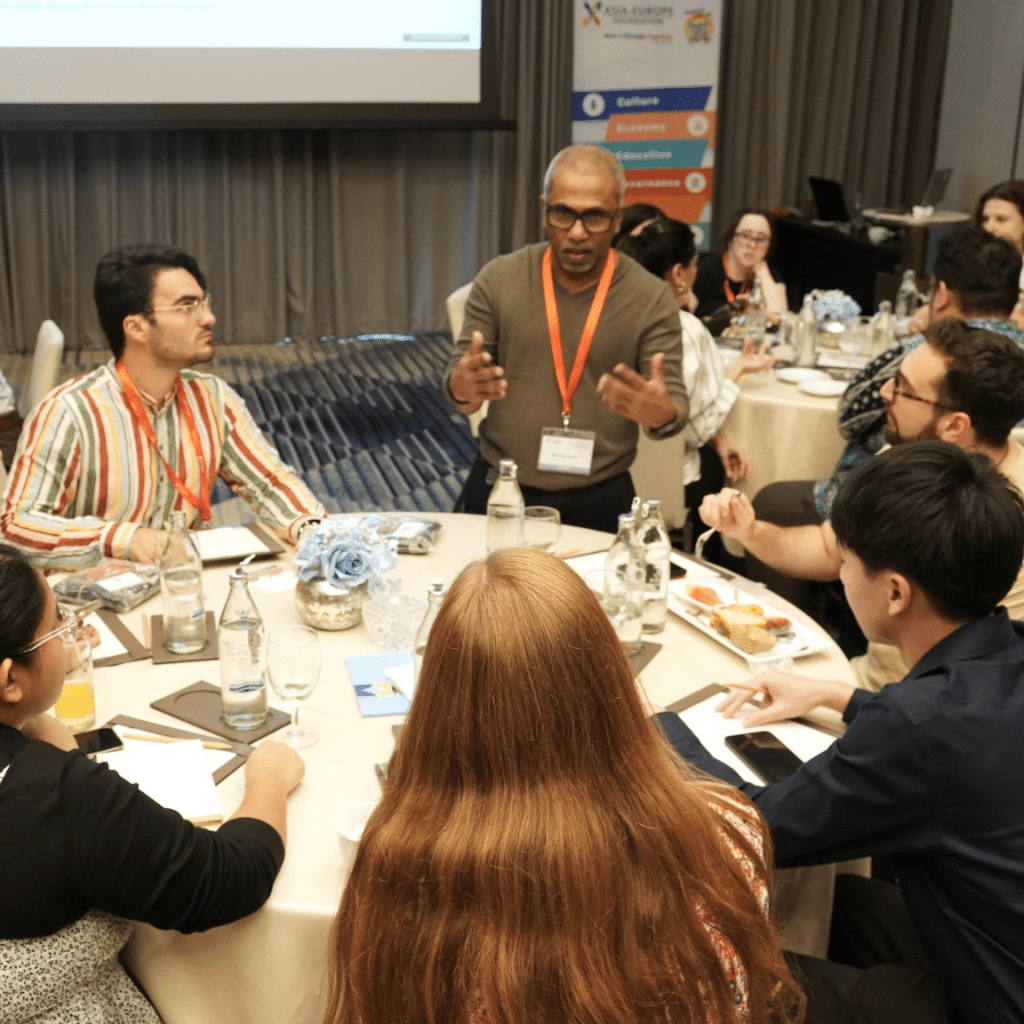
Module 5: Journalists’ Mental Health and Well-being in Hybrid Workspaces
Trainer: Mr Amantha Perera, Director, Centre for Journalism and Trauma Asia Pacific
At this session, former journalist and researcher Amantha Perera guided participants through ways to recognise and manage digital threats that can affect their safety, mental health and ability to report. Online threats are a pressing concern for journalists whose work keeps them connected for hours each day, with risks reaching beyond the screen into their personal safety and wellbeing. Drawing on participants’ experiences of trolling, threats, stalking and exposure to graphic content, the session explored how these risks cross the boundaries between professional and personal life. Perera introduced his “Digital Flak Jacket” framework, using the familiar journalistic questions of who, what, when, where, why and how to analyse threats and identify practical safety measures. Through group exercises, participants applied the framework to real incidents, exploring how to protect their wellbeing while maintaining their professional voice. The session also highlighted the importance of peer support and clearer boundaries between work and home.
To read the summary click here. For the presentation, click here.