
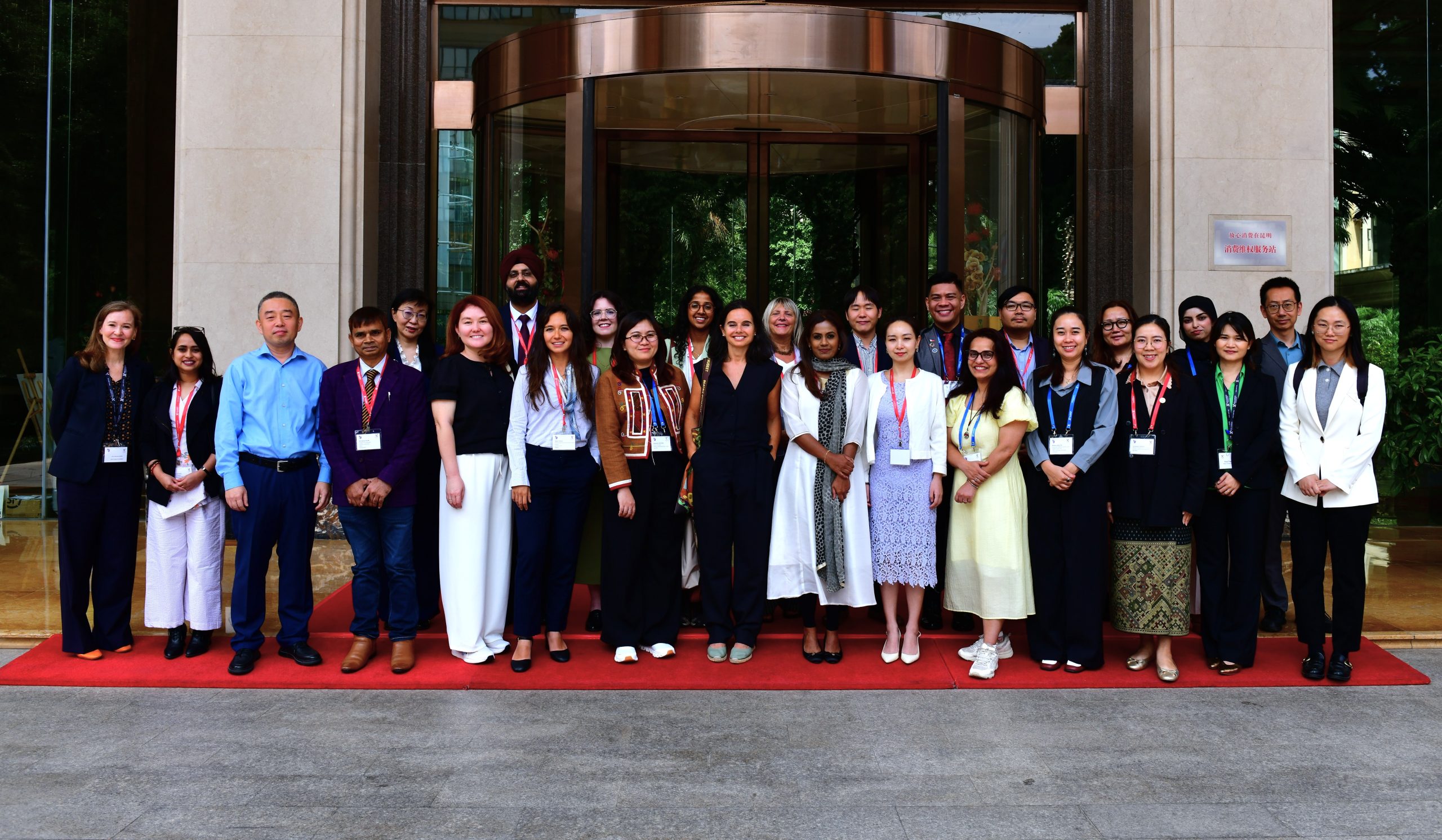
The Asia-Europe Foundation (ASEF), in partnership with the Foreign Affairs Office of the People’s Government of Yunnan Province, delivered a three-day in-person capacity-building programme on gender equality and women’s participation on 7-9 September 2026 in Kunming, China. The programme brought together 19 participants from diverse nationalities across Asia and Europe, working across government, civil society, international organisations, policy, research, advocacy, and programme implementation and monitoring.
Advancing gender equality and women’s leadership remains central to achieving SDG 5 and a wide range of related goals, from inclusive governance to climate action, peace and security, and digital transformation. Yet translating these commitments into everyday institutional practice remains a persistent challenge across sectors and regions. Reflecting ASEF’s cross-regional mandate to foster dialogue and exchange between Asia and Europe, the programme was designed to equip practitioners with concrete, actionable tools, moving beyond broad principles toward practical approaches for mainstreaming gender equality in policymaking, programming and community-level initiatives.
The training was opened with welcome remarks from a representative of the Foreign Affairs Office of the People’s Government of Yunnan Province and Mr Zhang Lei, Deputy Executive Director of ASEF, situating the programme within the partnership between ASEF and the host authorities. Two host-country lectures anchored the programme: “Gender Equality: Women’s Development Achievements in China” by Ms Gao Xianda of Yunnan University, and “The Role of Women in Leadership, Decision-Making and Community Development” by Dr Xiang Rong, also of Yunnan University.
Over three days, the programme moved participants from shared concepts to practical application. Day 1 established a common understanding of gender mainstreaming, SDG 5 and meaningful participation, and examined barriers to women’s leadership across individual, institutional and structural levels. Day 2 focused on embedding gender considerations across the project cycle, including a role-play exercise in which participants designed a gender-responsive and disability-inclusive project, before an afternoon cultural programme in Yunnan hosted by the Foreign Affairs Office. Day 3 addressed gender-sensitive data, gender-responsive budgeting and monitoring frameworks, culminating in individual action plans and a certificate awarding ceremony.
The programme met its objectives well: participants described it as useful to their work, a valuable opportunity to build new professional networks, and an experience they would recommend to others. As one participant reflected: “ASEF delivered in all their promises of this training. It was engaging, supportive, safe, fun and encouraging.”
Building on this strong response, ASEF remains committed to expanding the reach and impact of its work on gender equality.
See photo-album from the programme here