

In a world where artificial intelligence (AI) is increasingly impacting education, the ability of teachers to adapt, innovate, and lead has never been more important. At the forefront of this transformation is the ASEFClassNet Project, a pioneering bi-continental initiative that is redefining how educators build AI competencies through collaboration, creativity, and human-centered learning.
At the intersection of innovation, intercultural collaboration, and transformative learning, the ASEFClassNet Project is emerging as a powerful model for future-focused teacher development. In recognition of its growing international impact, ASEFClassNet was invited by UNESCO as a featured example of AI competency-building during the UNESCO Regional Seminar for Asia and the Pacific on AI Competencies for Teachers and Students, held virtually on 28–29 April 2025. The high-level seminar convened policymakers, researchers, and education leaders from across the Global South to explore how AI competency frameworks can move beyond policy into meaningful educational practice.
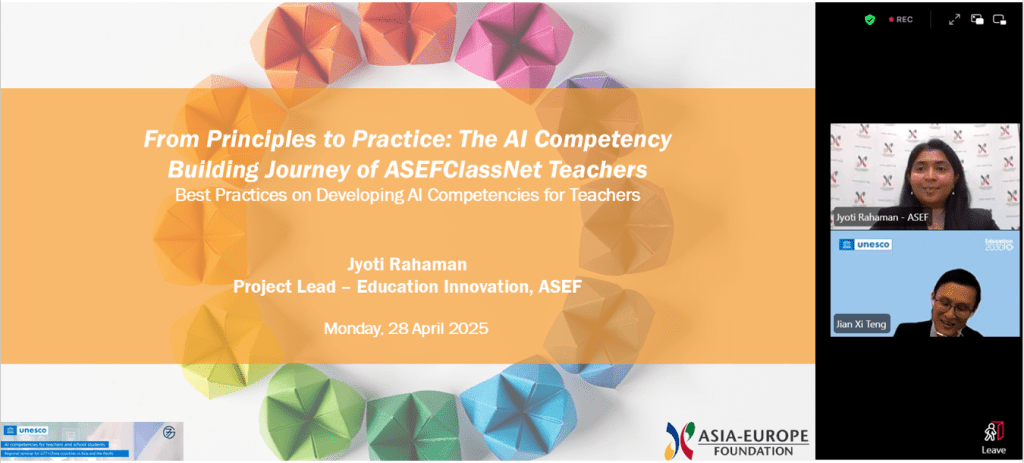
Ms Jyoti Rahaman, ASEF’s Project Lead for Education Innovation, was invited to present about the ASEFClassNet’s teacher training methodology during this event. She delivered a featured presentation titled, “From Principles to Practice: The AI Competency Building Journey of ASEFClassNet Teachers.” Her presentation highlighted how educators across Asia and Europe are translating global AI frameworks, including UNESCO’s AI Competency Framework for Teachers (AI-CFT), into authentic, learner-centered classroom experiences grounded in ethics, critical thinking, and responsible innovation.
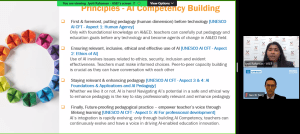
What makes ASEFClassNet particularly distinctive is its commitment to teacher agency and co-creation. Rather than relying on traditional top-down professional development models, the initiative empowers secondary, high school, and vocational educators to collaboratively design interdisciplinary projects that integrate AI literacy, digital citizenship, and pedagogical innovation into real classroom contexts.
Through sustained cross-cultural collaboration, educators are not simply acquiring technical competencies; they are developing the confidence and capacity to become architects of educational transformation within their own communities. This approach reflects a deeper understanding that meaningful innovation in education must remain human-centered, inquiry-driven, and contextually responsive.
Over the years, ASEFClassNet has evolved into a vibrant international ecosystem of 3000+ educators who are experimenting with emerging technologies, fostering intercultural dialogue, and reimagining learning for an increasingly complex and interconnected world. By creating opportunities for peer learning, reflective practice, and collaborative innovation, the project cultivates the very competencies that modern education systems seek to nurture in both teachers and students: adaptability, empathy, creativity, critical inquiry, and global mindedness.
At a time when many education systems are struggling to balance technological advancement with ethical responsibility, ASEFClassNet demonstrates that AI integration can, and should, be guided by educational values rather than technological trends alone. The project offers a scalable and replicable model for professional learning that prioritizes inclusion, teacher voice, and sustainable transformation.
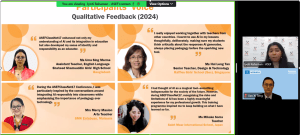
ASEF’s contribution to the UNESCO seminar reinforced a critical message for the future of education: empowering teachers is the foundation for meaningful AI integration. When educators are trusted as innovators, collaborators, and leaders of change, technology becomes not a disruption to learning, but a catalyst for deeper human connection, creativity, and possibility.
As global conversations around AI and education continue to evolve, ASEFClassNet stands as a compelling example of how international collaboration and educator empowerment can shape more ethical, equitable, and future-ready learning ecosystems.
Learn more about the seminar here!
Learn more about the ASEFClassNet Projects and initiatives in 2025 here!