
The Participation Gap: Women, Governance, and the 2030 Agenda
The 2030 Agenda is at a pivotal moment. With less than four years remaining, this ambitious blueprint faces growing challenges from persistent and systemic gender inequality. While Sustainable Development Goal (SDG) 5 specifically addresses gender equality, gender equality actually underpins all 169 SDG targets, with nearly three-quarters (74%) directly or significantly dependent on it. The success or failure of the 2030 Agenda ultimately hinges on the inclusion of women.
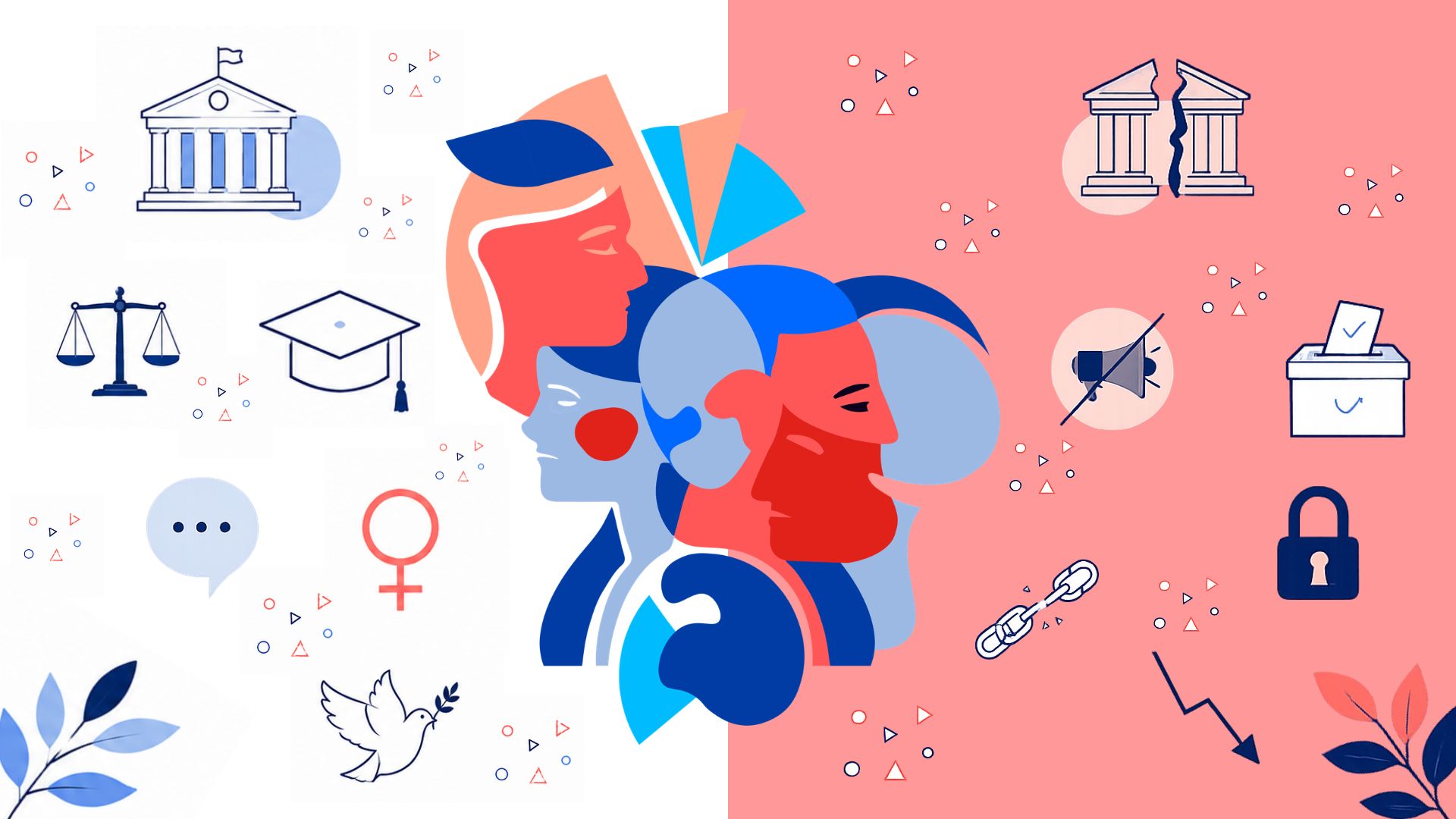
The data reveal both slow progress and enduring structural exclusion. Currently, 133 million girls remain out of school. Women represent only 35% of STEM graduates and 22% of the global AI workforce. The current frameworks shaping the next economy are being developed largely without women’s participation. On the political side, women constituted only 7% of negotiators and 14% of mediators in formal peace processes worldwide. At the current rate, gender parity in parliaments will not be achieved until 2063. These statistics are not isolated issues but rather symptoms of systemic exclusion manifesting sharply across two regions.
Europe has long positioned gender equality as a policy priority, reflected in a range of regional human rights instruments. However, the recent widespread backlash against gender equality policies is now undermining this progress. From 2019 to 2023, 275 actors contributed US$1.18 billion to initiatives opposing gender equality across Europe, with over half of this funding originating from 28 European countries. The Parliamentary Assembly of the Council of Europe has warned that appeals to restore “traditional family values” are being used to undermine progress on women’s rights for society as a whole. UN Women has reported that this resistance is also evident at the political level, where women’s rights organisations are blocked from accessing state-led policy spaces. WAVE, a network representing over 1,600 women’s organisations, has reported that its members face intimidation, reduced access to public funding, and exclusion from decision-making processes. This continued pushback on gender equality is likely to hinder the adoption of new progressive measures and further diminish women’s participation.
The cost of this regression is evident in the stalled progress on poverty, health, and education targets – and it is not confined to Europe alone.
In Asia, economic, cultural, and social transformations have intensified challenges related to gender equality in East Asia, primarily in response to the development of modern societies whose values diverge from traditional gender roles and national identities. Therefore, despite significant economic growth, gender equality remains unachieved in the region.
The region has also experienced notable governance and civic space challenges for over a decade. In South Asia, for example, cybersecurity laws, foreign funding regulations, and state surveillance have, according to some civil society reports, disproportionately affected women’s rights and feminist organisations , while in some parts of Southeast Asia, appeals to social and cultural norms have created tensions with commitments to gender equality and have shaped the pace of women’s political participation. As in Europe, these dynamics illustrate how structural and cultural continue to influence women’s participation and engagement in public and political spheres.
Resistance to women’s rights and participation is significant precisely because inclusion is transformative. When women gain access to policy spaces, measurable improvements follow. Studies by the UN Development Programme (UNDP) and UN Women indicate that higher proportions of women in public office are associated with reduced tolerance for corruption and a reallocation of public spending toward education, healthcare, and safety. The impact is also evident at the local level. UN Women recently cited a landmark study from India demonstrating that areas with female-led local councils initiated 62% more drinking water projects than those led by men.
When women participate, governance improves, development accelerates, and communities become more resilient. Yet, the mechanisms that make this participation, such as funding, legal protection, and access to policy spaces, are under pressure. Capacity-building, legal reform, and access to decision-making spaces are necessary to close the widening gap. With 74% of the SDGs dependent on gender equality, protecting and advancing gender equality and women’s participation is paramount and is the condition on which the 2030 Agenda delivers or fails.
Written by Shane Demalata, who is currently pursuing a Master’s in International Affairs at the Lee Kuan Yew School of Public Policy
Find out more about ASEF’s work in the area of Gender Equality and Women’s Participation here.