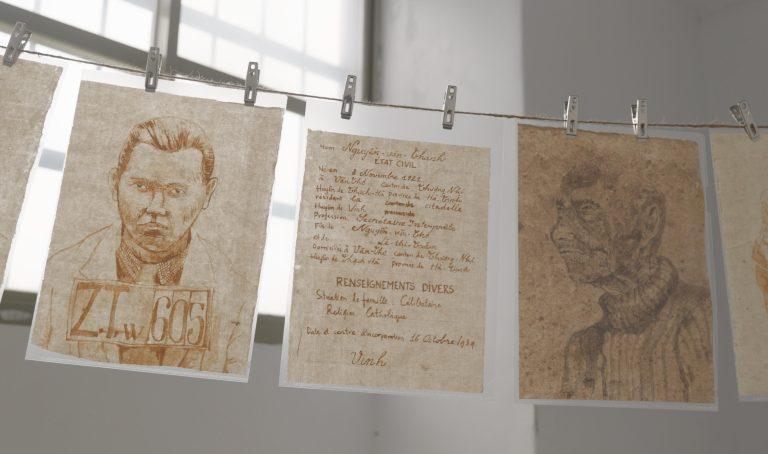
WE SPEAK WITH COMPOSER AND RESEARCHER, GABRIELE MARANGONI ABOUT HIS LATEST PRODUCTION, AÉRAS, WHERE TECHNOLOGICAL INNOVATION TURNS SILK INTO A LIVING INSTRUMENT AT THE AECFEST 2025 CLOSING CURTAIN IN SINGAPORE.
1. Aéras is a truly visionary project, in which silk is the key to unlocking unheard harmonies, within an ensemble of musicians. Please share about how you began this project, and what inspired this research into the incorporation of silk in music.
The initial idea was to imagine an aerial movement and a sensation rich in lightness yet profound and vibrant, the search for a beauty capable of standing above the brutality that often envelops us and drags us down. This idea of ascension materialized in my imagination as silk, in its sound, in its fragility and resistance, in its beauty. Thus, my sonic idea became tactile, visual, and material, and from this point began my exploration of all the possibilities of uniting material and sound, from fabrics to the construction of silk strings to the sonic and compositional balance between the phrasing and voice of the silk and the sound of both the musicians and the electronic structures, a process that was a game of balances and exchanges.
2. While contemporary instruments typically use nylon or steel strings, the handmade instruments in Aéras use silk -a more ancient material for making music. would you say this choice represents a form of reconnection to musical heritage? Additionally, how does performing on these silk-stringed instruments differ from playing their modern counterparts?
Each material has its own voice and sound; its sonic consistency, density, and vibration vary; each material tells its own sonic story.
If we think of a more traditional musical composition where notes, and their combination, are the supporting structure, then these aspects can be seen as nuances or details. But in a work like this, where the musical composition is absolutely focused on the absolute sound, then these aspects become cathedrals, like entering the sound event with a microscope.
In Aèras, for example, specially crafted 7-meter silk strings will be played in their deepest nature, exploiting the soundboard of a piano. The strings will resonate without any intermediaries, just like absolute instruments with their own voice, their imperfections, and their magic.
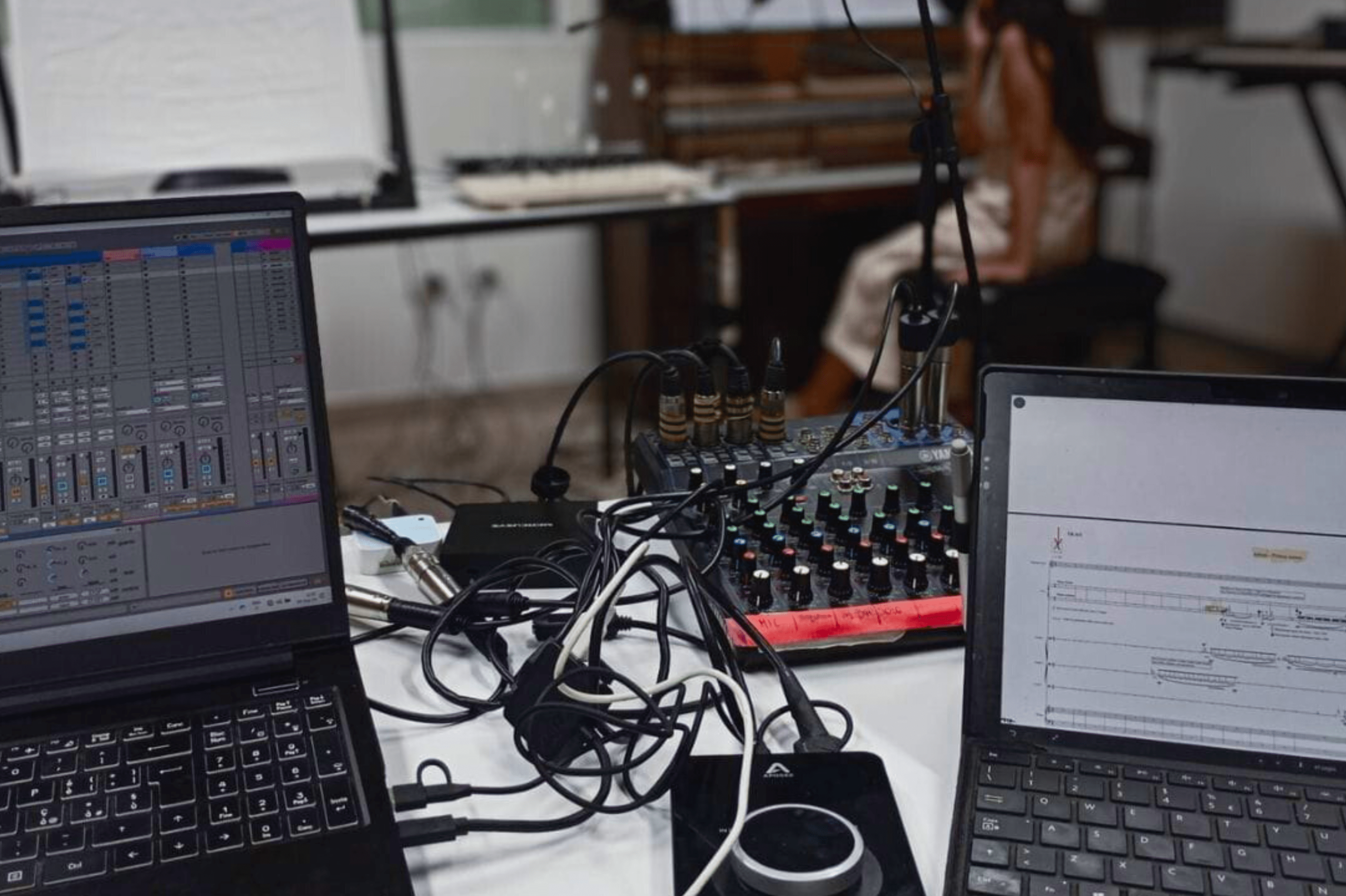
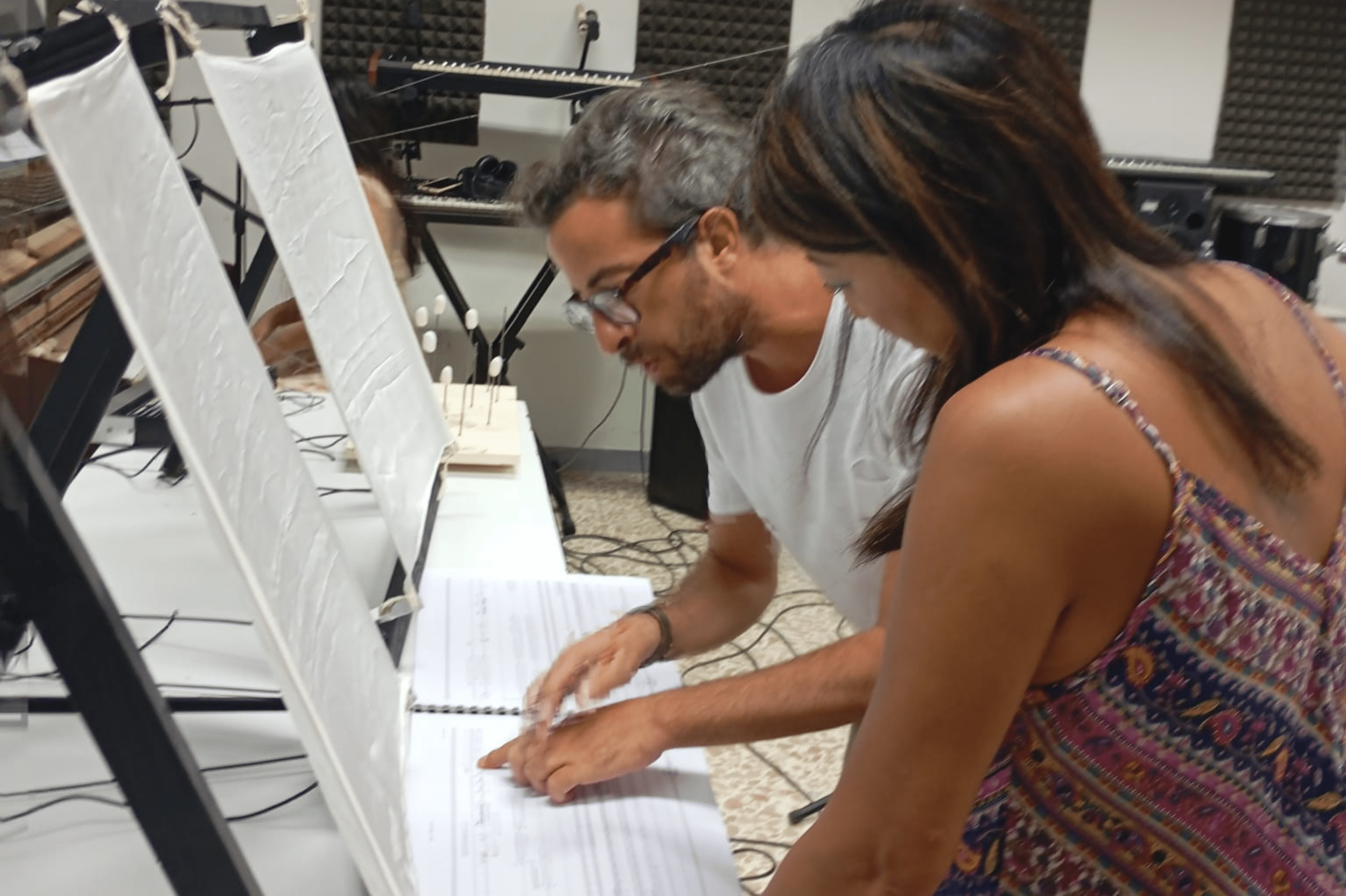
3. You’ve mentioned that advanced technological and computerised sound processing systems were pivotal to producing this research and this work – what role does technology play in the progression or evolution of music as an art form?
Technology, as far as I’m concerned, plays a fundamental role in artistic and sound research, allowing us to open ever-new doors of investigation and discovery. Technological and IT resources offer a whole range of potentialities that allow us to evolve language and create otherwise unimaginable situations. Aèras could not have existed without IT. This technological aspect also changes the process of artistic production, leading to collaborations between composers and experts in music computing and sound engineering, as in my case. I’ve collaborated for years with Damiano Meacci on all the most advanced aspects of electroacoustic research and he has become an irreplaceable figure within the creative process.
4. Silk is not simply a fiber – its production and trade have interweaved civilisations across China, Italy, Japan and beyond for centuries. Similarly, this project brings together artists from both Asia and Europe. Can you share what the process of collaborating with these artists have been like, and how cross-cultural dialogue has influenced the creative process?
The creative process of Aèras was not only an intercultural dialogue but also a dialogue between generations and professions, as if the millennia-old history of silk and its craftsmen had immediately influenced our process of openness and mutual understanding.
We had the exchange between Italy and Japan, where two sonic worlds met and found their union through an aesthetic vision of sound and reflection. Another important aspect was the dialogue with those who dedicate their lives to silk and produce it, with whom we shared a conceptual and artisanal vision that unites the world of sound production with that of silk production. Essentially, it is as if the ancient voice and soul of silk is still capable of uniting different peoples and cultures, and with its precious elegance and beauty, of inspiring in a historical period where opposition to ugliness and brutality must be essential.
Gabriele Marangoni’s work ranges from ensemble to orchestral music, from experimental ensembles to electronics and music for theatre. His research starts from an absolute vision of sound as matter with which everything is possible. His productions are supported by Italian and European artistic and musical foundations and his works are commissioned by festivals all over the world: among the latest productions are “Silent” premiered at the Aperto Festival in Reggio Emilia then taken up by the LAC in Lugano and the ARS Electronica Festival in Linz (Austria), “Drammaturgie umane” for the Uffizi in Florence, “Mater” for the Endorfine Festival in Lugano, “Utera” for the 2019 Open Festival in Reggio Emilia and the Roma Europa Festival.
Cover photo: Aéras © ph DAHU Project APS
Get your tickets for Aéras here. Tickets are free with registration. A SGD 10 deposit is required to secure your seat and will be refunded upon attendance.
Admission: General
Discover the full AECFest programme.
SHARE THIS ARTICLE
![Read more about the article BIOMODD [TT015]](https://asef.org/aecfest/wp-content/uploads/2025/03/Biomodd-768x511.png)