
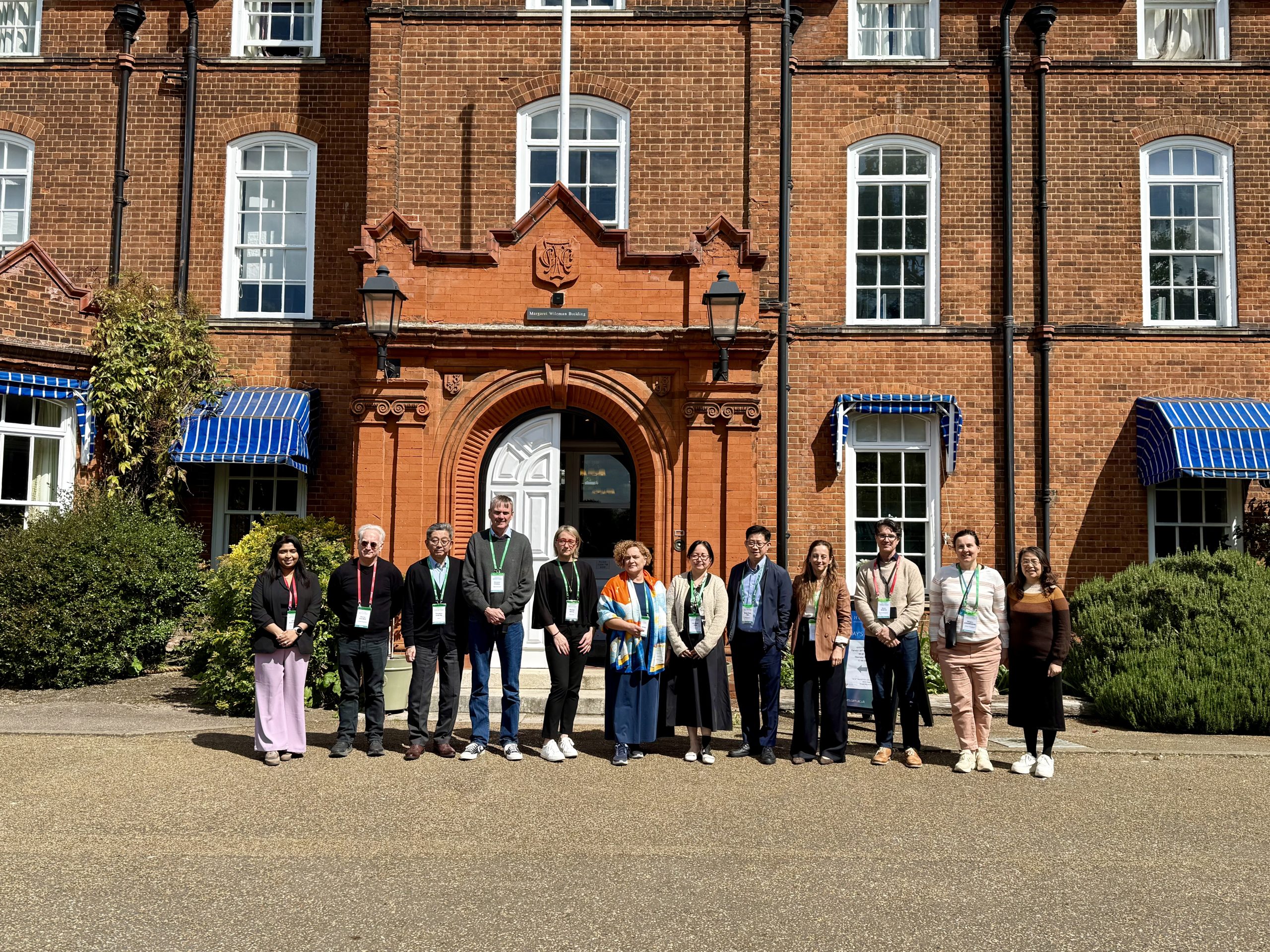
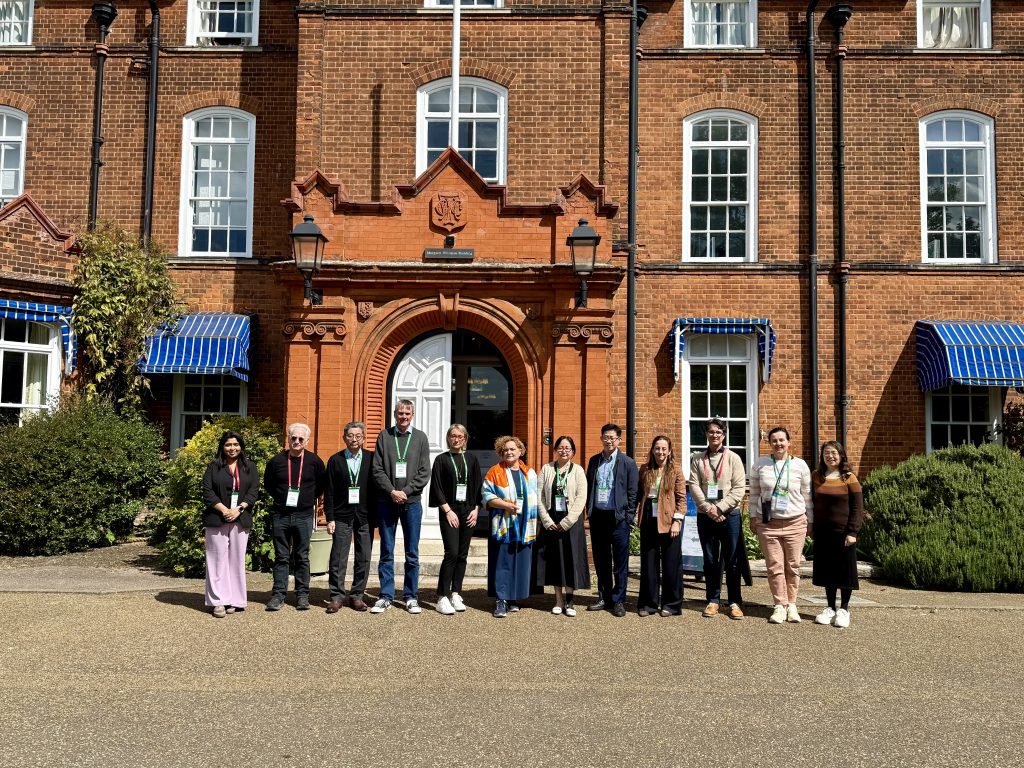
The Asia-Europe Foundation (ASEF) is proud to officially launch the 1st Asia-Europe Education Next Fellowship (ASEFNextEd1) at the University of Cambridge, United Kingdom, marking the beginning of an ambitious and collaborative journey to rethink the future of teacher education in the age of Artificial Intelligence (AI).
Held in partnership with the Digital Education Futures Initiative (DEFI), Hughes Hall, University of Cambridge the Fellowship Leaders’ Meeting brought together a distinguished group of academics, researchers, policymakers, and education leaders from across Asia and Europe. Over 3 dynamic days, participants engaged deeply with the Fellowship’s central theme:
“Re-thinking Intelligence: The Future of Teacher Education.”
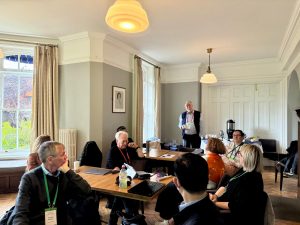
Creating Space for Critical Inquiry and Dialogue
From the outset, the programme fostered a intellectually vibrant environment that encouraged critical inquiry, openness, and meaningful exchange across cultures and disciplines. This shared space enabled Fellowship Leaders to move beyond surface-level discussions and engage with complex, often contested questions shaping the future of education.
Challenging Assumptions About Intelligence and AI
The Fellowship opened by questioning dominant narratives around AI and intelligence. In a thought-provoking dialogue by Professor Rupert Wegerif invited participants to reconsider intelligence not as something possessed by humans or machines, but as something emergent, dialogic, and relational. This perspective set the tone for a Fellowship grounded in critical reflection rather than technological determinism.
The Fellowship deepened its critical lens through a keynote by Professor Wayne Holmes, who challenged prevailing assumptions about AI’s role in education. Moving beyond the hype, he invited participants to examine what AI can, cannot, and should not do, emphasising the importance of professional judgement, ethics, and human agency in shaping the future of teacher education.
Building a Cross-Regional Community
With representation of diverse Asian and European countries, the meeting emphasised the importance of intercultural collaboration. Through an interactive intercultural learning session led by Jyoti Rahaman guided participants to move beyond surface-level collaboration and engage with the deeper values, assumptions, and perspectives shaping their work. By making these differences visible, the session laid the foundation for more reflective, trust-based, and effective cross-cultural collaboration.
In a reflective fireside dialogue, Dr Velislava Hillman created space for participants to reconnect with purpose and responsibility in a rapidly evolving educational landscape. By surfacing personal motivations, tensions, and uncertainties, the session grounded the Fellowship in a shared sense of commitment while embracing the complexity of the challenges ahead.
All in all, through structured dialogue and reflective exercises, participants explored how values, contexts, and perspectives shape the way we think, communicate, and work together. This process laid the foundation for a strong and cohesive Fellowship community.
From Ideas to Impact: Advancing Whitepapers
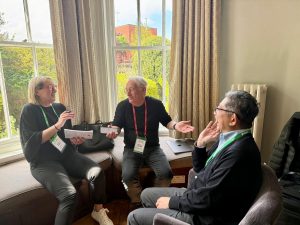
A core focus of the meeting was the development of Fellowship whitepapers. Through a rigorous peer-review process, Fellowship Leaders presented and refined their proposals, addressing key issues such as teacher agency in AI-driven environments, ethical and explainable AI, and system-level innovation in teacher education.
These sessions were designed not only to share ideas, but to challenge, test, and strengthen them, ensuring that each contribution is both intellectually robust and relevant to policy and practice.
Reframing the Big Questions
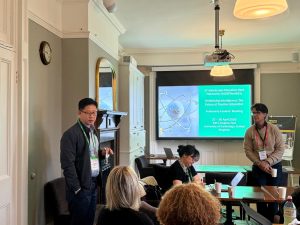
A defining moment of the programme was the Asia-Europe Strategic Roundtable, which posed a critical provocation:
What if we are wrong about intelligence?
This discussion encouraged participants to question underlying assumptions, surface blind spots, and explore alternative ways of understanding intelligence in the context of education and AI.
Beyond the Hype: Reclaiming Human Agency
Across keynotes and discussions, the Fellowship emphasised the importance of maintaining a human-centred perspective. Rather than viewing AI as a replacement for teachers, participants explored how it can support dialogue, ethical reasoning, and human development, reinforcing the central role of educators in increasingly complex learning environments.
Innovation and Future Thinking
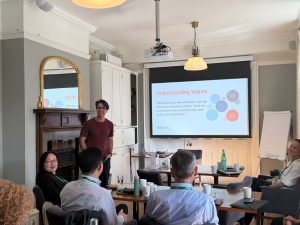
The DEFI Innovation Showcase highlighted cutting-edge research and emerging practices, from dialogic AI to inclusive learning design, demonstrating how technology can be leveraged to create more equitable and collaborative education systems.
Looking ahead, the Future Scenario Lab invited participants to explore possible futures for teacher education in 2050, examining both AI-dominant and human-centred trajectories. These discussions connected present challenges with long-term possibilities, encouraging systemic and forward-looking thinking.
Reimagining Quality Education
The Fellowship concluded by challenging traditional definitions of “quality” in education. Participants called for a shift towards models that prioritise creativity, collective intelligence, and human flourishing, rather than narrow, metrics-driven approaches.
In his forward-looking closing keynote, Dr Kevin Martin re-examined what “quality education” means in the age of AI. Framing AI not only as a disruption but as a potential partner, he encouraged participants to rethink education systems around dialogue, creativity, and collective intelligence, rather than narrow metrics of performance.
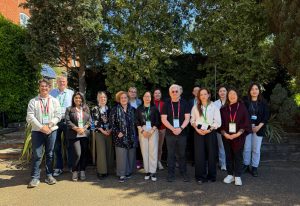
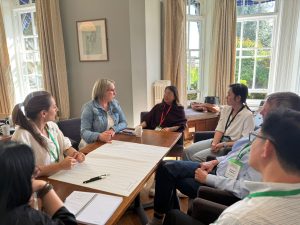
The ASEFNextEd1 Fellowship Leaders’ Meeting is the beginning of a collective effort to shape new narratives, generate new knowledge, and influence the future direction of teacher education across Asia and Europe.
ASEF looks forward to continuing this journey with its growing community of Fellowship Leaders, Fellows and partners, as they work together to develop forward-looking insights and impactful whitepapers for policy and practice.
ASEF extends its sincere appreciation to the Digital Education Futures Initiative (DEFI), Hughes Hall, University of Cambridge, for hosting the ASEFNextEd1 Fellowship Leaders’ Meeting and for an excellent partnership. ASEF also thanks our distinguished speakers, advisers, and Fellowship Leaders for their insightful contributions throughout the programme:
Advisers, Speakers and Facilitators:
- Professor Rupert Wegerif (University of Cambridge, United Kingdom)
- Professor Wayne Holmes (University College London / UNESCO Chair for AI and Ethics, United Kingdom)
- Dr Kevin Martin (Digital Education Futures Initiative (DEFI), Hughes Hall, University of Cambridge, United Kingdom)
- Dr Imogen Casebourne (DEFI, Hughes Hall, University of Cambridge, United Kingdom)
- Dr Li Yuan (Beijing Normal University Zhuhai Campus, China)
- Jyoti RAHAMAN (Asia-Europe Foundation)
Fellowship Leaders:
- Professor Yik Chan Chin (United Nations University Macau, China)
- Mrs Lidija Kralj (EduconLK, Croatia)
- Professor Yasuhisa Tamura (Sophia University, Japan)
- Professor Stephen Powell (University of Waikato, New Zealand)
- Professor Seng Chee Tan (National Institute of Education, Singapore)
- Dr Mateja Berjc (Ministry of Education, Slovenia)
- Dr Imogen Casebourne (University of Cambridge, United Kingdom)
- Dr Velislava Hillman (EDDS Institute, United Kingdom)
DEFI Innovation Showcase Contributors:
- Mr Luwei Bai (University of Cambridge, United Kingdom)
- Ms Bo Yu (University of Cambridge, United Kingdom)
- Mr Isaac Lei (University of Cambridge, United Kingdom)
- Ms Megan Ennion (University of Cambridge, United Kingdom)