







What is Educational Leadership Fellowship About?
The Asia-Europe Education Next Fellowship (ASEFNextEd) is an annual educational leadership initiative that brings together leading educators, researchers, and teacher trainers from across Asia and Europe to explore one central question: What is next for the future of education?
Each edition focuses on a timely theme shaping education systems worldwide. The inaugural fellowship, “Re-thinking Intelligence: The Future of Teacher Education,” explores how AI, digital transformation, and sustainability are redefining teaching, learning, and human agency in education.
Over an 8-month hybrid programme, 40+ Fellows engage in peer learning, collaborative inquiry, and an international conference, working together to develop forward-looking white papers that contribute to global discussions and policy on the future of teacher education.
The Fellowship is an opportunity for participants to pause and think deeply about the future of teacher education; to develop core competencies in adaptive leadership, systems thinking, collaborative inquiry, and ethical engagement with AI; and to work across Asia and Europe to co-create policy-relevant ideas that shape the future of teacher education.


Building Educational Leadership for the Future of Teacher Education
Key Objectives of the ASEFNextEd1 Fellowship
- Re-examine Intelligence in Teacher Education
Reflect on how intelligence is understood in education in an AI-impacted world. - Enable Asia–Europe Policy Dialogue and Collaboration
Connect academics, researchers, and teacher educators across regions. - Generate Policy-Relevant Knowledge & Resources
Co-create white papers that inform teacher education reform and future policy.
How Can We Shape the Future of Teacher Education
Topic of the ASEFNextEd1 Fellowship
The first edition of the Fellowship focuses on the topic “Re-thinking Intelligence: The Future of Teacher Education.” As AI-mediated tools, particularly generative AI (GenAI), enter classrooms, teacher education systems face an urgent responsibility: to ensure that these technologies strengthen learning and human agency, rather than weaken professional judgement, equity, and trust in education.
Global organisations such as the OECD, UNESCO, and the Council of Europe highlight the need for education systems to rethink curriculum, pedagogy, and teacher preparation to support human-centred, ethical, and accountable use of AI.
In this context, ASEFNextEd1 examines how teacher education must evolve in response to AI, digitalisation, and sustainability transitions.
Why does this topic matter?
The rapid expansion of Artificial Intelligence, alongside accelerating digitalisation and sustainability transitions, is reshaping how societies understand intelligence, learning, and human agency. As AI increasingly influences thinking, decision-making, and knowledge creation, long-standing assumptions about teaching, learning, and professional judgement are being challenged.
At this critical moment, teacher education must evolve to prepare educators to lead learning in an AI-impacted world. This requires rethinking how teachers develop professional judgement, ethical responsibility, and human-centred approaches to education.
Read the ASEFNextEd1 concept note here to learn more about the topic.
How will the ASEFNextEd1 Fellowship contribute?
The theme “Re-thinking Intelligence” provides a focused and integrative framework for examining how teacher education can respond to these shifts. Rather than treating AI as a technical issue, the theme foregrounds intelligence as a human, ethical, cultural, and systemic construct, with direct implications for pedagogy, professionalism, and leadership. In this context, the Fellowship explores the future of teacher education through five interconnected areas:
- Human-Centred Intelligence and Pedagogy: How teacher education can prioritise values, care, and professional judgement, ensuring AI enhances rather than replaces human decision-making.
- The Evolving Role of Teachers and Teacher Educators: How teachers’ roles are shifting from knowledge transmitters to facilitators, interpreters, and ethical decision-makers in AI-supported learning environments.
- Ethics, Agency, and Professional Responsibility: How teacher education can strengthen educators’ capacity to navigate ethical dilemmas, algorithmic influence, and data-driven systems responsibly.
- Wellbeing, Sustainability, and the Green Transition: How intelligence in education must account for cognitive, emotional, and ecological dimensions, supporting sustainable and humane learning systems.
- Cultural and Contextual Perspectives on Intelligence: How diverse understandings of intelligence across Asia and Europe can inform more inclusive and context-sensitive teacher education models.
Within this context, ASEFNextEd1 positions teacher education institutions and stakeholders as key actors in shaping how intelligence is understood, cultivated, assessed, and governed. Rather than treating AI as a technical add-on, the Fellowship supports a systemic re-examination of teacher education’s purposes, practices, and leadership roles.
Through structured dialogue, interdisciplinary collaboration, and policy-oriented knowledge creation, ASEFNextEd1 enables participants to move beyond predefined solutions and engage in collective sense-making. In doing so, the Fellowship supports teacher educators not only as trainers of future teachers, but as intellectual leaders and stewards of responsible educational transformation across Asia and Europe.
ASEFClassNet Faculty Collaboration Advisers
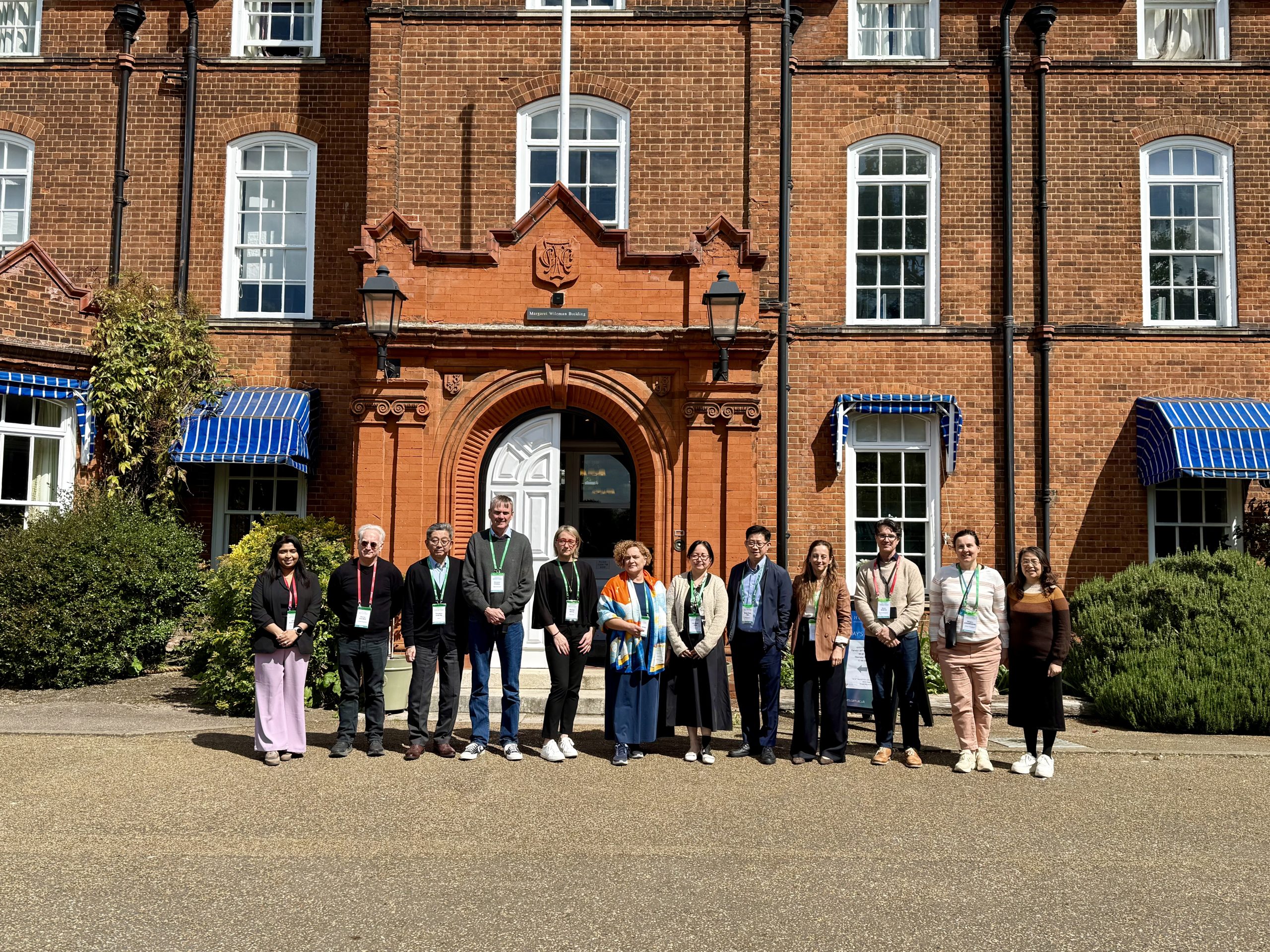
ASEFClassNet18 is guided by four exceptional Academic Advisers—leaders in educational innovation who bring deep insight, passion, and purpose to the project. Professor Li YUAN, Professor Wayne HOLMES and Professor Miki SUGIMURA were outstanding alumni who were part of the inaugural series, ASEFClassNet16 Faculty Collaboration in 2023. This year, we also have a new Adviser, Dr Kevin MARTIN joining us and supporting us by hosting the 1st Fellowship Leader’s Meeting in Cambridge, United Kingdom. Their unwavering commitment to reimagining teaching and learning continues to inspire new directions, ensuring the programme remains bold, relevant, and transformative. Click on their profile to learn more about them!
Who is Eligible and Can Benefit from this Fellowship?
Eligibility and Selection of ASEFNextEd1 Fellows
The ASEFNextEd Fellowship is designed for academics, researchers, and teacher trainers who are:
- Academics and researchers at a Higher Education Institution (HEI) or Teacher trainers at a ministry or government associated Teacher Training Institution
- Working on K-12 teacher education initiatives, such as educational leadership, curriculum development, or educational research
- Committed to shaping the future of teacher training at secondary, high and vocational education levels across Asia and Europe
All Fellows must be citizens of an eligible Asian or European country and work for an institution based in one of these countries:
Asia: Australia, Bangladesh, Brunei Darussalam, Cambodia, China, India, Indonesia, Japan, Kazakhstan, Korea, Lao PDR, Malaysia, Mongolia, Myanmar, New Zealand, Pakistan, Philippines, Singapore, Thailand and Viet Nam.
Europe: Austria, Belgium, Bulgaria, Croatia, Cyprus, Czech Republic, Denmark, Estonia, Finland, France, Germany, Greece, Hungary, Ireland, Italy, Latvia, Lithuania, Luxembourg, Malta, Netherlands, Norway, Poland, Portugal, Romania, Slovakia, Slovenia, Spain, Sweden, Switzerland and the United Kingdom.
ASEF and its partners will invite applicants for the Fellowship. Candidates from diverse disciplinary, cultural, and institutional perspectives from eligible Asian and European countries are welcome. Selection will be based on their expertise and dedication to collaborate across cultures to create new knowledge and drive meaningful change, making Teacher Education more innovative inclusive, dynamic, and impactful.
What will the Fellows Do During the Programme?
Programme Design & Key Elements of ASEFNextEd1 Fellowship
The ASEFNextEd1 Fellowship is structured around five interconnected phases, designed to support collective inquiry, emergence, and policy-relevant knowledge creation. Rather than starting with predefined solutions, the programme guides Fellows through a structured process of dialogue, collaboration, and reflection, allowing insights and responses to develop over time.
Fellowship Leaders’ Meeting | 27 – 30 April 2026 | Cambridge, United Kingdom
The ASEFNextEd Fellowship Leaders’ Meeting marks the official launch of the Fellowship and brings together eight education Leaders (four from Asia and four from Europe) who will guide the whitepaper co-creation process throughout the programme.
Selected from the wider pool of invited Fellows, these Leaders will coordinate the work of a team of five to six Fellows, providing intellectual leadership and coordination during the independent whitepaper drafting phase of the Fellowship (see below).
Over the three-day meeting in Cambridge, these Leaders will collectively refine the overarching inquiry framework, align on thematic directions, and agree on shared standards for quality, collaboration, and policy relevance. The meeting also serves to synchronise timelines, roles, and working methods, ensuring coherence across teams while allowing space for diverse perspectives and approaches.
By establishing a strong foundation of shared purpose, trust, and cross-regional leadership, the Leads’ Meeting enables a coordinated yet flexible process for producing high-quality, policy-relevant whitepapers that contribute to renewing teacher education across Asia and Europe.

Peer-to-Peer Learning & Dialogue Phase I 13 May – 24 June 2026 | Online
The Fellowship begins with a facilitated peer-learning and dialogue phase, creating a shared foundation for inquiry. This phase establishes trust, shared language, and intellectual coherence across the Fellowship. During this phase, Fellows engage in structured conversations to:
- Develop a shared conceptual understanding of “intelligence” in the context of education, moving beyond purely technical interpretations.
- Exchange regional, cultural, and institutional perspectives on the trends reshaping teacher education.
- Identify common challenges and priorities, and form interdisciplinary, cross-regional whitepaper teams around emerging themes.
Programme Design
The ASEFNextEd1 Fellowship is structured around five interconnected phases, designed to support collective inquiry, emergence, and policy-relevant knowledge creation. Rather than starting with predefined solutions, the programme guides Fellows through a structured process of dialogue, collaboration, and reflection, allowing insights and responses to develop over time.
The ASEFNextEd Fellowship Leaders’ Meeting marks the official launch of the Fellowship and brings together eight education Leaders (four from Asia and four from Europe) who will guide the whitepaper co-creation process throughout the programme.
Selected from the wider pool of invited Fellows, these Leaders will coordinate the work of a team of five to six Fellows, providing intellectual leadership and coordination during the independent whitepaper drafting phase of the Fellowship (see below).
Over the three-day meeting in Cambridge, these Leaders will collectively refine the overarching inquiry framework, align on thematic directions, and agree on shared standards for quality, collaboration, and policy relevance. The meeting also serves to synchronise timelines, roles, and working methods, ensuring coherence across teams while allowing space for diverse perspectives and approaches.
By establishing a strong foundation of shared purpose, trust, and cross-regional leadership, the Leads’ Meeting enables a coordinated yet flexible process for producing high-quality, policy-relevant whitepapers that contribute to renewing teacher education across Asia and Europe.

The Fellowship begins with a facilitated peer-learning and dialogue phase, creating a shared foundation for inquiry. This phase establishes trust, shared language, and intellectual coherence across the Fellowship. During this phase, Fellows engage in structured conversations to:
- Develop a shared conceptual understanding of “intelligence” in the context of education, moving beyond purely technical interpretations
- Exchange regional, cultural, and institutional perspectives on the trends reshaping teacher education
- Identify common challenges and priorities, and form interdisciplinary, cross-regional whitepaper teams around emerging themes
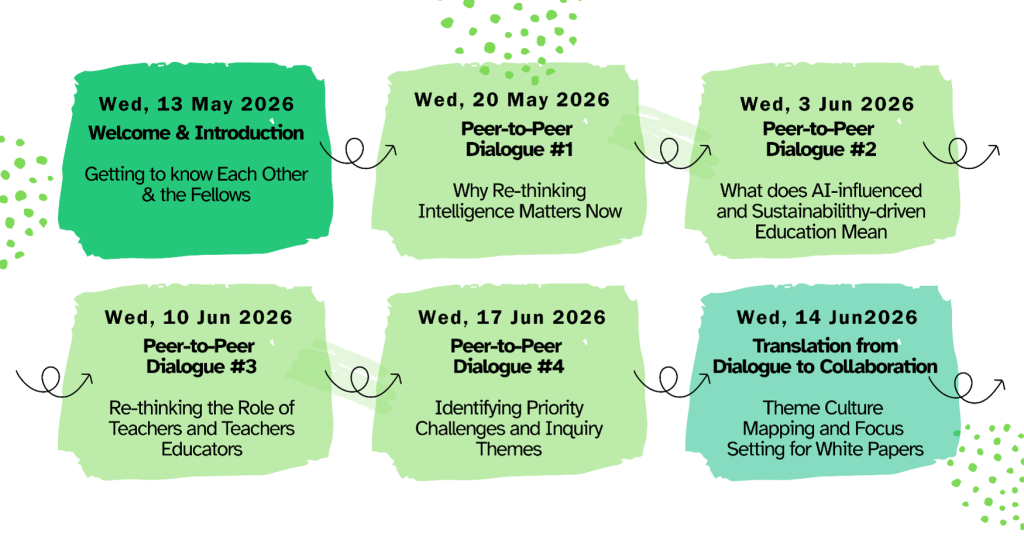
By the end of the Peer-to-Peer Learning & Dialogue Phase, Fellows will have:
A shared and nuanced understanding of “Re-thinking Intelligence” in the context of AI-influenced and sustainability-driven education systems
- Established trust, shared language, and agreed principles for constructive dialogue and peer feedback
- Clearly defined inquiry themes and well-formed, cross-regional whitepaper teams with aligned focus and ways of working
This foundation ensures that subsequent collaboration is deep, coherent, and policy-relevant, rather than fragmented or solution-driven too early.
Building on the insights generated during the Peer-Learning & Dialogue Phase, the White-Paper Co-Creation Phase constitutes the core knowledge-production component of the Fellowship.
What are the ASEFNextEd1 Whitepapers?
The ASEFNextEd whitepapers are collaborative, evidence-informed outputs developed by cross-regional teams of teacher educators, researchers, and academics. Each whitepaper examines a priority subtopic under the theme “Re-thinking Intelligence: The Future of Teacher Education,” with the aim of informing institutional leadership, shaping teacher education practice, and contributing to regional and international policy dialogue on teacher education.
What is the Co-creation Process?
During this independent phase, Fellows collaborate in cross-regional and interdisciplinary teams of 4-5, each led by a Fellowship Leader. Each team will address a specific subtopic withing the overarching Fellowship theme: “Re-thinking Intelligence: The Future of Teacher Education”. Each whitepaper is developed through iterative inquiry, collaborative writing, and peer feedback, and is guided by a designated team lead. Rather than following a prescriptive model, teams engage in an iterative, problem-driven process, allowing ideas, questions, and policy-relevant insights to emerge through collaboration, peer feedback, and reflection. Fellowship Leads play a facilitative and intellectual leadership role, ensuring conceptual coherence, policy relevance, and progress, while maintaining the collective ownership of the whitepaper among all team members.
Who are the Target Audiences of the Whitepapers?
The whitepapers are designed with a two-tier audience approach, ensuring both institutional relevance and policy resonance across Asia and Europe:
1. Institutional Leaders in Teacher Education: The primary audience of the whitepapers includes senior leaders within teacher education institutions, such as Deans, Vice-Chancellors, Heads of Faculties of Education, and leaders of teacher training institutions. The whitepapers aim to support these leaders in:
- Reflecting on how teacher education programmes must evolve in AI-influenced and sustainability-driven education systems
- Informing institutional strategy, curriculum renewal, leadership development, and professional standards
- Strengthening human-centred, ethical, and future-oriented approaches to teacher educatiom
2. Policy Stakeholders and Public Authorities: As a secondary audience, each whitepaper will conclude with a short set of high-level, accessible recommendations relevant to Ministries of Education, government bodies, and policy stakeholders. These recommendations will:
- Be limited in numbers (3-5 max), focused and framed at a strategic level
- Focus on interregional relevance and shared challenges across Asia and Europe
- Highlight broad policy considerations rather than detailed national prescriptions
This two-tier approach ensures that the whitepapers remain grounded in institutional practice, while also contributing meaningfully to regional and international policy dialogue on the future of teacher education.
What topics are discussed in the Whitepapers?
Building directly on the topic framework described above, the ASEFNextEd1 whitepapers address key dimensions of “Re-thinking Intelligence: The Future of Teacher Education”, including but not limited to:
- Human-centred intelligence and professional judgement
- Evolving roles of teachers and teacher educators in AI-supported learning environments
- Ethics, agency, and professional responsibility in data-driven education systems
- Wellbeing, sustainability, and the green transition in education
- Cultural and contextual perspectives on intelligence across Asia and Europe
Together, these whitepapers translate the Fellowship’s conceptual focus into policy-relevant, practice-oriented insights, supporting institutional leaders and policymakers in navigating the future of teacher education across Asia and Europe.
A Peer-to-Peer Feedback Session in the midst of this phase will bring all white paper teams together in a facilitated, learning-oriented dialogue to review progress, exchange perspectives, strengthen arguments, and refine their drafts through collective reflection before presenting them at the Conference.
The 4-5 days long (tbc) on-site conference brings Fellows together to consolidate learning and translate collaborative inquiry into actionable insights. During the conference, Fellows will:
- Present and critically reflect on their draft whitepapers
- Engage in structured peer feedback and policy-oriented dialogue
- Refine and finalise their collective outputs through exchange with peers and invited experts
- Connect with a broader ecosystem of education leaders, researchers, and innovators
The conference will be organised by the United Nations University Macau (UNU Macau), creating opportunities for wider international engagement and situating the Fellowship within global discussions on education, intelligence, and sustainability.
Please note: Invitation to the conference is conditional for fellows based on active engagement, meaningful peer contributions, and strong progress on the joint publication during the virtual phase.

After the Conference there will also be an opportunity for Knowledge Dissemination & Policy Dialogue. Following the Fellowship, outcomes will be disseminated through ASEF and partner platforms, regional and international education fora, and targeted policy-oriented communication outputs. Depending on scope and relevance, a follow-up publication or edited volume may be developed to further extend the impact of the Fellowship’s collective work and support ongoing policy dialogue.

What is Expected from Fellows?
Time Commitment and Expected Contributions of ASEFNextEd1 Fellows
Fellows are expected to participate actively as co-creators of knowledge and contributors to Asia-Europe policy dialogue on the future of teacher education. Fellows are expected to commit approximately 2–3 hours per week to fully participate in the activities below:
Peer-Learning & Dialogue Phase I 13 May – 24 June 2026 | Online
- Participate in six structured online peer-learning and dialogue sessions live online, one session per week, each 2 hours long
- Fellows are expected to bring insights from their own institutional, national and regional contexts, including teacher education models, research findings, and emerging challenges linked to digitalisation, human-centred education, and sustainability transitions
- Expected time commitment: 2-hours each week
White-Paper Co-Creation Phase | 01 July – 17 November 2026 | Online
- Contribute to a cross-regional whitepaper team, and work together with 4-5 team members, to co-develop a policy-relevant and practice-informed whitepaper.
- Provide peer feedback to other teams’ work, strengthening quality, coherence, and shared ownership of Fellowship outputs
- Expected time commitment: 2 hours per week between June – July & September – November 2026
On-site Conference | 23 – 27 November 2026 | Macau, China
- Attend the 4-5days long conference in China, to present, refine, and finalise whitepapers in dialogue with peers and expert resource persons. Participation is conditional on active engagement and meaningful progress during the previous two phases of the Fellowship.
- Expected time commitment: 4-5 days in November 2026, Macau, China
What will the Fellows Achieve?
Key Outcomes & Competencies Acquired through the ASEFNextEd1Fellowship
Fellows
Through the ASEFNextEd1 Fellowship, Fellows will achieve the following outcomes to advance their professional roles as academics, researchers, and teacher trainers, while contributing to broader Asia–Europe education reform:
- Contribute to Policy-Relevant Knowledge Creation: Fellows will collaboratively co-create thematic whitepapers that critically examine “Re-thinking Intelligence: The Future of Teacher Education”, generating evidence-informed insights to support teacher education reform, leadership development, and future-oriented policy dialogue across Asia and Europe.
- Engage in High-Level International Dialogue and Visibility: Through participation in the ASEFNextEd1 Conference organised Fellows will engage with international education leaders, researchers, and innovators, strengthening their global outlook and situating teacher education within wider discussions on digitalisation, human-centred education, and sustainability transitions.
- Strengthen Asia–Europe Academic and Institutional Partnerships: By working in cross-regional and interdisciplinary teams, Fellows will build sustained professional networks and institutional collaborations between Faculties of Education and teacher training institutions, fostering long-term cooperation, joint research, and shared leadership in teacher education.
- Advance Future-Oriented Teacher Education Leadership: Fellows will enhance their capacity to lead change within their institutions by integrating Fellowship insights into teacher education curricula, professional development programmes, and research agendas, promoting human-centred, ethical, and future-ready approaches to teacher education across secondary and vocational contexts.
Through the ASEFNextEd1 Fellowship, Fellows will develop core competencies essential for leading future-oriented teacher education:
- Systems Thinking & Problem Framing: Ability to analyse complex, interconnected challenges in teacher education related to intelligence, AI, and sustainability, and to frame them in ways that support meaningful institutional and policy responses.
- Collaborative Inquiry & Knowledge Co-creation: Capacity to work across disciplines and regions to co-create knowledge, integrate diverse perspectives, and refine ideas through peer dialogue and feedback.
- Ethical Reasoning & Professional Judgement: Strengthened competence in identifying ethical implications, exercising responsible judgement, and promoting human-centred approaches to intelligence and AI in teacher education.
- Adaptive Leadership & Change Agency: Readiness to lead educational change amid uncertainty by translating emerging insights into future-ready teacher education practices, policies, and institutional strategies.
How Will the Fellowship Create Impact?
Impact, Scale & Sustainability of the ASEFNextEd1 Fellowship
- Impact: The ASEFNextEd1 Fellowship creates lasting, system-level impact by strengthening the intellectual and educational leadership of teacher educators and generating policy-relevant whitepapers that inform future-oriented teacher education reform across Asia and Europe.
- Scale: The knowledge, insights, and conceptual frameworks co-created by Fellows are designed for transferability and wide dissemination, enabling ripple effects across institutions, national teacher education systems, and regional and international policy dialogues beyond the Fellowship cohort.
- Sustainability: By cultivating an enduring Asia–Europe ASEFNextEd Community of Practice (CoP), the Fellowship embeds continuous collaboration, peer learning, and leadership development among academics, researchers, and teacher trainers beyond the project lifecycle.
Overall, by positioning teacher educators as intellectual leaders and change agents, ASEFNextEd1 aims to generate a multiplier effect that supports longer-term transformation across education systems and learner communities across Asia and Europe.
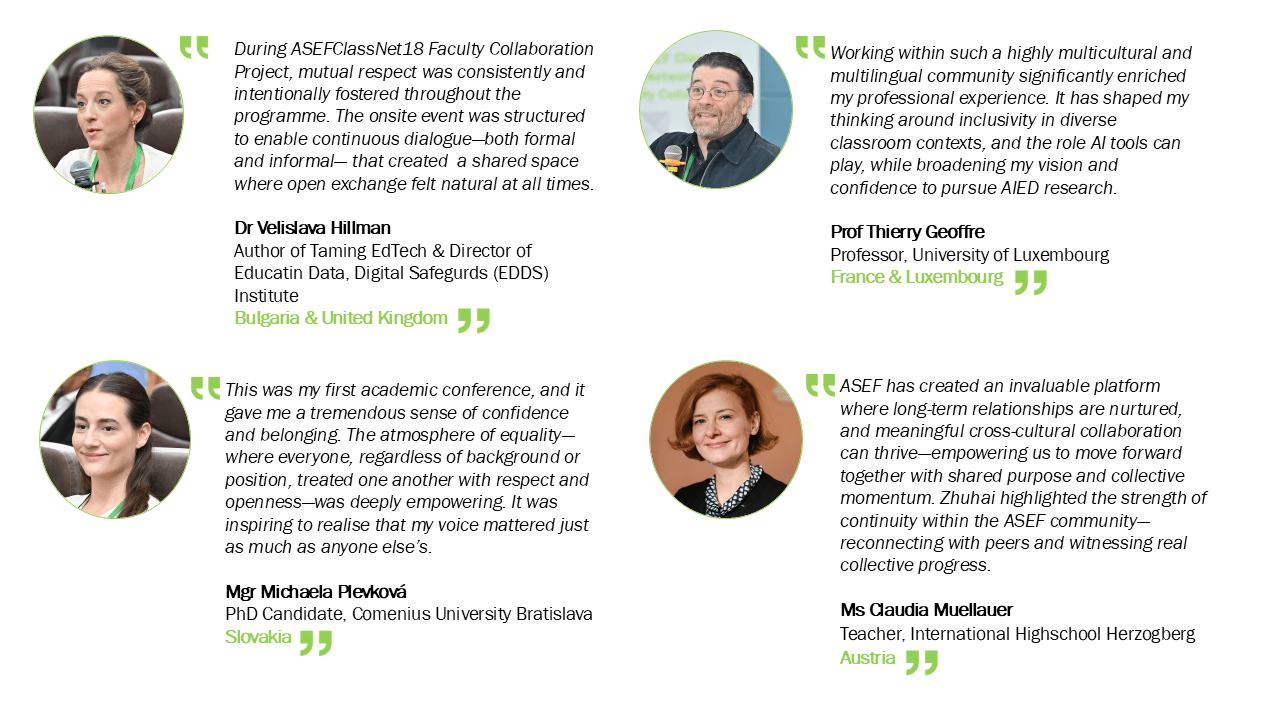
Testimonials from the ASEFClassNet18 Faculty Collaboration Participants
Learn more about the previous edition #ASEFClassNet18 Faculty Collaboration here: