WHAT WAS THE ASIA-EUROPE YOUTH SUMMIT ON SCIENCE AND TECHNOLOGY DIPLOMACY?
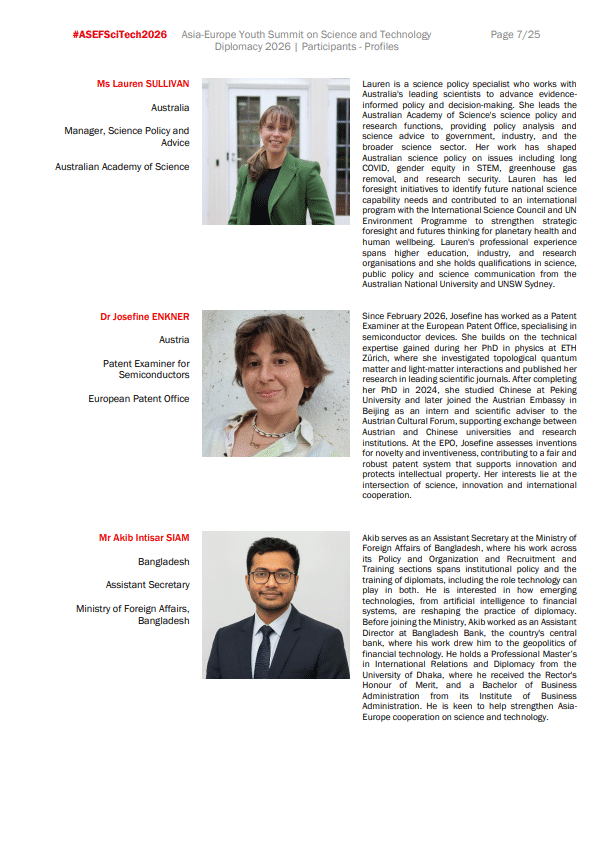
50 young diplomats, government officials, and research & science managers, coming from 31 countries across Asia and Europe, gathered in Jakarta, Indonesia, between 19-24 October 2026, for the second Asia-Europe Youth Summit on Science and Technology Diplomacy.
The Youth Summit marked the culmination of the Asia-Europe Training on Science and Technology Diplomacy, where the participants presented their Asia-Europe Youth Communiqué on Science and Technology Diplomacy.
The Youth Summit was a unique opportunity for the participants to engage in people-to-people dialogue, learn in a vibrant local context, and for them to make invaluable connections with experts, peers, and other professionals working in this intersection of science, technology, and international relations.
The Youth Summit was organised in partnership and hosted by the National Research and Innovation Agency of Indonesia (BRIN), and the Ministry of Foreign Affairs of the Republic of Indonesia (MOFA).
A special thank you to our funders the Ministry of Foreign Affairs of Denmark and Germany. Also, for the support from the Central European Scientific Society of Innovation and Technology (CESSIT) on-site in Jakarta during the Youth Summit.
WHO WAS PART OF THE YOUTH SUMMIT?
We invited selected participants from the Asia-Europe Training on Science and Technology Diplomacy Conference with the following profiles to join the Youth Summit:
- Civil Society: Research and Science Managers, who has a supervisory or coordination role (e.g. managing research projects or teams, overseeing research areas, or supporting institutional research strategy), who are involved in international science, technology and innovation cooperation.
- Government: Diplomats and Government Officials working in the intersection of science, technology, innovation and international relations in the Ministry of Foreign Affairs or relevant government institutions
PROGRAMME
DAY 1: ASIA-EUROPE YOUTH SUMMIT ON SCIENCE AND TECHNOLOGY DIPLOMACY 2026
Welcome Dinner: Hosted by the German Residency in Jakarta
We welcomed representatives from our partners and Ambassadors & representatives from Asian and European diplomatic missions in Jakarta to officially kick off the programme.
A special thank you to HE Mr Ralf BESTE, German Ambassador to Indonesia, Mr Andri HADI, Governor for ASEF at the Ministry of Foreign Affairs of Indonesia, and Prof. Dr. Eddy Giri RACHMAND, Deputy Chairman for Human Resources of Science and Technology at the National Research and Innovation Agency (BRIN), for welcoming the participants.
During HE Mr Ralf BESTE’s welcoming speech he encouraged embassies to actively draw on the intellectual power of researchers. He emphasised the importance of connecting scientific expertise with diplomatic efforts, highlighting opportunities for young professionals to contribute fresh perspectives and strengthen Asia-Europe collaboration in Science and Technology Diplomacy.
Mr Andri HADI stated that this Youth Summit creates opportunities for people-to-people exchanges, allowing participants to understand and learn from one another. He expressed hope that the coming days will offer participants not only new knowledge and perspectives, but also lasting friendships and professional connections. Welcoming everyone to enjoy Indonesian hospitality, and he wished them a successful summit ahead.
Prof. Dr. Eddy Giri RACHMAN emphasised the diversity that unites the group. Coming from different countries, cultures, disciplines, and professional backgrounds, every participant brings a unique perspective. He stressed that this diversity is not merely something to celebrate, but one of our greatest strengths.


Opening: Welcome Remarks
The Youth Summit officially started on 20 October with the Opening. It started with the ‘Bhineka Tunggal Ika’ dance rooted in the Indonesian motto which represents unity in diversity. This was then followed by welcoming remarks from Ambassador Beata Stoczynska (Executive Director, ASEF), Ambassador Andri Hadi (Governor for ASEF, Ministry of Foreign Affairs of Indonesia (MOFA)), and Prof. Dr. Arif Satria (Chairman of BRIN). The remarks mentioned how we can address global challenges, knowledge exchange turning dialogue into action, sustainable partnerships, youth empowerment, and how science and technology is a valuable part that constructs our future.
Inspirational Keynote: Hosted at BRIN
The morning continued with a keynote by HE Ms Grata Endah WERDANINGTYAS, Director General for America and Europe at the Ministry of Foreign Affairs of Indonesia (MOFA).
She shared her diplomatic journey being infuenced by her father’s contribution in the Palapa Satellite project, a system domestically built by Indonesian connect 17.000 islands in the country. This childhood memory shaped the way she thinks about diversity and the positive impact of technology. It demonstrated how innovation can bridge geographical distances and foster a shared sense of national identity in Indonesia.

Drawing on her experience, she highlighted how digitalisation has transformed human interaction by expanding the scale of communication and reshaping its ethical boundaries. She emphasised that core principles of honesty, respect, and accountability must remain central in navigating these changes.

Panel: Impact of Science Diplomacy
Following the welcome addresses, participants listened to two panel discussions on the topics of the ‘Impact of Science Diplomacy’ and ‘Science Diplomacy in ASEAN’
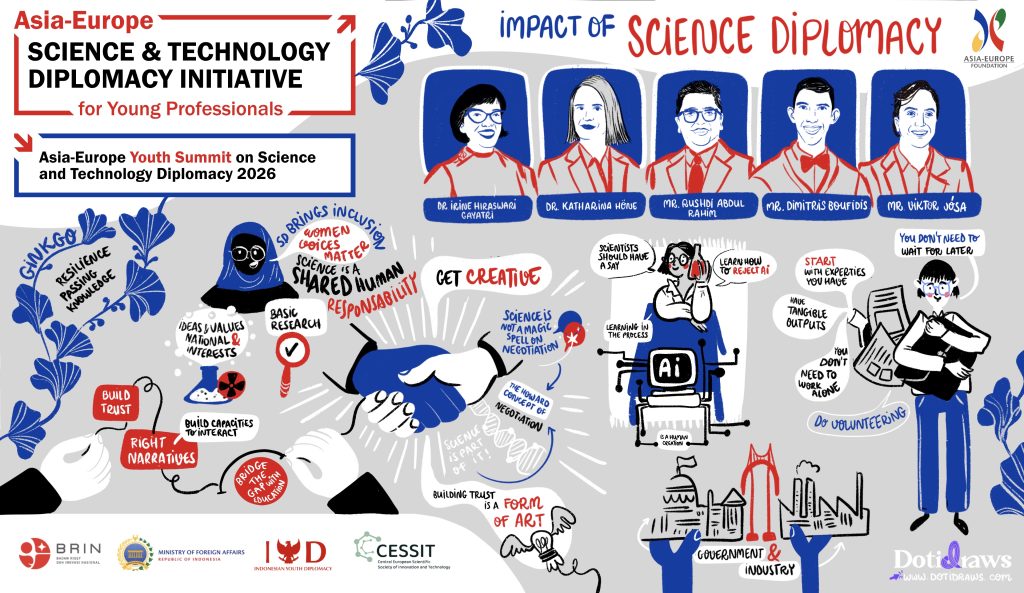
We were grateful to welcome the perspectives of Dr Irine HIRASWARI GAYATRI, Executive Director & Chief of the Program Implementation Committee, Management of Social Transformation (MOST) UNESCO Indonesia; Dr Katharina HÖNE, Scientific Advisor, German Aerospace Center (DLR) –DLR Projektträger; Mr Rushdi ABDUL RAHIM, President & CEO, Malaysian Industry Government Group for High Technology (MIGHT); Mr Dimitris BOUFIDIS, Chair, Penn Science Policy and Diplomacy Group, University of Pennsylvania who shared insights on a variety of perspectives such as equity, technology, industry government, scientific research, and youth views.
This panel was moderated by Mr Viktor JOSÁ, Central European Scientific Society for Innovation and Technology (CESSIT).
The panel sparked rich discussionas, with speakers from diverse backgrounds sharing perspectives on equity, technology, industry, government, scientific research, and youth engagement. Their varied experiences brought different insights to the conversation, highlighting the importance of cross-sector collaboration in Science and Technology Diplomacy.


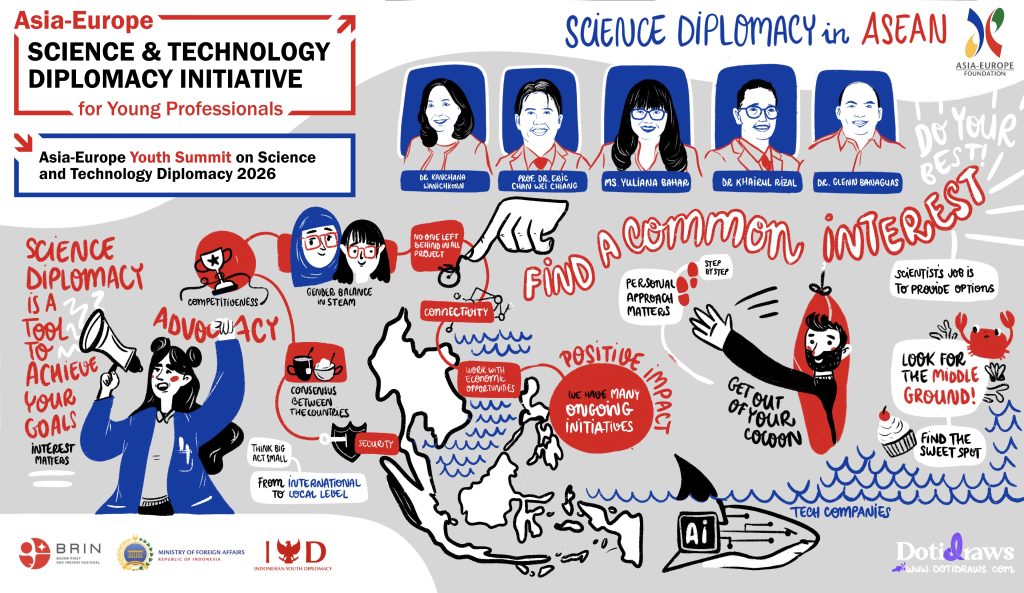
Panel: Science Diplomacy in ASEAN
In this second panel on ‘Science Diplomacy in ASEAN’ we were grateful to hear from Dr Kanchana WANICHKORN, Director of Sectoral Development, ASEAN Economic Community Department, The ASEAN Secretariat; Professor Dr. Eric CHAN Wei Chiang, Head of Programme for the Master in Science Diplomacy and Master of Science Policy & Communication, Institute for Science Diplomacy and Sustainability (IISDS), UCSI University; Ms Yuliana BAHAR, Director of ASEAN Socio-Cultural Cooperation, Ministry of Foreign Affairs of the Republic of Indonesia; Dr Khairul RIZAL, Director of Research, Technology and Innovation Measurement and Indicators at Indonesia’s National Research and Innovation Agency (BRIN) and Indonesia’s Board Advisor for ASEAN COSTI. The session was moderated by Dr Glenn BANAGUAS, Chairman, ASEAN Science Diplomats.
The panel discussion explored blind spots in Science Diplomacy within ASEAN, highlighting how science can serve as a neutral tool for communication. Speakers discussed the use of statistical surveys and scientific methods to help institutions identify shared interests and strengthen collaboration across the region.
Lunch & Dialogue: Meet up with Young Scientist Community in Jakarta
Over lunch participants engaged in peer-to-peer dialogue with members of the Indonesian Young Academy of Sciences (ALMI) and representatives of Indonesian Youth Diplomacy (IYD), exchanging insights on the realities of navigating local research ecosystems, bridge local experiences with broader regional and global challenges. Through reflecting on shared obstacles and cross-disciplinary insights, the conversation underscored actionable pathways to strengthen youth-led scientific collaboration, empower early-career leadership, and expand the collective impact of young scientists on the global stage.


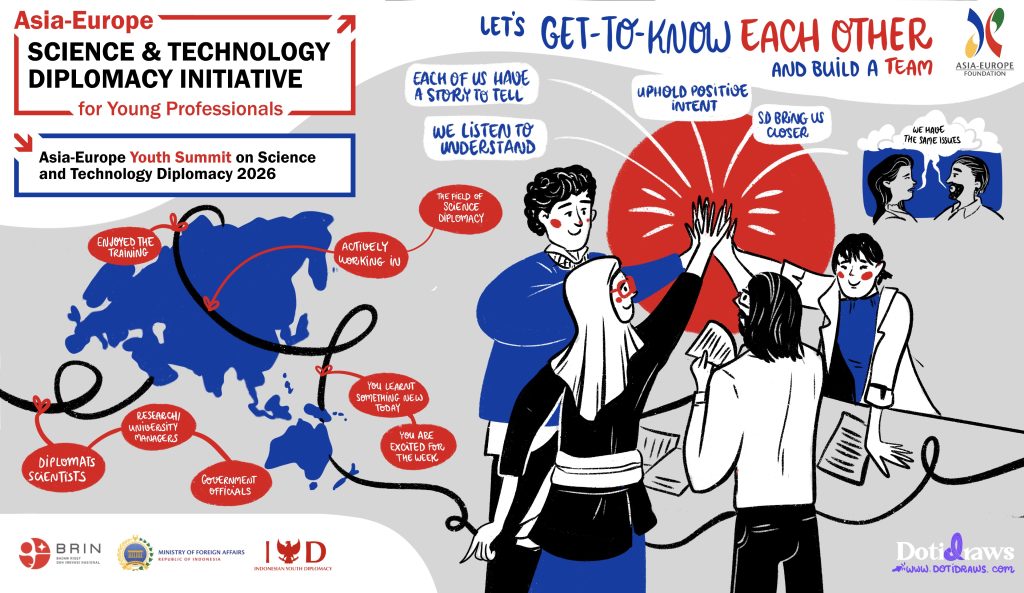
Workshops: Get-to-know Each Other & Intercultural Teambuilding
Following the opening panels, participants had the chance to start get to know one another through different exercises facilitated by Ms Freya CHOW-PAUL, Youth Project Lead, Education Department, ASEF, and Ms Linnea REGNELL, Project Executive, Education Department, ASEF, including the UNESCO Story Circles workshop. During this workshop participants participants practised deep listening and meaningful intercultural dialogue while building connections across diverse backgrounds and perspectives. This helped establish a foundation of trust and mutual understanding to support their collaboration in developing the Asia-Europe Youth Communiqué.
Day 1 finished with a dinner hosted by the National Research and Innovation Agency (BRIN), where participants were welcomed by Prof Dr Amarulla OCTAVIAN, Vice Chairman, National Research and Innovation Agency (BRIN), and got to enjoy a traditional Indonesian meal, whilst experiencing some local Indonesian performances by Maheswara Production Indonesia and PAMUR (Pencak Silat Angkatan Muda).


DAY 2: ASIA-EUROPE YOUTH SUMMIT ON SCIENCE AND TECHNOLOGY DIPLOMACY 2026
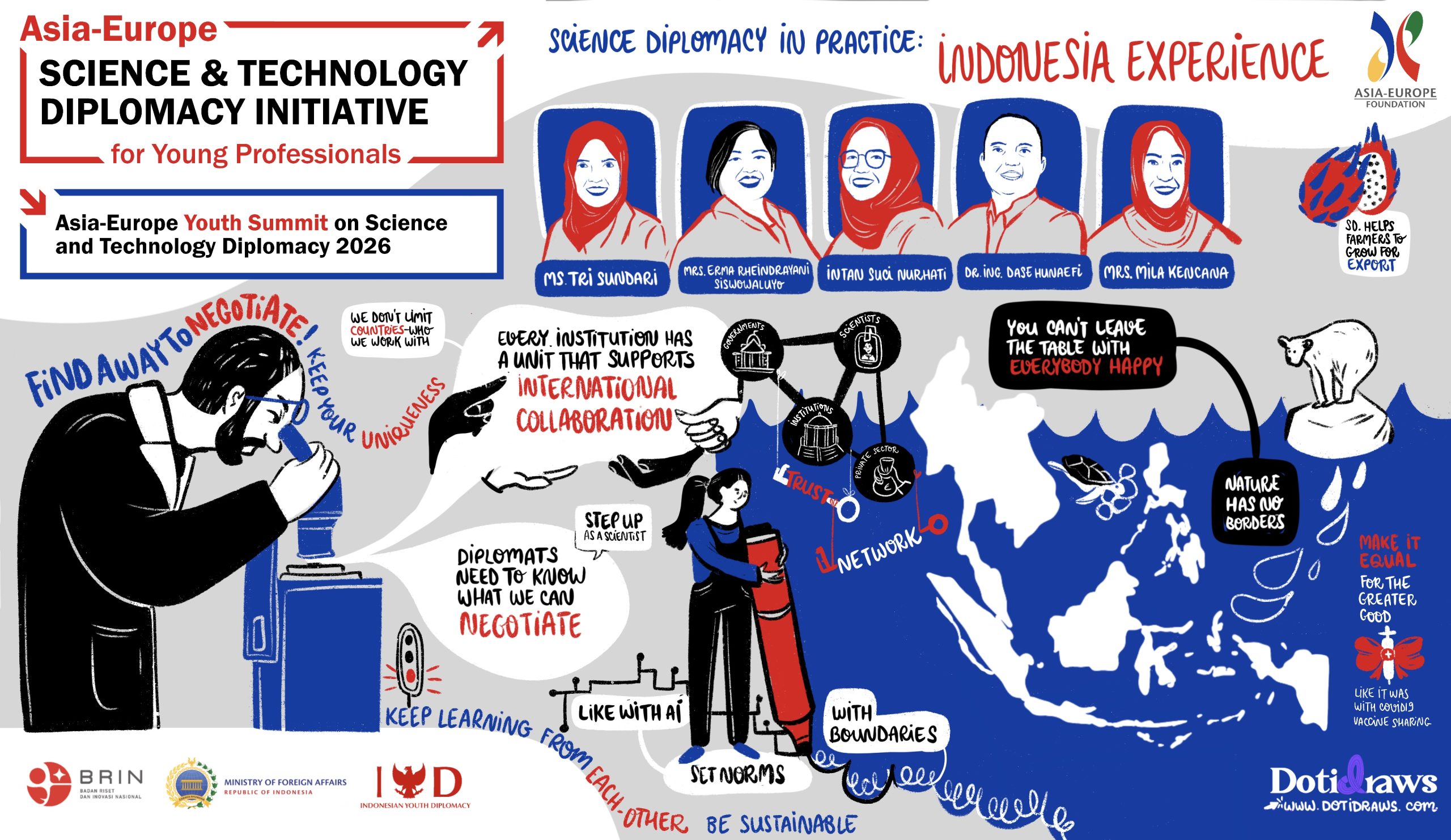
Panel: Science Diplomacy in Practice: Indonesian Experience
On day 2 of the Youth Summit, we started with a panel discussion where participants had the opportunity to learn from Ms Tri SUNDARI, Head of Bureau for Legal and Cooperation, National Research and Innovation Agency (BRIN); Mrs Erma RHEINDRAYANI SISWOWALUYO, Director for American and European Intra-regional and Inter-regional Cooperation (MOFA), Indonesia; Dr Intan Suci NURHATI, Climate and Oceanography Researcher, BRIN Member Dr of Indonesia Young Academy of Sciences (ALMI); Ing. Dase HUNAEFI, Head of Food Technologies Studies Programme, Faculty of Engineering and Technology, IPB University.
The panel was moderated by Mrs. Mila KENCANA, Director for Research and Innovation Permit Governance and Scientific Authority, National Research and Innovation Agency (BRIN).
In this panel session, the speakers covered topics of climate change and pollution, ensuring benefits for humankind and aligning scientific objectives with national interests. Speakers also mentioned the importance of equal opportunity that all countries need to advance together.
Indonesia has a lot of partnerships, and network is the key to finding solutions.

Workshop: Empowering Youth through International Collaboration for Research and Technology for Global Impact
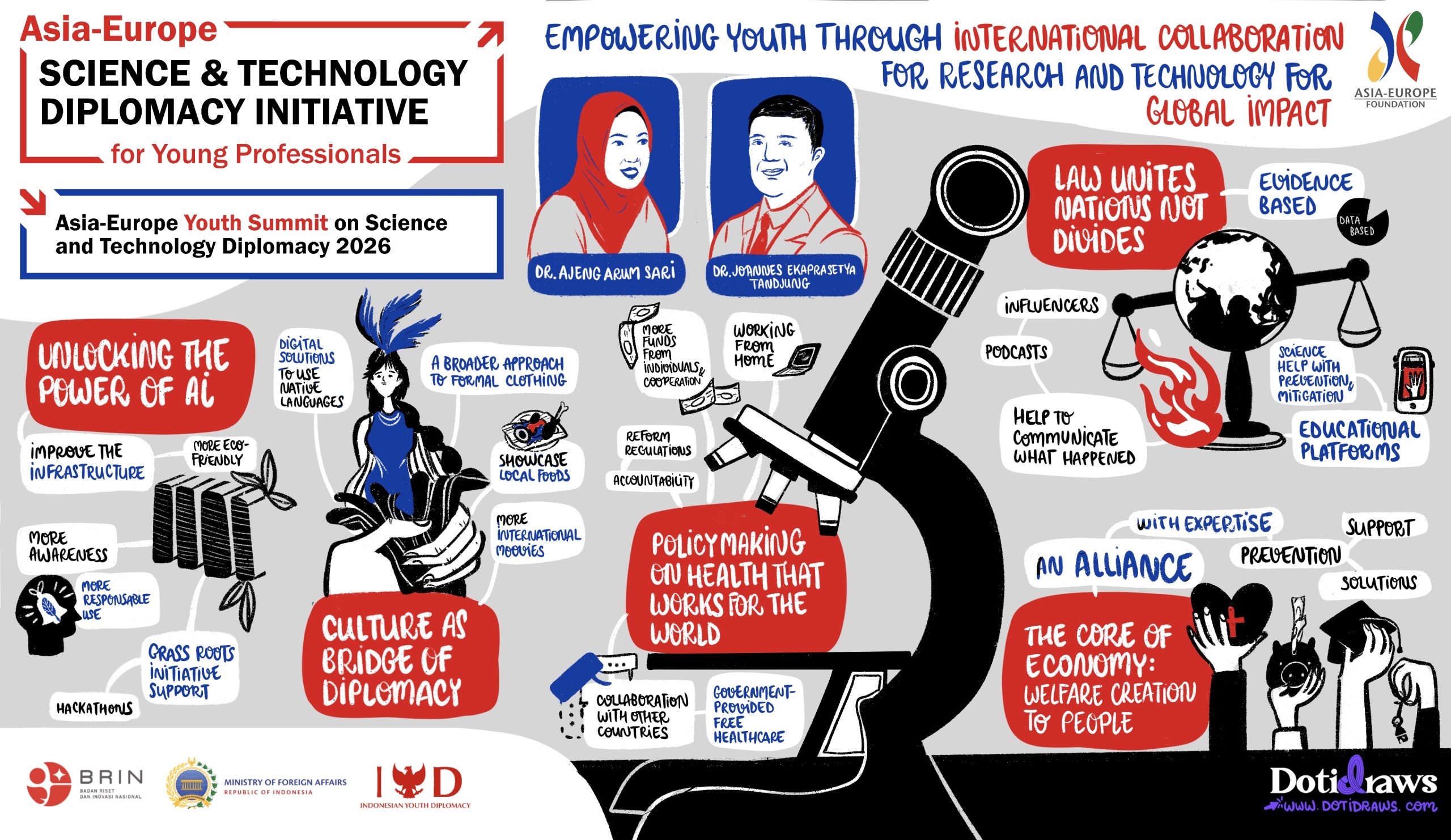
Participants joined a workshop facilitated by our hosts, the National Research and Innovation Agency (BRIN). Dr. Ajeng Arum SARI, Director of Talent Management, BRIN opened the workshop session with insights of her views on research and innovation, stating that research is only the beginning, because great research doesn’t always create real-world impact. Impact depends on talent, research management, funding, enabling policy, and collaboration. This workshop focused exploring interdisciplinary collaboration and working towards a more connected, inclusive, and innovation ecosystem.
Dr. Joannes EKAPRASETYA TANDJUNG, Director of Research and Innovation Infrastructure Strengthening and Partnership, BRIN proceeded with engaging participants in roundtable discussions across five groups, each exploring a key theme: (1) unlocking the power of AI, (2) using culture as a bridge to diplomacy, (3) developing health policies that work for the world, (4) recognising how law unites rather than divides nations, and (5) placing people’s welfare at the heart of economic development. Participants exchanged ideas and proposed potential solutions to address these key challenges through collaboration and innovative approaches.


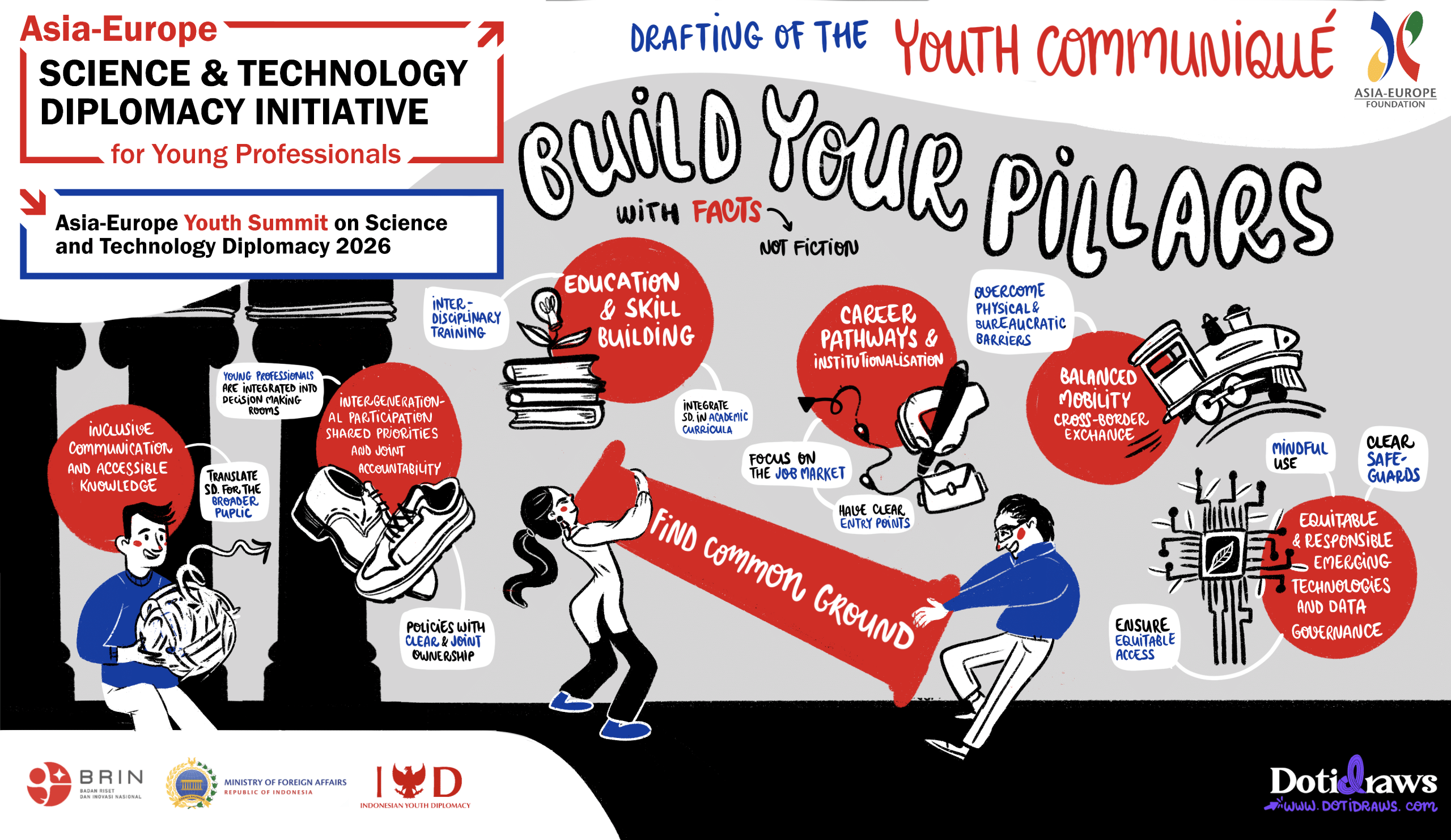
Workshop: Setting the Ground Rules for Drafting the Youth Communique
Following the panel sessions and insightful discussions, participants took part in workshops facilitated by Mr João MOURATO PINTO, Assistant Professor of Diplomacy at the University of Minho, Portugal to brainstorm ideas for the Youth Communiqué. They explored how science and technology can strengthen international collaboration and shape a more connected, innovative future. Through collaborative discussions, six pillars of recommendations were agreed upon, forming the foundation of the Youth Communiqué. Developed collaboratively. the Communiqué aims to capture their priorities, concerns and recommendations, amplifying youth voices and contributing to future dialogue and collaboration across Asia and Europe in Science and Technology Diplomacy.


DAY 3: ASIA-EUROPE YOUTH SUMMIT ON SCIENCE AND TECHNOLOGY DIPLOMACY 2025
World Cafe with Science Attaches
To help the participants and guide them in their dialogue as they worked on their recommendations, ASEF and the partners at the Central European Scientific Society of Innovation (CESSIT) organised a World Cafe Dialogue with a panel of practitioners in the field of science and technology diplomacy – offering their input on the different perspectives and aspects of this complex ecosystem.
We were grateful to welcome Prof Roberto CARNIEL, Science Attaché, Embassy of Italy to Indonesia; Prof Julien BOURGEOIS, Attaché for Science and Technology, Embassy of France in Indonesia; Mr Nik ACHARYA, Science Counsellor, Australian Embassy to Indonesia; Mr Martin RAUCHBAUER, Head of Unit, Austrian Ministry of Foreign Affairs (BMEIA) and Founder of the Tech Diplomacy Network; Dr Dwie Irmawaty GULTOM, Science and Technology Utilization Analysis, National Research & Innovation Agency (BRIN), Indonesia and former Indonesian Science Attaché in Vienna; Mr Dimas IRAWAN, Former Indonesian Science Attaché in Vienna; Ms Safiera NADYA, Science and Innovation Officer, British Embassy in Indonesia
The dialogue was moderated by Mr Tamás KOVÁCS, CESSIT.
Each table held insightful discussions on understanding different stakeholders’ priorities, aligning them with national interests to bridge capacity gaps, and negotiating shared strategic interests at the global level to strengthen scientific collaboration while safeguarding research security.


Workshop: Drafting of the Youth Communique
Following the dialogue, Mr João MOURATO PINTO continued to guide the delegates through different workshops and opportunities for facilitated peer-to-peer feedback sessions towards the development of their Youth Communique.
To help refine the Youth Communique, participants received advice from representatives of the organising organisations. We were grateful to hear perspectives from Ms Réka TÓZSA, Director of Education, Asia Europe Foundation (ASEF); Mr Bálint SZABÓ, Central European Scientific Society for Innovation and Technology (CESSIT); Ms Nona Siska NOVIYANTI, Ministry of Foreign Affairs (MOFA), Ms Ros Intan PURBASARI, National Research and Innovation Agency (BRIN).
Through a constructive feedback round, participants refined their ideas, considering diverse perspectives from policy, research, and diplomatic fields. This exchange helped strengthen the quality, coherence, and global relevance of the youth communique before its finalisation.
Participants also had an interactive Poster Fair where they had the opportunity to exchange feedback and further develop one another’s ideas. After two rounds of feedback sessions, the participants had one last chance to refine their document – finalising the work they had been doing for the past 2 months as part of the online Training and the in-person Youth Summit and prepare for the presentation of the document at the UNESCO-ASEF Intergenerational Dialogue on Science Diplomacy on Friday, 23 October.
By the end of the day, participants had finalised the Youth Communiqué and Mr Dimitris BOUFIDIS, speaker and ASEF SciTech Alumnus challenged them to develop personal action plans beyond the Youth Summit, identifying actionable steps for the next 30 days, setting 6-month goals, and establishing key contacts to help turn their ideas into action.
Closing Reception
On Thursday, 22 October, following the successful drafting of the Youth Communique, the participants gathered for the closing reception of the Asia-Europe Youth Summit on Science and Technology Diplomacy hosted by Indonesia’s Ministry of Foreign Affairs (MOFA). This was the time to celebrate the achievement together and handover of the Youth Communiqué to representatives from ASEF, BRIN and MOFA.
We were glad to welcome Mrs Erma RHEINDRAYANI SISWOWALUYO, Director for American and European Intra-regional and Inter-regional Cooperation (MOFA), Indonesia; Ms Tri SUNDARI, Head of Bureau for Legal and Cooperation, National Research and Innovation Agency (BRIN) and Ms Réka TÓZSA, Director of Education, Asia Europe Foundation (ASEF), at the reception who all gave some inspiring closing remarks to the participants.
The event concluded with a cultural exchange, where guests and participants played the traditional Indonesian angklung together, followed by an Indonesian culinary dinner and a musical performance featuring the instrument.
This marks the end of a 2-month journey. Our wish is that the participants will use their new-found knowledge and the connections built to bridge the two regions to better navigate this complex landscape of Science and Technology Diplomacy in Asia and Europe.


Delivery of the Youth Communique
Organised alongside the Youth Summit, ASEF co-organised the UNESCO-ASEF Intergenerational Dialogue on Science Diplomacy. There, the participants of the Youth Summit were able to present the Asia-Europe Youth Communiqué on Science and Technology Diplomacy 2026.
Representing the cohort, Anthony ISWARA (Indonesia) and Erika Pinheiro MACHADO (Netherlands) presented the Communiqué to representatives from the National Research and Innovation Agency of Indonesia (BRIN), the Ministry of Foreign Affairs of Indonesia (MOFA), UNESCO Jakarta, and ASEF.
The Youth Communiqué was developed to provide emerging leaders with an opportunity to share their ideas and contribute to a field where youth voices are often underrepresented, bringing youth perspectives into future Asia-Europe cooperation in Science and Technology Diplomacy.
The Youth Communiqué comprises of 6 pillars and 25 recommendations, reflecting diverse perspectives, priorities and concerns of young professionals. It offers actionable recommendations for stakeholders and incorporates youth perspectives into future Asia-Europe cooperation in Science and Technology Diplomacy.
Learn more about the UNESCO-ASEF Intergenerational Dialogue on Science Diplomacy here.
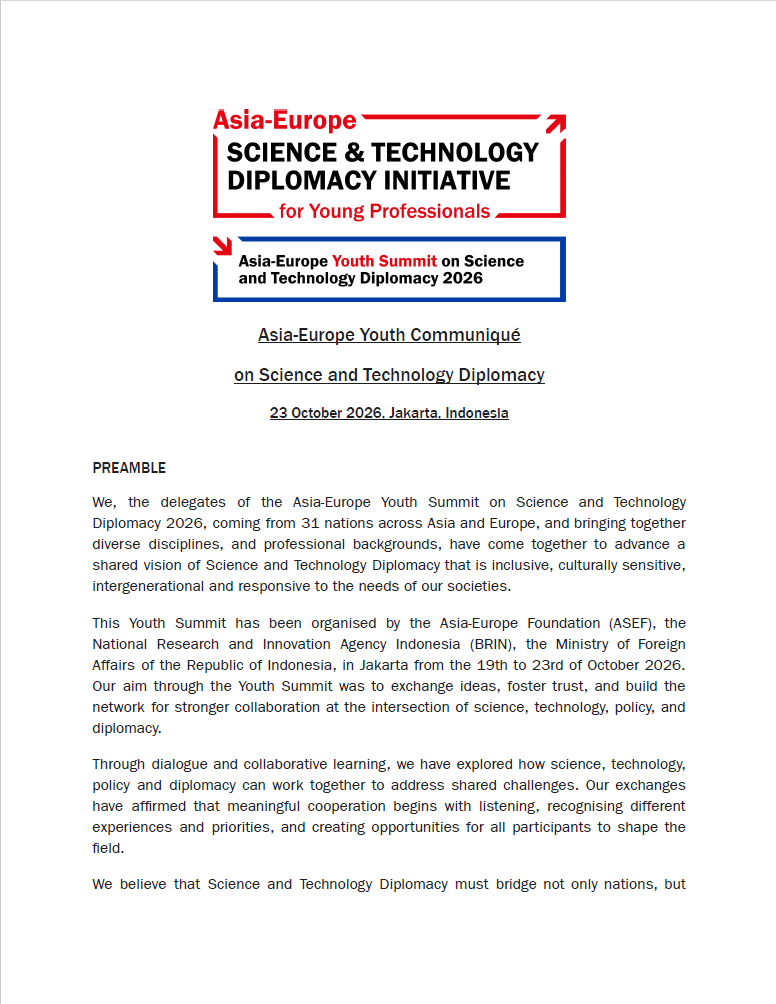
'Asia-Europe Youth Communiqué on Science and Technology Diplomacy 2026'
Read the full document here!
You can read about the full programme here.