
23rd Informal ASEM Seminar on Human Rights: Human Rights & Artificial Intelligence, 29–31 October 2025 | Copenhagen, Denmark
Artificial Intelligence (AI) now shapes nearly every aspect of our daily lives – from how we access information to fundamental areas such as employment, education, housing and access to justice. While AI offers tremendous opportunities for innovation and development, it also poses significant risks to human rights, the rule of law, and democracy. These risks often exacerbate existing inequalities, disproportionately impacting marginalised and vulnerable groups.
AI technologies can interfere with fundamental rights such as privacy, equality and non-discrimination. Their expanding use in critical areas—such as child protection, criminal justice, and asylum processes—raises complex ethical, legal, and technical challenges. Moreover, accountability and remedies for harms caused by AI systems remain insufficiently defined.
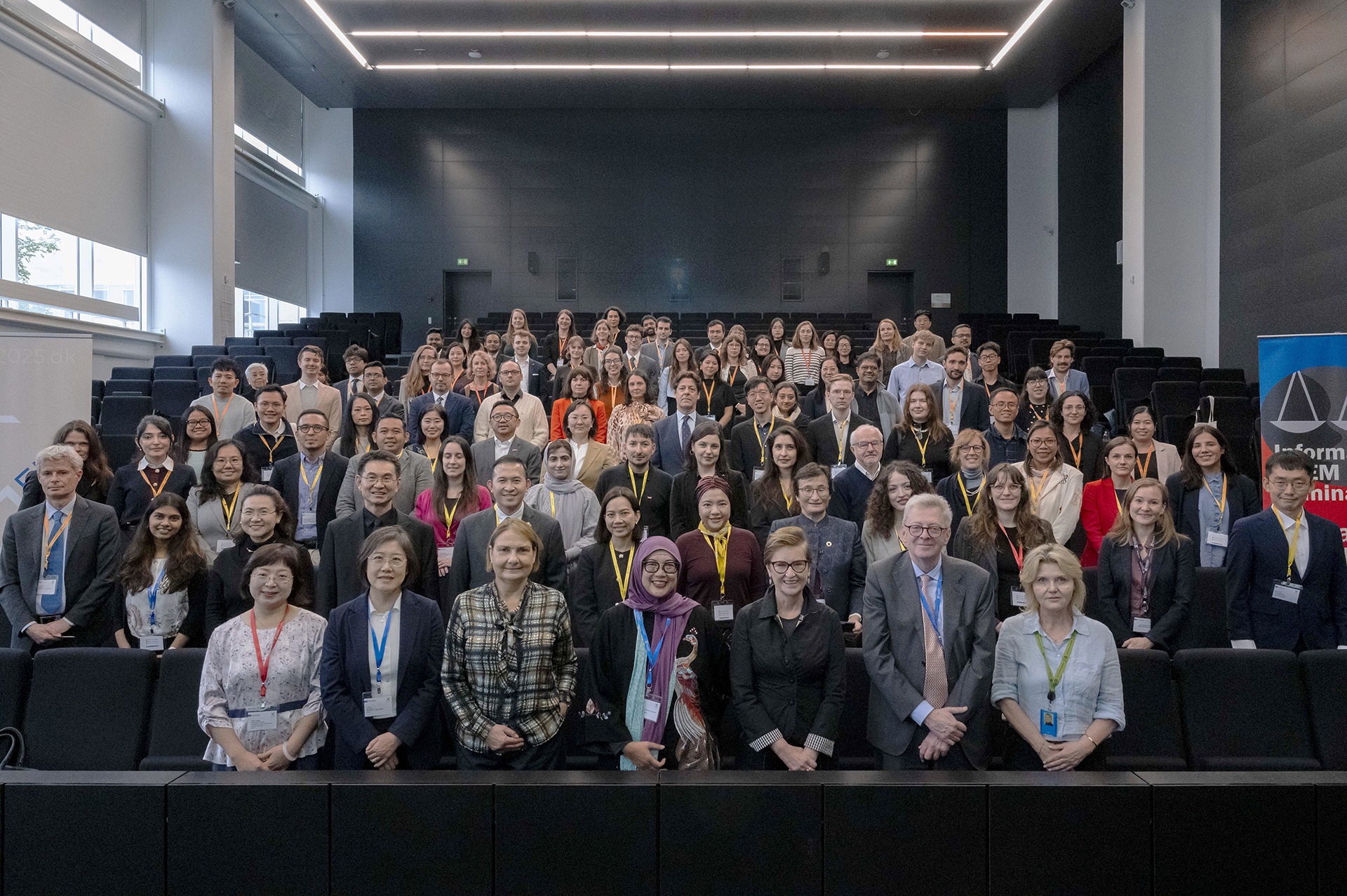
The 23rd Informal ASEM Seminar on Human Rights (ASEMHRS23) brought together key stakeholders from Asia and Europe—including government officials, civil society, academics, and national human rights institutions—to discuss the intersection of AI and human rights. The Seminar focused notably on privacy, equality, and access to remedies, aiming to build capacity, strengthen partnerships, and develop actionable recommendations for human rights-based AI governance.
The participation in the 23rd Informal ASEM Seminar on Human Rights took place in three simultaneous working group discussions on the following topics:
→ Privacy and Data Protection
→ Equality and Non-Discrimination
→ Remedies and Access to Justice
Please refer to ASEMHRS23 – Human Rights and Artificial Intelligence – Concept Note for more details.
TARGET AUDIENCE
The Seminar was designed for stakeholders engaged in artificial intelligence, human rights and digital rights. It particularly targets:
- Government representatives, policymakers, and regulators involved in shaping AI governance frameworks
- Civil society organisations and human rights practitioners working on digital and AI-related issues
- Academics, researchers, and AI practitioners exploring the intersection of technology and rights
- Representatives of national human rights institutions and ombudsman offices
- Private sector actors responsible for developing and deploying AI technologies in line with ethical and rights-based standards
PARTICIPATION AND FORMAT
- The Seminar was an invitation-only event for which relevant participants belonging to the civil society from Asia and Europe were selected by the Co-organisers. The civil society participants comprise human rights and AI experts & practitioners from civil society organisations (CSOs), non-governmental organisations (NGOs) & academia (universities, research institutes & think tanks)
- Representatives of ASEM Partners’ Ministries / government agencies were nominated by ASEM Partners.
- The Seminar also welcomed representatives from National Human Rights Institutions (NHRIs), relevant international /regional / inter-governmental organisations, as well as from the private sector.
- The format of the 3-day Seminar consisted of plenary sessions, expert panel discussions, and thematic working groups which were held under the Chatham House Rule.
OUTCOMES
Read more about the Seminar discussions and outcomes here → Human Rights & AI in Focus: Highlights from the 23rd ASEM Seminar in Copenhagen – Asia-Europe Foundation (ASEF)
Key Recommendations → ASEMHRS23-Key-Outcomes-and-Recommendations-.pdf
Seminar Publication → Human Rights and Artificial Intelligence – Asia-Europe Foundation (ASEF)
ABOUT THE ORGANISERS
The Informal Asia-Europe Meeting (ASEM) Seminar on Human Rights series was launched in 1997 to strengthen relations between civil society actors and governments in Asia and Europe on human rights issues. The Seminar series is co-organised by the Asia-Europe Foundation (ASEF), the Raoul Wallenberg Institute (nominated by the Swedish Ministry of Foreign Affairs), the Philippine Department of Foreign Affairs, the Swiss Federal Department of Foreign Affairs, and the Ministry of Foreign Affairs of the People’s Republic of China, with support of the European Union and the Ministry of Foreign Affairs of Denmark.






 Download

