What was the topic?
ASEFInnoLab6 placed the spotlight on the critical role that universities play in developing skills for an AI-powered future. This included anticipating emerging needs, designing inclusive and accessible learning pathways, and building interdisciplinary bridges that align academic knowledge with real-world applications. By centring its work on AI skills foresight and literacy, ASEFInnoLab6 responded to the urgent global need for academic institutions to keep pace with, and help define, the trajectory of AI development.
With the theme “Universities’ Role in Developing Skills for an AI-Powered Future”, ASEFInnoLab6 participants focused their work during the entire edition on two main outputs:

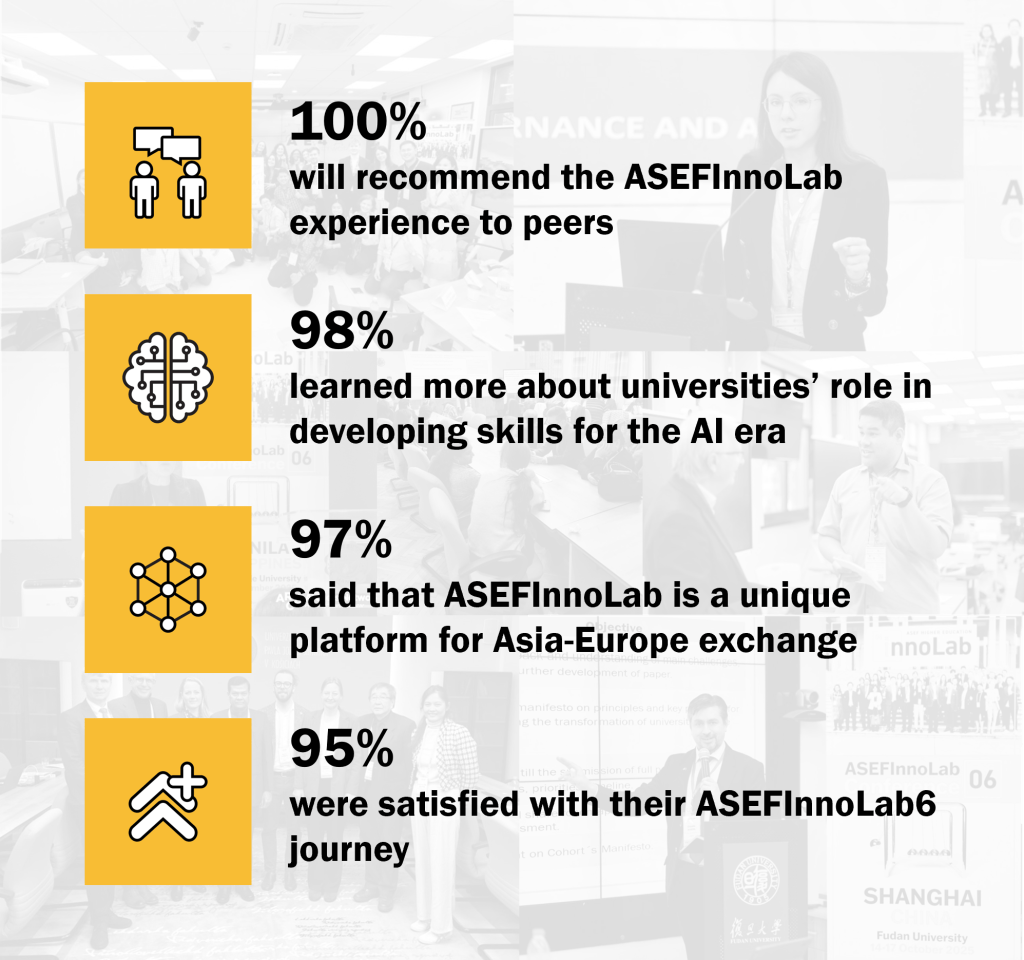
The project welcomed 212 participants from 39 countries in the 11-week long online learning and collaboration phase from 14 May to 23 July.
At the Self-Learning Phase, experts shared their thoughts and insights on key trends and developments related to skills needed to thrive in this AI Era. Topics included predicting competencies needed for the AI era, skills development landscape and frameworks in Asia and Europe, and the dual challenge of universities in preparing their students for an AI-driven future. This phase lasted for four weeks and set the intellectual tone for the rest of the virtual programme.
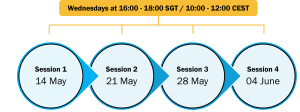
During the subsequent Team Learning Phase, 25 multidisciplinary groups were formed to pursue either an academic paper or a micro-credential programme. During this phase, their work was supported by the ASEFEdu team alongside our Strategic Advisor, Dr Claudio RIVERA (RTU Riga Business School) and Expert Facilitators Dr Lafifa JAMAL (University of Dhaka) and Dr Lara SORRENTINO (University of Florence). This phase lasted for seven weeks, closing on 23 July 2025 with each team presenting their initial output to a jury composed of representatives from partner institutions and members of the ASEFInnoLab community.

From the 22 successful teams, 73 outstanding participants joined one of three in-person events hosted by Fudan University, De La Salle University, and Pavol Jozef Šafárik University.
Check out the materials below to learn more about the virtual programme’s design, topics covered, and get to know our roster of speakers and participant cohort:
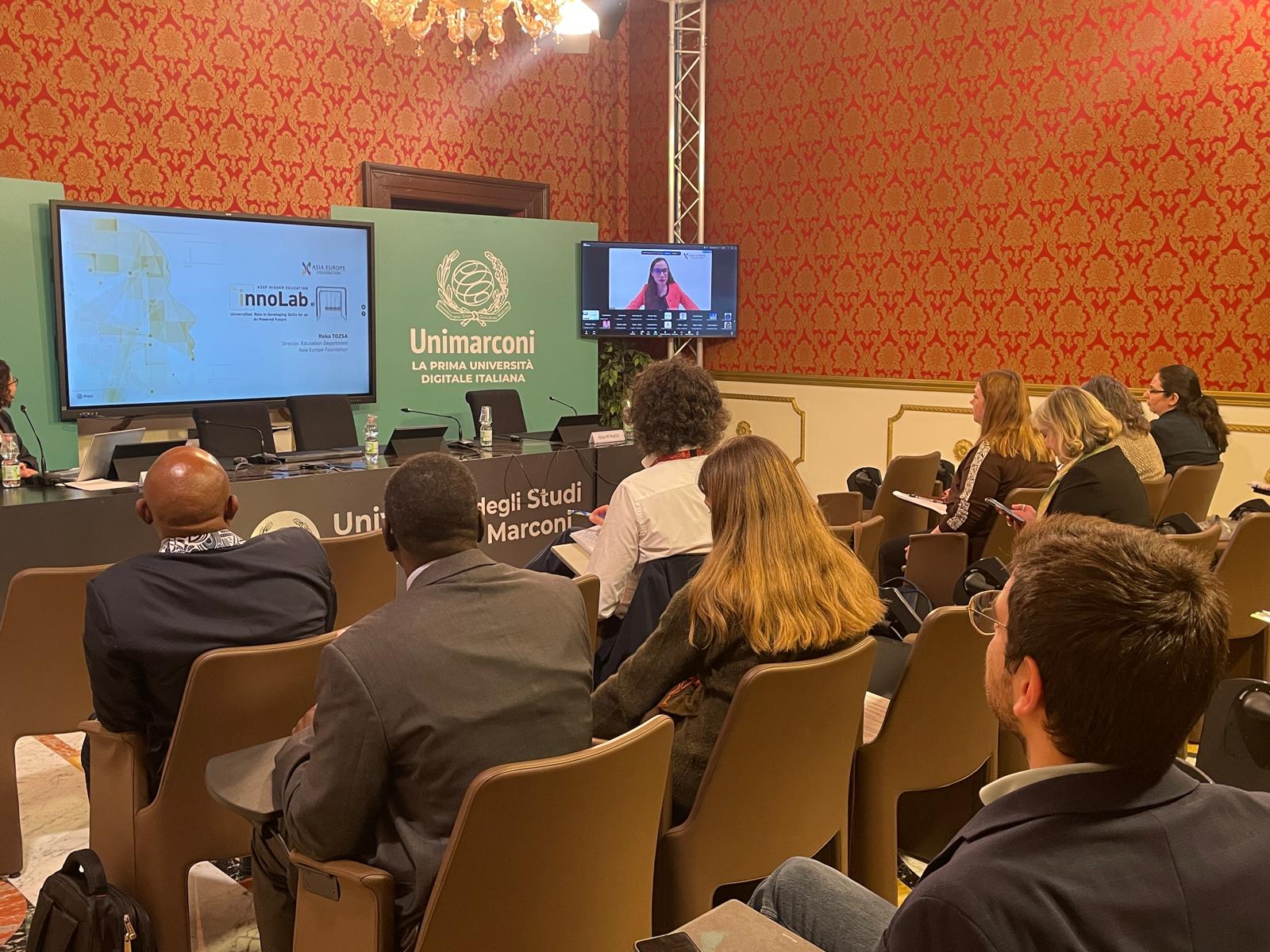
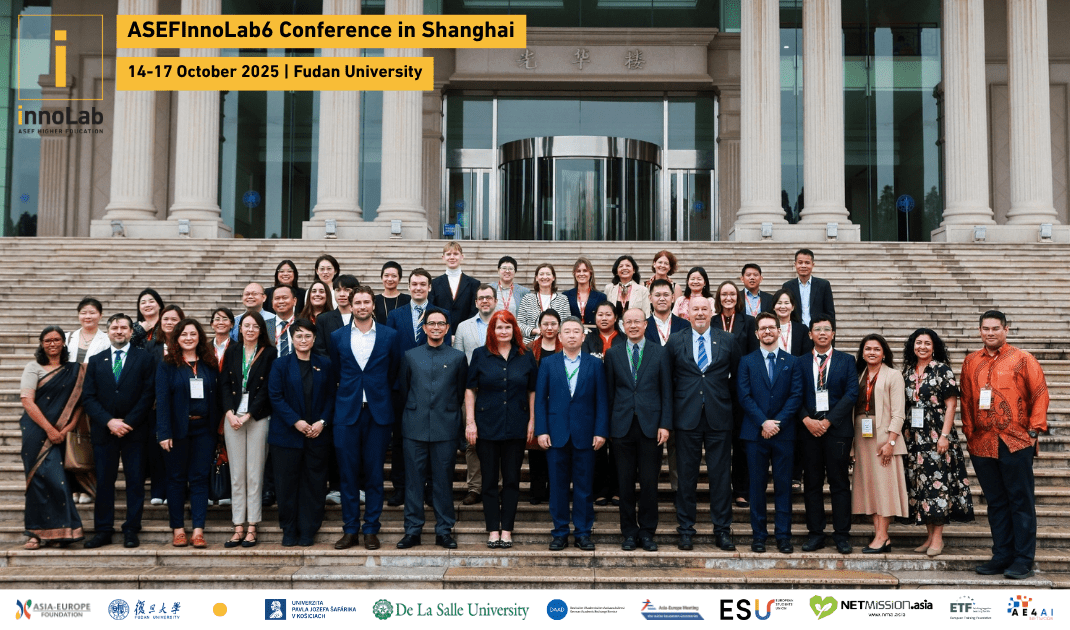
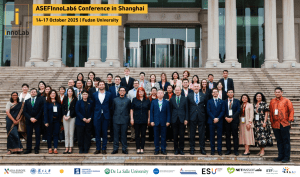 The ASEFInnoLab6 Conference in Shanghai, co-organised by the Asia-Europe Foundation (ASEF) and Fudan University, took place from 14-17 October 2025 and convened 33 academics and researchers from across Asia and Europe for an intensive, research-focused programme.
At the core of the Shanghai Conference was a rigorous academic programme centred on paper presentations and peer review. Participants worked in their teams to examine issues such as generative AI literacy, institutional AI governance frameworks, inclusive and rights-based approaches to AI in education, multilingual and accessible AI tools, and whole-of-university strategies for responsible AI adoption. These discussions were enriched by expert keynotes and panel sessions that explored the transition from the Information Age to the Intelligence Age, the role of universities in driving AI-enabled scientific discovery, and the need for capacity building to support effective global AI governance.
Beyond the conference rooms, participants engaged in site visits to leading AI research and innovation institutions in Shanghai, offering first-hand exposure to how AI is being applied across research and industry contexts.
Learn more through our conference documents below:
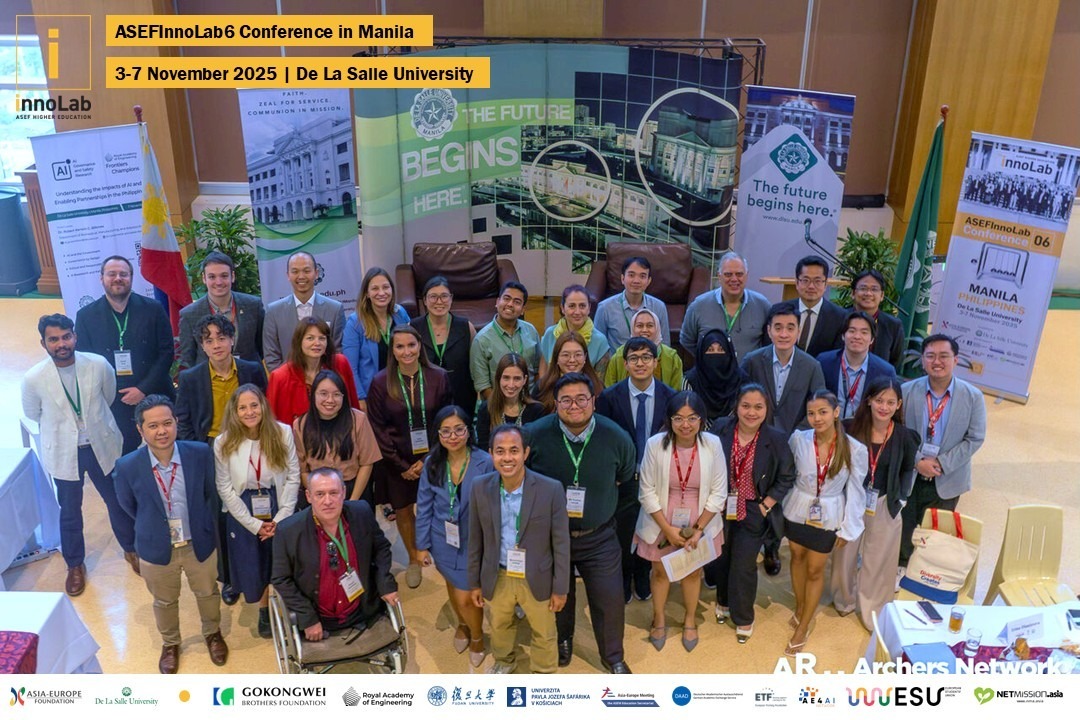
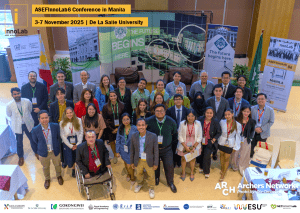 The ASEFInnoLab6 Conference in Manila, held from 3-7 November 2025 and hosted in partnership with De La Salle University, welcomed 36 participants and speakers to collaboratively design micro-credential programmes tailored to the evolving skills demands of the AI era.
Throughout the week, participants engaged with a series of keynotes and guided sessions on skills development, ethics, and lifelong learning in the AI age, featuring thought leadership from regional and international education and innovation experts. These sessions explored how higher education must rethink programme design, integrate industry perspectives, and prioritise inclusion and equity while building agility into learning pathways. Teams also advanced concrete micro-credential proposals addressing real-world needs such as AI ethics, digital transformation, fraud risk management in education, and AI tool integration in teaching and assessment. This productively demonstrates the practical outcomes of sustained peer collaboration under expert facilitation.
Complementing the core programme, participants experienced industry engagement through site visits that showcased applications of data and AI in urban planning and public health, reinforcing the value of academe–industry linkage in shaping future-ready credentials. The conference week concluded with DLSU’s Conference on AI Governance and Safety, uniting perspectives from government, industry, and academe to chart pathways for responsible AI frameworks in higher education.
Learn more through our conference documents below:
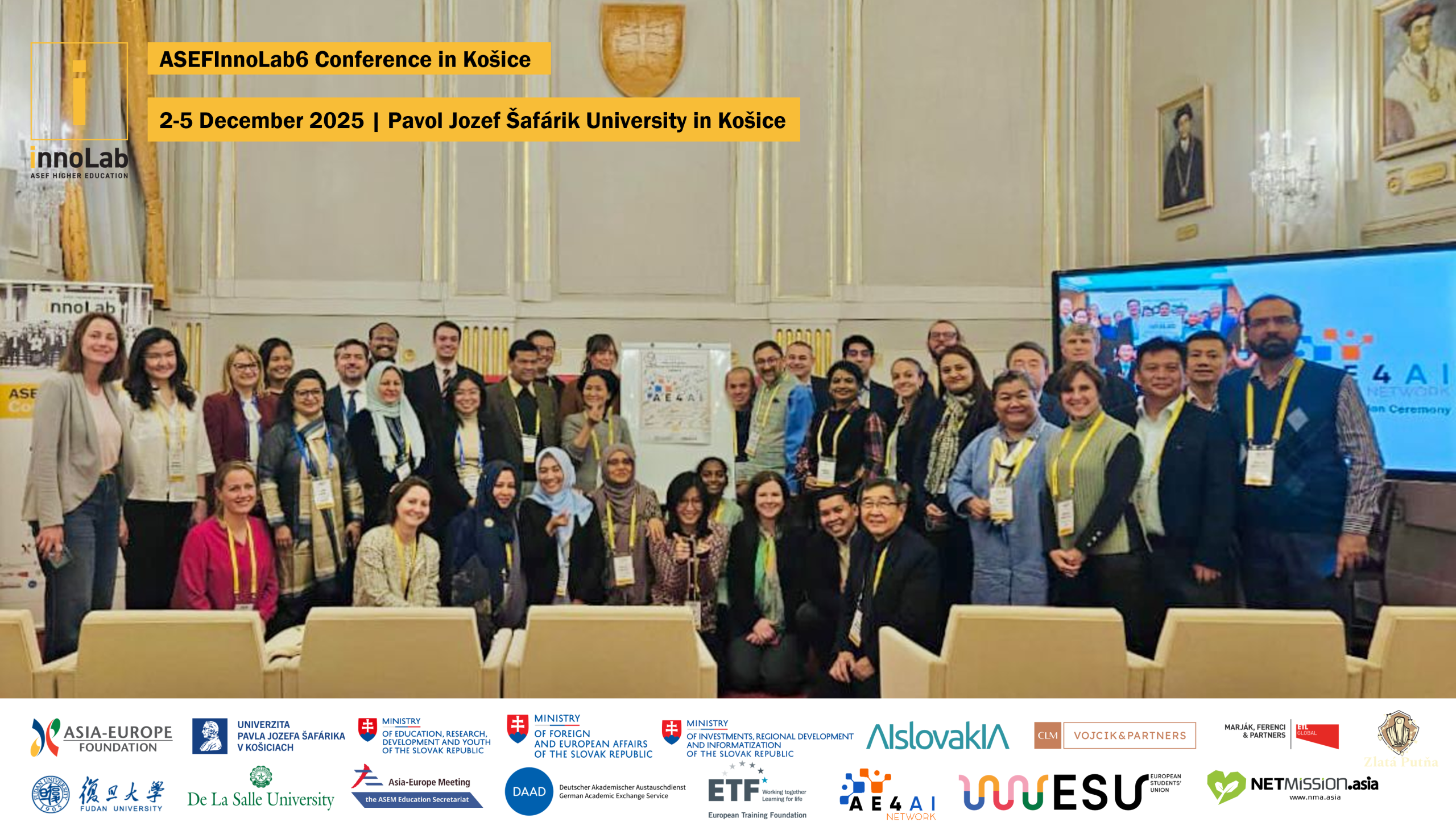
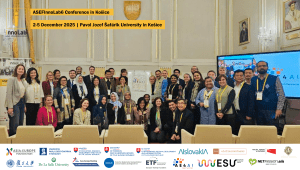 The ASEFInnoLab6 Conference in Košice, hosted by Pavol Jozef Šafárik University from 2-5 December 2025, convened 46 participants and resource persons which includes representatives from the ASEM Education Expert Group on Digitalisation and AI.
Throughout the event, participant teams presented interdisciplinary academic papers they had been developing since the programme’s online phase, covering topics such as bridging AI skill gaps through agile micro-credential frameworks, ethical and policy considerations for cross-regional innovation, inclusive AI ecosystems, the evolving role of AI in creative pedagogy, and structural inequalities in AI access. These exchanges were enriched by a diverse lineup of expert presentations on national AI strategies, regulatory frameworks, responsible research practices, and university-centred approaches to future-ready skills.
Building on a successful partnership with the Expert Group last edition, we are pleased to welcome them once again into the programme where they contributed to discussions on balancing innovation, equity, and institutional autonomy in AI-enabled higher education. Read more about their fruitful engagement with the project here.
Learn more through our conference documents below:
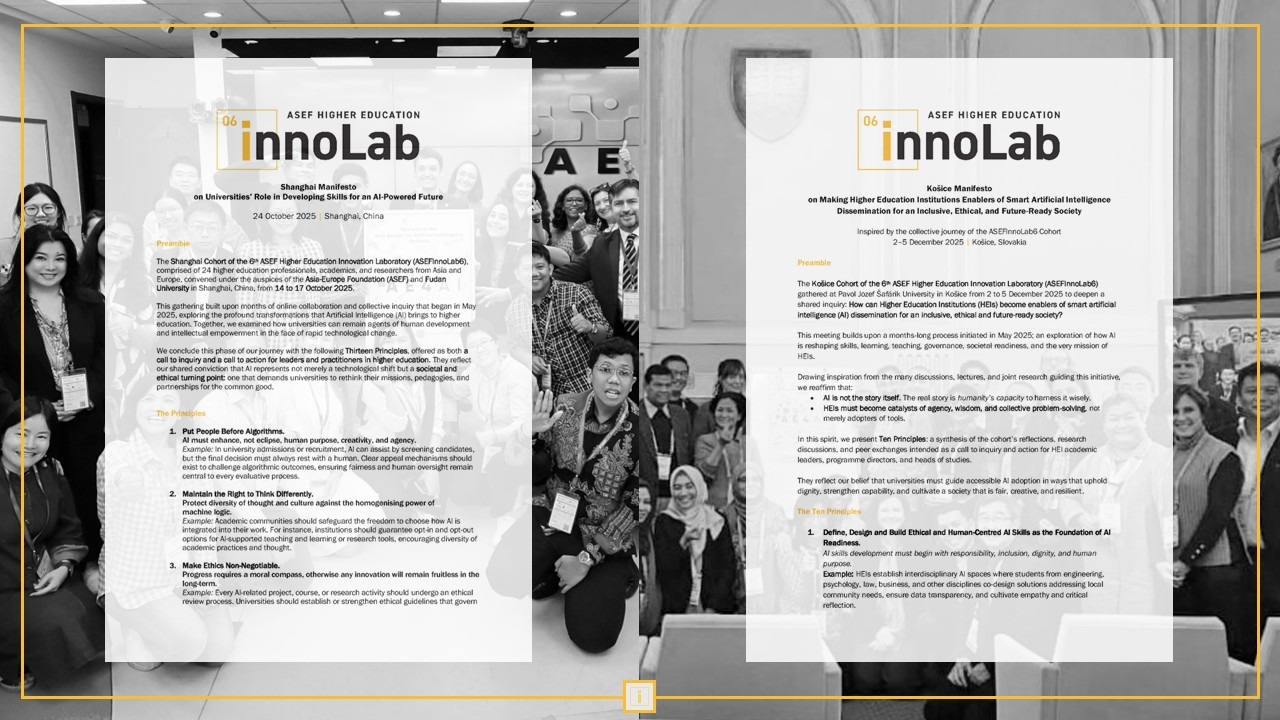
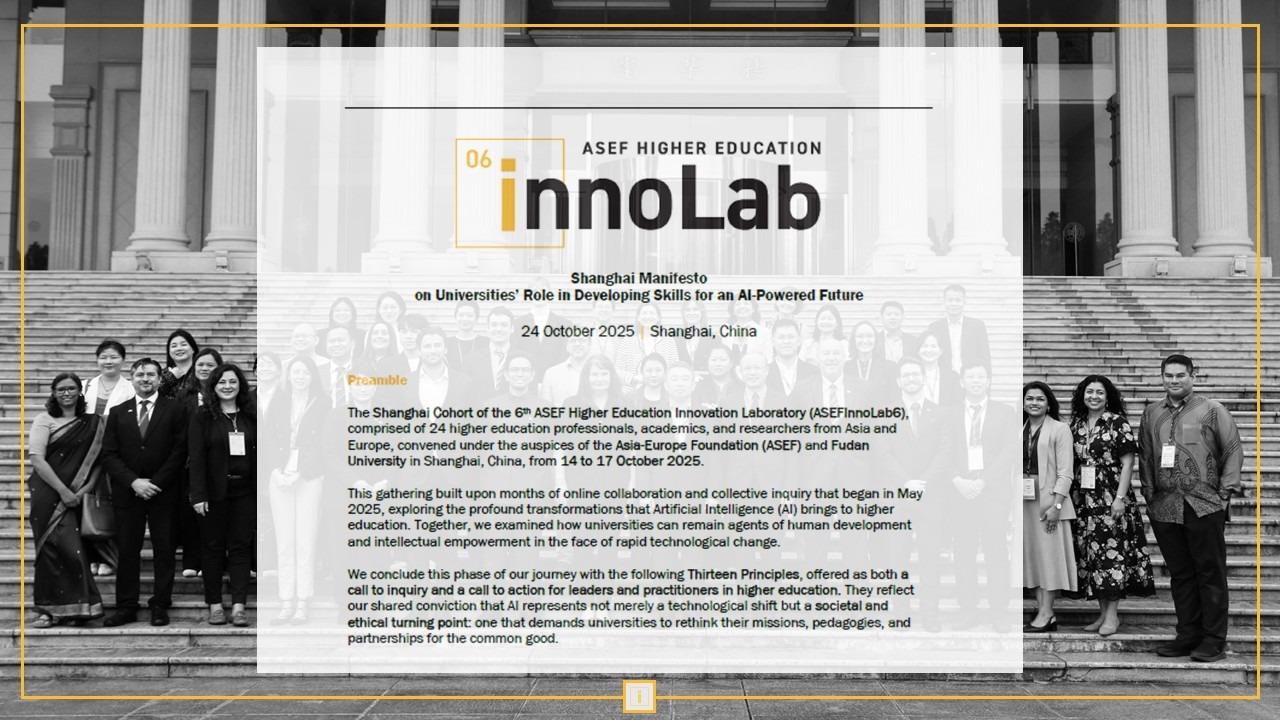
The Shanghai Manifesto
This was co-created at the ASEFInnoLab6 Conference in Shanghai by our cohort of 24 higher education professionals, academics, and researchers from Asia and Europe.
The Manifesto presents 13 principles as a collective call to action that urges universities to respond to AI not merely as a technological trend, but as a profound societal and ethical turning point that reshapes the mission, practices, and responsibilities of higher education.


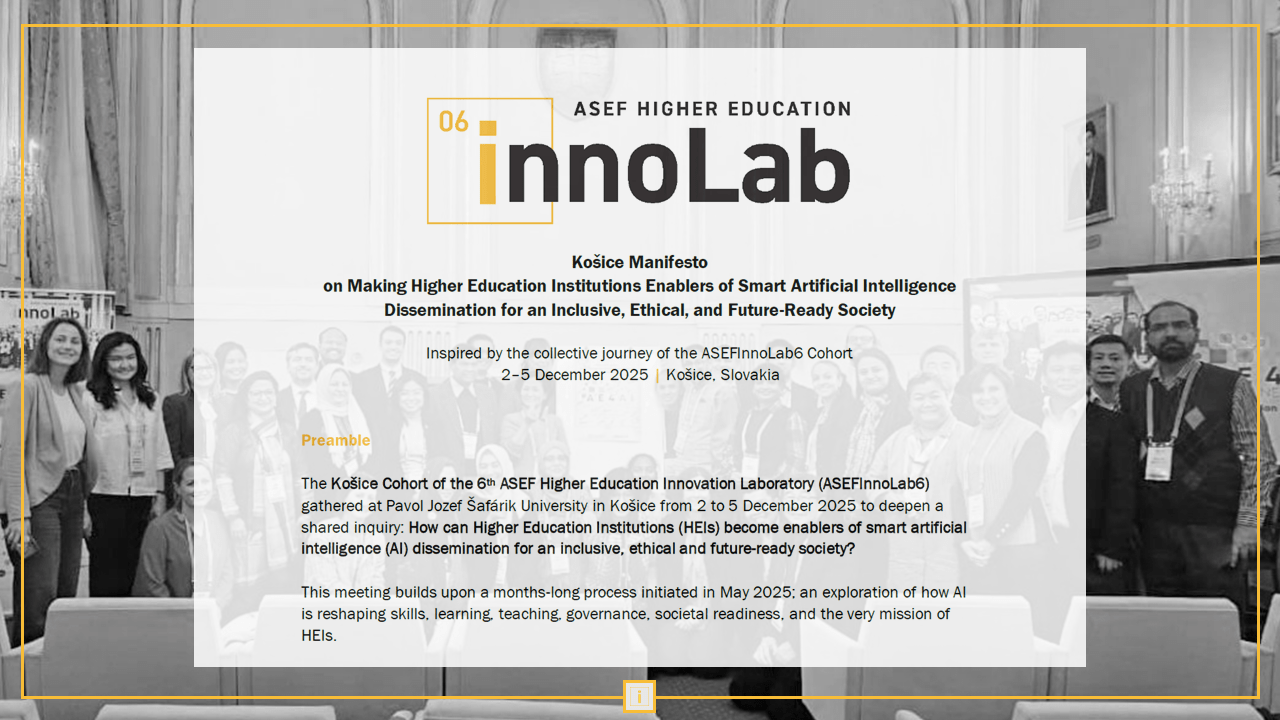
The Košice Manifesto
Co-created by the cohort of the ASEFInnoLab6 Conference in Košice, this document draws from the discussions, lectures, and joint research guiding their exploration of how AI is reshaping learning, teaching, governance, societal readiness, and the mission of HEIs.
More than 30 participants worked on this Manifesto, which zeroes in on making universities enablers of smart AI dissemination for an inclusive, ethical, and future-ready society.















 Download